

The Saint-Scientist Vallalar has a precise answer for what you came here for, which is how to foster self compassion. Perhaps you have tried to ‘think’ your way to self-kindness and found the feeling does not last. This article explains why Vallalar taught that compassion is not an internal feeling to generate, but an external practice to perform—and how that outward action becomes the most direct path to inner peace. Much of the advice on this topic stays at the level of mindset and mental reframing. Vallalar offered a physical, actionable starting point that changes the mind as a consequence, not a cause. To understand his method, we must look at the man who documented it.
The Life and Teachings of Vallalar
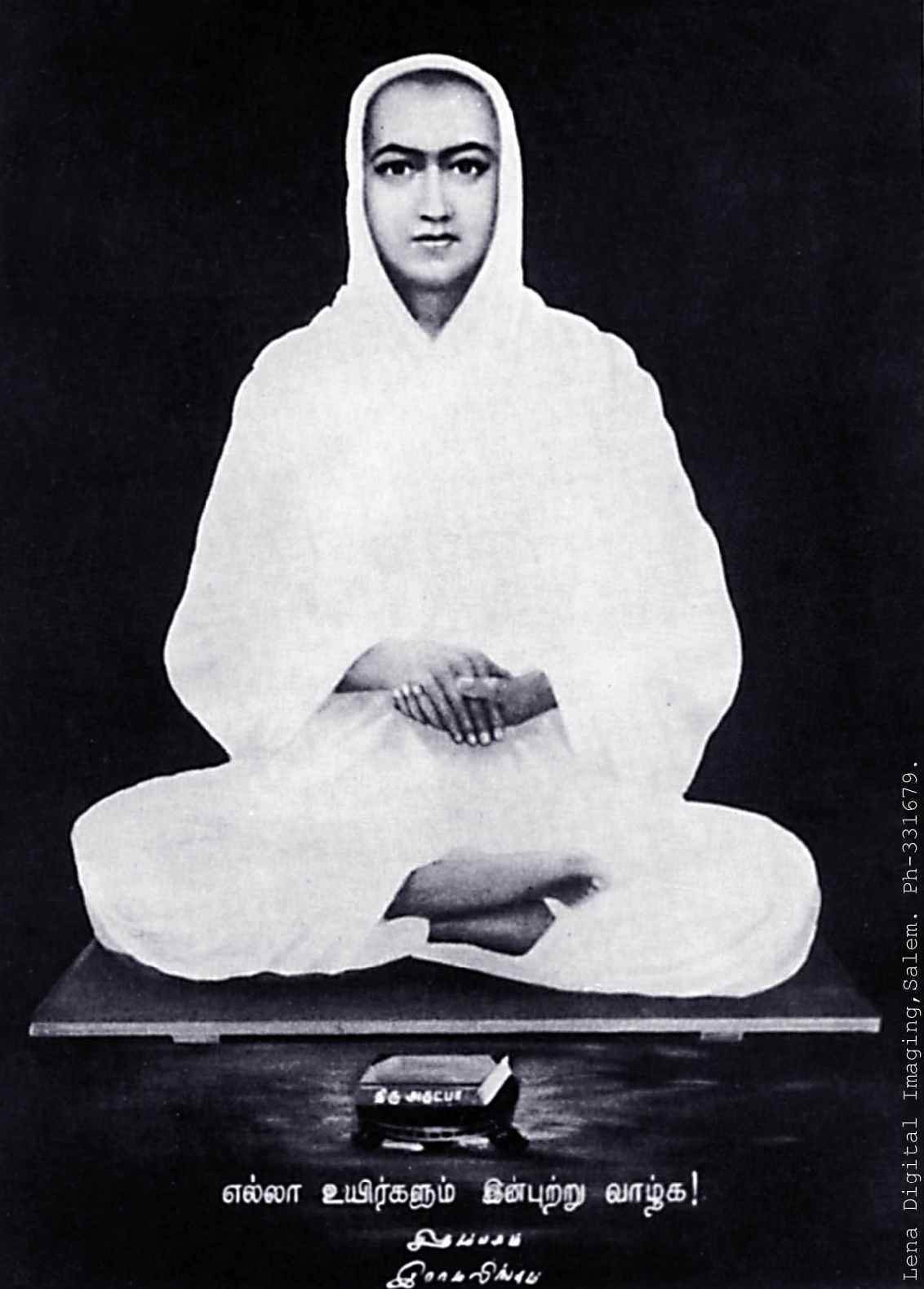
Ramalinga Swamigal, known as Vallalar, was a 19th-century Tamil mystic whose collected writings, the Thiru Arutpa, remain one of the most extraordinary spiritual records ever produced. His life was filled with remarkable feats—though he dismissed anything supernatural, insisting that everything he did was a science. He established a center for feeding the poor, the Sathya Gnana Sabai, which has run continuously since 1867, never once stopping its service of providing free food to all who come. On January 30, 1874, accounts from those present record that he locked himself in a room in Mettukuppam and was never seen again—his body never found. This event is documented by government records and by British Collector John Henry Garstin.
Why Compassion Is a Practice, Not a Feeling
Most people approach compassion as an emotion to be felt. We try to feel kinder toward ourselves or others. Vallalar taught a different model. For him, compassion was primarily a practice, an action. He called this practice Jeeva Karunyam—compassion for all living souls.
Jeeva Karunyam is not the aspiration to feel kindly; it is the active, physical relief of suffering wherever one finds it. It is a verb, not a noun. According to this teaching, the inner state of peace and self-acceptance is a result of this external practice, not a prerequisite for it. You do not start by fixing your inner world. You start by fixing what you do in the outer world, and the inner world corrects itself.
This reverses the common therapeutic approach. Instead of analyzing your feelings, you are asked to observe your actions. Are they causing suffering to any living being? If so, the first step is to stop. This creates the space for something new to arise.
Jeeva Karunyam: The Mechanism for Divine Grace
Vallalar did not teach compassion as a moral virtue to be admired. He taught it as the specific mechanism by which divine grace-light, or Arut Perum Jōti, enters the soul and transforms the body. In his view, every act that causes suffering—to another person, to an animal, or even to a plant unnecessarily—creates a block. These blocks prevent the grace-light from illuminating the inner being.
Conversely, every act that relieves suffering opens a channel. Feeding a hungry person, giving water to a thirsty animal, or simply refraining from an act of harm actively invites this divine energy. It is a form of spiritual physics. The practice of Jeeva Karunyam is what cleanses the system and allows the grace-light to flow.
Without this practice, Vallalar taught that other spiritual efforts like meditation or prayer would have limited effect. Compassionate action is the foundation upon which everything else is built. It is the key that opens the door to grace.
The Real Answer to How to Foster Self Compassion
How does this outward practice lead to the inner state of self-compassion? Vallalar’s teaching suggests a direct link. When a person participates in systems that cause suffering, even indirectly, a part of their being registers that conflict. It is difficult to feel at peace with yourself when your actions contribute to the pain of others.
The most immediate and controllable act of Jeeva Karunyam is what one puts on the plate. Vallalar taught that consuming the flesh of animals, which involves fear and a violent death, directly introduces energies of suffering into one’s own body. By choosing to eat plants, one makes a simple, powerful choice to stop participating in that cycle.
This single act begins to dissolve the inner conflict. When you know that your survival is not dependent on the suffering of another being, a quiet integrity settles in the soul. Self-criticism and inner turmoil often lessen because their root cause—a conflict between one’s desire for peace and one’s actions—has been addressed. From this first step, compassion expands naturally to every other interaction with every living being. Self-compassion is not something you foster directly; it is what remains when you stop being cruel to others.
A Daily Practice for Cultivating Compassion
Vallalar gave a simple mantra to align the mind with the energy of grace and compassion. This is not a request for something you lack, but an affirmation of the reality that is always present. Reciting it turns one’s attention toward the source of all compassion.
The Mahamantra is:
Aruṭ Perum Jōti — Aruṭ Perum Jōti —
Taṇi Perum Karuṇai — Aruṭ Perum Jōti
The English translation is:
The Vast Grace-Light. The Vast Grace-Light.
The Incomparable Great Compassion. The Vast Grace-Light.
Repeating this, silently or aloud, can serve as a constant reminder of the goal. It aligns personal consciousness with the universal principles of light and compassion, making the practice of Jeeva Karunyam feel less like a discipline and more like a natural expression of one’s true self.
Your First Step in Compassionate Action
For your very next meal, make a conscious choice to eat only plant-based foods. As you prepare and eat the meal, hold the awareness that this simple decision prevented fear and suffering for another living creature. Notice the feeling in your body. Vallalar taught that this act of not-harming is the beginning of all spiritual progress. It is the most practical and powerful way to begin the practice of Jeeva Karunyam today.
You came here for how to foster self compassion and found something worth reading. Want much more?
The Sanmarkkam Journey delivers free teachings, health guidance, and translations of Vallalar’s works, directly to your inbox. We take you by hand, at your own pace.
No pressure, no selling. Just value. Unsubscribe with one click. Join the Sanmarkkam Journey

Want Vallalar's wisdom
delivered free to your inbox?
All directly to your favourite email inbox.
We take you by hand, at your own pace. Step-by-Step.
- Free E-book: Jeevakarunyam Ozhukkam — Vallalar's Guide to Compassionate Living IMMEDIATE DOWNLOAD
- Free E-books, translations & commentaries
- Free health tips from Vallalar's manuscripts
- Free community
- Free Emporium items
- & Much More 🎁
🕯️ Welcome to the Journey
Look for an email from international@sanmarkkamlife.org. Check your inbox, spam folder and Promotions tab. Your first teaching and your free e-book are on their way.
🔒 We hate Spam. No Pressure. 0 Selling or Pitching.
1 Click Unsubscribe any time.
Privacy Policy · Sanmarkkam Life APS · GDPR compliant