
Upadesa Kurippukal
Notes of the Teachings
உபதேசக் குறிப்புகள்
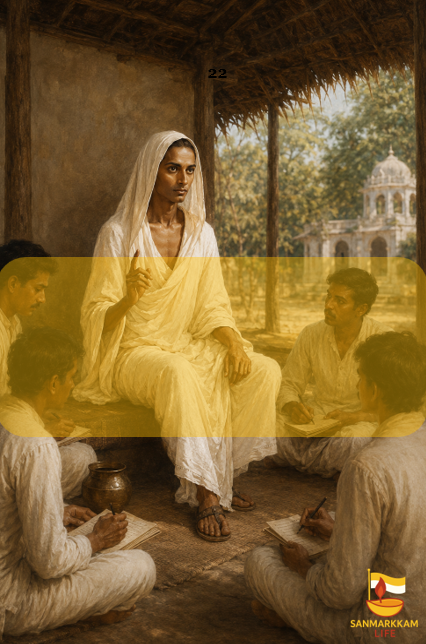
About this text
The Upadesa Kurippukal, the Notes of the Teachings, is the closest we come to hearing Vallalar think aloud.
His poetry sings and his letters instruct, but these 133 notes state his teaching in its raw form. They were noted down in Tamil Nadu, in the final years of his mission, in the years of Vadalur and Mettukuppam, and they gather everything he wanted understood before he disappeared from the world in 1874: the making of the human body and its correspondence with the cosmos, the hidden meaning behind the old gods and their stories, the discipline of compassion, and the turning of the mortal body into one of pure light.
“May all living beings live happily, in absolute compassion, forever.” — Vallalar
Vallalar never separates the spiritual from the practical. A note on the cosmic ages sits beside a note on what to eat. An account of the five elements leads straight into guidance on sleep and breath. One conviction runs through all of it: Jeevakarunyam, compassion for every living being, is the one foundation of genuine spiritual life, and Arut Perum Jothi, the Vast Grace-Light, is real and open to every human being who turns toward it.
Shown in this reader — a selection across the range of the text:
The Seven Veils (121) · The Conquest of Death (24) · Churning the Ocean of Milk (33) · Thevaram (45) · The Meaning of Initiation (82) · The Five Great Sins (74) · Compassion, the First Step to Liberation (105) · The Three Pure Bodies (131)
The complete text contains all 133 teachings: on the body and the cosmos, the tattva reading of myth, scripture and its hidden meaning, the disciplines of conduct and diet, and the transformation into the deathless body. All 133 are available in full in the PDF below.
Glossary · About Sanmarkkam Life
Read it. Keep it. Share it.
This text is free for everyone: read online, download, print, and share without any restriction.
Receive new publications and teachings as they are released.
Read Online
This is a living translation — your suggestions matter
See a passage that could be clearer, more faithful to the Tamil, or better phrased? Select any text in the reader and suggest a revision. You can also read and vote on suggestions left by others.
- 1 Select any passage
- 2 Type your suggestion
- 3 Others read and vote
Translation & Commentary
Upadesa Kurippukal — eight of the 133 notes, chosen to show the range of the text. The full text is in the PDF below.
The Body and the Cosmos121. The Seven Veils
இந்தப் பவுதிக உடம்பிலிருக்கிற நீ யாரெனில்: நான் ஆன்மா, சிற்றணு வடிவன். அணு கோடி சூரியப் பிரகாசமுடையது, லலாடஸ்தானமிருப்பிடம், கால்பங்கு பொன்மை முக்கால்பங்கு வெண்மை கலந்த வண்ணம். இப்படிப்பட்ட ஆன்மப் பிரகாசத்தை மறைக்க மாயா சத்திகளாகிய 7 திரைகளுண்டு. அவையாவன: கறுப்புத் திரை மாயாசத்தி. நீலத்திரை கிரியாசத்தி. பச்சைத்திரை பராசத்தி. சிவப்புத்திரை இச்சாசத்தி. பொன்மைத்திரை ஞானசத்தி. வெண்மைத்திரை ஆதிசத்தி. கலப்புத்திரை சிற்சத்தி.
(திரு அருட்பா, அருட்பெருஞ்ஜோதி அகவல் 813–826)
If asked, “Who are you residing within this physical body?” the answer is: “I am the Soul (Atma), in the form of a minute atom (Chitranu).” This atom holds the radiating brilliance of a billion suns. Its seat is the centre of the forehead (Lalata Sthanam), and its colour is a blend of one-quarter golden and three-quarters white.
To conceal such intense brilliance of the soul there are seven veils (thiraigal) which act as forces of illusion (Maya Shaktis): the Black Veil, Maya Shakti, the force of illusion; the Blue Veil, Kriya Shakti, the force of action; the Green Veil, Para Shakti, the supreme force; the Red Veil, Iccha Shakti, the force of desire; the Golden Veil, Jnana Shakti, the force of wisdom; the White Veil, Aadhi Shakti, the primordial force; and the Mixed Veil, Chit Shakti, the force of pure consciousness. As the Arutperunjothi Agaval sings, each veil in turn conceals a deeper reality, from the sovereign state of God down to the innermost contemplative experience, and behind every one of them stands the Vast Grace-Light.
24. The Conquest of Death
மார்க்கண்டர்க்காக ருத்திரமூர்த்தி இடது காலால் எமனை உதைத்ததற்கு நியாயம்:- மார்க்கண்ட ரென்பது மயக்கமாகிய மறைப்பென்னும் மரணத்தைத் தவிர்த்தது. ருத்திர னென்பது தனித்த ஆன்ம அறிவு. எமனென்பது மயக்கத்தைத் தரத்தக்க வெகுளி சினம் முதலிய. இடது காலால் எமனை யுதைத்த தென்பது: இடது என்பது சந்திர கலை, காலென்பது பிராணவாயு. ஜனன மரணத்தை உண்டு பண்ணுவது சந்திரசூரியசக்தி. ஆதலால், அஞ்ஞான பாசத்தால் சினமாகிற கூற்றுவன் கட்ட, விவேகியென்னும் மார்க்கண்டன் ருத்திரனென்னும் ஆன்மஅறிவோடு கூடவே, மேற்படி ருத்திரன் பிண்டநஷ்டஞ் செய்கின்ற இடகலையை மேலேற்றி, குணங்களாகிய சூலத்தால் கூற்றையொழித்து, அருளாகிய சத்துவ மயமாய் நீடிக்கச் செய்வது – எமசம்மாரம்.
The inner meaning behind the story of Rudramurthi kicking Yama, the lord of death, with his left foot to save the boy Markandeya is this. Markandeya represents the overcoming of death, which is nothing but the mental confusion that veils reality. Rudra represents the pure, independent knowledge of the soul. Yama represents the destructive qualities, anger and explosive rage, that create this confusion.
“Kicking with the left foot” has a precise meaning. “Left” is the Chandra Kalai, the cooling lunar breath, and “foot” is the Prana Vayu, the vital air. Birth and death are produced by the paired energies of sun and moon within the body. When the messenger of death, appearing as anger born of ignorance, moves to bind a person, the wise one aligns fully with the knowledge of the soul, raises the left channel that otherwise wears the body down, destroys death’s power with the trident of refined qualities, and fills the body with purity and grace so that life is greatly prolonged. That is the true “slaying of Yama.”
The popular tale of Shiva stepping from a pillar to kick the lord of death and save the boy Markandeya is read here as breath and emotion. Death is not an outside figure with a noose; it is a process driven by rage and inner heat that destabilises the body and speeds its decay. “Kicking with the left foot” means turning the cooling lunar breath upward to neutralise that heat and halt the body’s clock. Anger, in this reading, is a slow suicide.
33. Churning the Ocean of Milk
திருப்பாற்கடல் கடைந்து அமுதபானம் தேவர்கள் செய்யும் பொருட்டு விஷத்தை ருத்திரர் உட்கொண்டா ரென்பதற்குப் பொருள்:- திருப்பாற்கட லென்பது தேங்காய். அமுதமென்பது அதன் ஜலம். தேங்காயின் பாலிலுள்ள எண்ணெயே விஷம். மேற்படி எண்ணெயாகிய விஷத்தைப் போக்குவது முப்பூவாகிய ருத்திரன். ஆதலால், தேங்காய்ப் பாலிலுள்ள விஷமாகிய எண்ணெயை முப்பூவால் போக்குவது ருத்திரன் விஷம் சாப்பிட்டது. மற்றக் கடல்கள் யாவும் இட்சு, மது முதலிய வஸ்துக்களே. இவ்வாறு, அண்டத்தினும் பிண்டத்தினும் பௌதிகத்தினும் தாதுக்களினும் ஓஷதியினும் கடல்கள் உள.
The scriptures describe Rudra drinking a deadly poison so that the gods could safely churn the ocean of milk and drink the nectar of immortality. The true meaning is found in daily things. The ocean of milk is a coconut, and the nectar is the water inside it. The heavy oil in the squeezed coconut milk is the “poison,” because it is dense and hard for the body to process. Rudra represents Muppu, the master formula of three salts used by the old alchemists. Using that three-salt compound to remove the heavy oil from the coconut milk is what the myth means when it says Rudra drank the poison. The other symbolic oceans stand for ordinary substances such as sugarcane juice (Ikshu) and honey (Madhu). Such oceans exist everywhere: in the universe, in the body, in physical elements, in minerals, and in medicinal herbs.
The cosmic churning becomes a coconut. The ocean of milk is the coconut, the nectar its water, and the poison Shiva swallows is simply the heavy oil in the milk, cracked and cleared by the three-salt compound muppu. Vallalar’s point is consistent across the book: the great myths are scaled-up descriptions of what happens in plants and in our own bodies, not battles among gods.
45. Thevaram
தேவாரம் என்பது: தேவ் – தயவு, ஆரம் – ஒழுங்கு, தயா ஒழுங்கே தேவாரம்.
The word Thevaram can be broken into its syllables: dev means Thayavu (compassion), and aaram means Ozhungu (order or discipline). Therefore Thevaram means the orderly practice of compassion.
Thevaram is the name of the great body of Shaiva devotional hymns. Vallalar bypasses religious worship and turns the word into an ethical code: the truest devotion is not chanting words but organising your whole life around the steady, orderly exercise of kindness toward every living being.
82. The Meaning of Initiation
தீக்ஷ என்பது யாதெனில்: தீ – மலம், க்ஷ – ஒழிவு, தீக்ஷ – மல ஒழிவு.
What is Deeksha (initiation)? Dee means impurity; ksha means removal. Therefore Deeksha means the removal of impurity.
Vallalar gives a plain etymology and, with it, a redefinition. Initiation is not a ritual but the fundamental work of purification. The primary impurity is the ego, the mistaken sense of being a separate self, so true initiation is the beginning of the end of the ego.
74. The Five Great Sins
கள், காமம், கொலை, களவு, பொய் – இவ்வைந்தும் கொடிய துக்கத்தை உண்டுபண்ணும். இவ்வைந்திலும் கொலை விசேஷ பாவம். எனினும், கள்ளுண்டவனுக்குக் காமம் உண்டாகாமலிருக்காது, கொலை செய்யத் துணிவு வாராமலிராது, களவு செய்யாமலிரான், பொய் பேச அஞ்சான். ஆகையால், இந்த ஐந்தையும் ஒழிக்க வேண்டியது அவசியம். இதில் ஒன்றை அடைந்தவ னானாலும் அவனை மற்றவை தொடராம லிரா.
Alcohol, lust, killing, theft, and lying: these five create terrible suffering. Of the five, killing is an especially grave sin. Yet for one who drinks, lust will surely arise, the nerve to kill will not be lacking, he will not refrain from stealing, and he will not fear to lie. It is therefore essential to be rid of all five. Even if a person falls into only one of them, the others will not fail to follow.
The five great sins are familiar in Indian ethics; Vallalar’s insight is that they are linked. Drink is the gateway that loosens the will and lets the other four follow, until the whole moral structure collapses. The warning is absolute: to be safe from any one of them, a person must be free of all.
105. Compassion, the First Step to Liberation
நம்முடைய தலைவராகிய கடவுளை நாமடைவதற்கு அவரெழுந்தருளி இருக்கும் கோட்டையின் சாவியாகிய அருள் வேண்டும். அவ்வருள் அன்பினாலல்லது வேறு வகையா லடைவதரிது. இவ்வன்பு ஜீவகாருண்யத்தாலல்லது வேறுவகையால் வாராது. ஜீவகாருண்யத்தின் லாபமே அன்பு. இந்த ஜீவகாருண்ய முண்டாவதற்கு ஏது அல்லது துவாரம் யாதெனில்: கடவுளுடைய பெருமையையும் தரத்தையும் நம்முடைய சிறுமையையும் தரத்தையும் ஊன்றி விசாரித்தலே. அன்னியவுயிர்களுக்கு இம்சை உண்டாகாது நடத்தலே ஜீவ காருண்யம். இதுதான் முத்தியடைவதற்கு முதற் படியாயிருக்கின்றது. ஆதலால் இதைப் பாதுகாத்தல் வேண்டும்.
To reach God, our Master, we need the key of Grace to the fort in which He resides. That Grace is hard to obtain by any means other than love. That love does not arise by any means other than compassion; love is the very profit of compassion. And what gives rise to compassion? Deeply contemplating the greatness and stature of God and our own smallness. To live without causing harm to other lives: this is Jeevakarunyam. This is the first step to liberation, and therefore it must be guarded.
One clear chain: compassion leads to love, love to grace, grace to God. God is a locked fort and grace is the only key, and that key can be forged only from love, which is the natural profit of compassion. The practical definition could not be simpler, to live without harming others, and the way to grow it is to reflect on the vastness of the divine and the smallness of the ego. Ethics and mystical attainment are, for Vallalar, inseparable.
131. The Three Pure Bodies
சுத்தமாதி மூன்று தேக விவரம்: சுவர்ணதேகம், பிரணவதேகம், ஞானதேகம். சுவர்ண தேகம் பொன் வண்ணம், அபரஞ்சி மாற்று, 12 வயது பருவம்; நரை, திரை, பிணி, மூப்பு, மலம், ஜலம், வியர்வை, ஆகாரம், நித்திரை, தாகம், சாயை முதலியன இல்லாமை; கர்மசித்தி, கல்பதேகி. பிரணவ தேகம் 16 முதல் 108 வரையில் மாற்று, 5 முதல் 8 வயது; தேகம் தோற்றும், உருவம் பிடிபடாது; சர்வ சித்தி, பிராண கல்பதேகி. ஞானதேகம் எங்கும் பூரண வியாபகம், அளவு கடந்த மாற்று; உருவம் தோற்றியும் தோற்றாமலும் இருக்கும்; சர்வ மகாசக்தி, சர்வ சுதந்தரம், காலாதீதன்.
The three pure bodies are the Golden Body (Swarna Deham), the Sound-Resonance Body (Pranava Deham), and the Wisdom Body (Jnana Deham).
The Golden Body has the colour and purity of the finest gold and the apparent age of a twelve-year-old. It shows no grey hair, wrinkles, disease, old age, waste, sweat, and needs no food, sleep, or water; it casts no shadow. It commands the attainments of action (Karma Siddhi) and is an immortal body.
The Sound-Resonance Body has a purity ranging from sixteen to one hundred and eight measures and the apparent age of a child of five to eight. It can be seen but cannot be caught or held. It commands all attainments (Sarva Siddhi) as a life-force immortal body.
The Wisdom Body is an all-pervading omnipresence, its purity beyond all measure. It can appear visibly or remain wholly invisible at will. It holds all supreme energies and complete autonomy, and stands entirely beyond time (Kalaatheethan).
For Vallalar liberation is not only an idea in the mind but a literal, graded transformation of the body into light. First the Golden Body, which no longer ages, eats, sleeps, or casts a shadow. Then the Sound-Resonance Body, which can be seen but not touched, as if your hand would pass through it. Finally the Wisdom Body, pure light, visible or invisible at will, wholly free and outside the reach of time and death. The book measures this ascent the way gold is graded, by its degree of purity.
Scroll inside the reader above · the full text of all 133 teachings is in the PDF below
Full PDF Reader
On mobile, tap below to open the PDF directly.
Open PDFUnique Great Compassion · Vast Grace Light
Vallalar answers “Who am I?” with startling precision: the soul is a sub-atomic point of light with the brilliance of a billion suns, seated between the eyebrows. If it is that bright, why do we not feel it? Because seven veils of illusion stand in the way, from the black veil of sheer forgetfulness to the fine golden veil of intellectual pride that still blocks the truth even while it shines. The whole path is the patient dissolving of these seven screens until the light can fill the body freely.