
The Great Teaching
Perupadesam
பேருபதேசம்
About this text
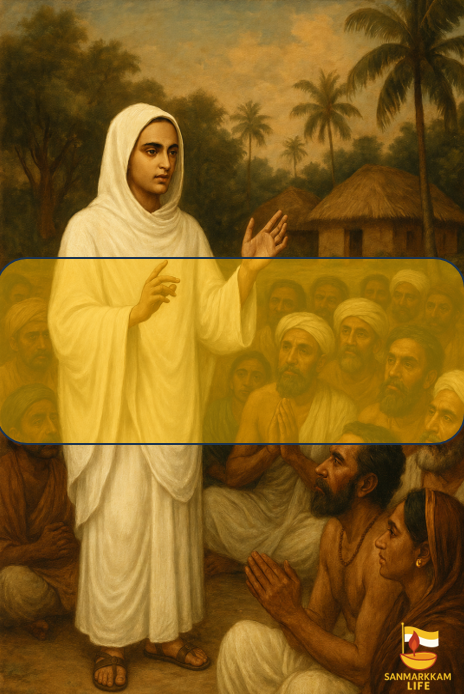
Perupadesam, the Great Teaching, is the last recorded discourse of Ramalinga Swamigal. He delivered it at Mēṭṭukkuppam on the 7th day of Aippaci in the Śrīmukha year, a Wednesday morning at eight o’clock, corresponding to 22 October 1873, immediately after the Sanmarkkam flag was hoisted for the first time. He disappeared from the same building a little over three months later.
It is not a poem. It is a spoken address: direct, urgent, and stripped of allegory. Vallalar sets aside the poetic register of the Thiru Arutpa and speaks plainly, condensing the whole of Suddha Sanmarkkam into one sitting. He tells the people in front of him what to do, what to abandon, and how little time is left.
“What raised me onto that unascended state is tayavu. It is tayavu, which is compassion, that lifted me.”Vallalar, Perupadesam
The discourse opens with a deadline: ten days of sustained inquiry before his departure for the Sālai. From there it moves through the true meaning of vicāram (genuine inquiry), the structure of the veils that cover the soul, the failure of the scriptures and the religious systems to state the Divine openly, the dependency of compassion on orumai (oneness), and the disclosure of the Mahamantra as an aid given openly rather than in cipher.
Two disciples wrote it down as he spoke. Their notes are the only record, and they carry the ordinary limits of transmission: the Tamil preserves repeated words, a stutter in one sentence, and one place where the record simply breaks off mid-thought. Nothing has been smoothed over here. Those features are part of the document.
Each section carries three layers: Vallalar’s Tamil exactly as it is preserved, a translation, and a commentary. The Tamil is not ornament. These are the words that were actually spoken in that room, and translation can only approach them.
The Great Teaching · Translation & Commentary
Invocation & Title · Record of the Discourse · The Urgency of Genuine Inquiry · The Two Kinds of Inquiry and the Generation of Spiritual Heat · Piercing the Impure and Pure Veils of Māyā · The Urgency of Righteous Effort at This Very Moment · The Rejection of Traditional Scriptures · On Grammatical Traditions · Transcending Religions and the Path of True Inquiry · The Summit State and the Power of Compassion · Integration and Soul-Centred Kinship · The Urgency of Transformation and Experiencing the Divine · The Practice of Macrocosmic and Microcosmic Inquiry · The Crucible of Self-Inquiry and Desirelessness · Transcending Sectarian Formulas and Dualistic Realms · The Supreme Mahamantra of Divine Compassion · The Dawn of the Suddha Sanmarkkam Era · The Sanmarkkam Flag and Its Esoteric Anatomy · The Unveiling of Truth · The Prerequisites of Compassion and the Supreme Assurance · Conclusion of the Great Teaching
Glossary · About Sanmarkkam Life
Read it. Keep it. Share it.
This text is free for everyone: read online, listen, download, print, and share without any restriction.
Receive new publications and teachings as they are released.
Listen to this text
An audio reading of the translation, section by section. Listen here or download the recording to keep and share.
Free for everyone. No account needed.
Read Online
This is a living translation, and your suggestions matter
See a passage that could be clearer, more faithful to the Tamil, or better phrased? Select any text in the reader and suggest a revision. You can also read and vote on suggestions left by others.
- 1 Select any passage
- 2 Type your suggestion
- 3 Others read and vote
Translation & Commentary
Pērupatēcam · recorded at Mēṭṭukkuppam on the 7th of Aippaci, Śrīmukha year (22 October 1873), immediately after the hoisting of the Sanmarkkam flag
Invocation & Title
திருச்சிற்றம்பலம்
அருட்பெருஞ்ஜோதி தனிப்பெருங்கருணை
6. பேருபதேசம்
Tirucciṟṟampalam (the Sacred Hall of Consciousness). Aruṭperuñjōti Taṉipperuṅkaruṇai (Vast Grace-Light, Singular Supreme Compassion).
6. Pērupatēcam (The Great Teaching).
Record of the Discourse
ஸ்ரீமுக வருஷம், ஐப்பசி மாதம், 7ஆம் நாள், புதவாரம், பகல் 8 மணிக்கு, மேட்டுக்குப்பம் என்னும் சித்திவளாகத் திருமாளிகையில் முதல் முதல் கொடி கட்டினவுடனே நடந்த விவகாரத்தின் குறிப்பு.
Record of the discourse delivered immediately upon the first hoisting of the flag at the Sacred Mansion of Cittivaḷākam in Mēṭṭukkuppam, at 8 o’clock in the morning on Wednesday, the 7th day of the month of Aippaci, in the year Śrīmukha.
The heading is precise about time and place, and this precision matters: what follows is not general counsel but a time-bound instruction issued at a specific hour. The Śrīmukha year, Aippaci 7, falling on a Wednesday, corresponds to 22 October 1873. Vallalar disappeared from the same building a little over three months later, on 30 January 1874.
Cittivaḷākam combines citti (attainment, perfection) and vaḷākam (spacious hall). The flag raised that morning is the subject of the discourse’s closing sections, where Vallalar reveals that the outward banner is a map of an inner anatomy.
The Urgency of Genuine Inquiry
இங்குள்ள நீங்கள் எல்லவரும் இதுவரைக்கும் இருந்தது போல் இனியும் வீண்காலம் கழித்துக்கொண் டிராதீர்கள். இது முதல் சாலைக்கு ஆண்டவர் போகிற – பத்துத் தினமாகிய கொஞ்சக் காலம் – வரையில், நீங்கள் எல்லவரும் நல்ல விசாரணையில் இருந்து கொண்டிருங்கள். அந்த விசாரணை எது வென்றால்: நம் நம்முடைய நிலை எப்படிப்பட்டது? நமக்கு மேல் நம்மை அதிஷ்டிக்கின்ற தெய்வத்தினுடைய நிலை எப்படிப்பட்டது? என்று விசாரிக்க வேண்டியது. அதற்குத் தக்கபடி, நீங்கள் ஒருமித்தாவது, அல்லது தனித்தனியாகவாவது, உங்களறிவிற்கும் ஒழுக்கத்துக்கும் ஒத்தவர்களுடன் கூடியாவது, அல்லது – வேலாயுத முதலியாரைக் கேட்டால் மனுஷ்ய தரத்தில் போதுமான வரையில் சொல்லுவார் – அவரிடம் அப்படிக் கேட்டாவது நல்ல விசாரணையி லிருங்கள். அல்லது, தனியாகவும் விசாரிக்கலாம். இவ்விசாரணை முகத்திலிருந்தால், நமது ஆன்ம அறிவை விளக்கமின்றி மூடிக் கொண்டிருக்கின்ற அனந்தத்திரைகளில் அழுத்தமாயிருக்கின்ற முதல் திரையாகிய பச்சைத்திரை முதலில் நீங்கிவிடும். அது நீங்கினால், மற்றத் திரைகள் அதிக விரைவில் நீங்கிப் போய்விடும். அந்தப் பசுமை வர்ணம் எப்படிப்பட்டதென்றால், கருமைக்கு முதல் வர்ணமான பசுமையாக இருக்கின்றது. இப்படிப்பட்ட அழுத்தமான திரை நீங்கவேண்டுமென ஸ்தோத்திரித்தும், தெய்வத்தை நினைத்தும், நமது குறையை ஊன்றியும் – இவ்வண்ணமாக, இருக்கின்றபோதும் படுக்கின்றபோதும் இடைவிடாது இவ்விசாரத்தோடு ஆண்டவர் நமக்குண்மை தெரிவிக்க வேண்டு மென்கின்ற முயற்சியுடனிருந்தால், தெரிய வேண்டியதைத் தெரிந்துகொள்ளலாம்.
All of you who are present here, do not go on wasting your time as you have done until now. From this day until the Lord departs for the Sālai, for a brief period of ten days, let all of you remain engaged in genuine inquiry (vicāraṇai). What is that inquiry? You must inquire: “What is the nature of our own state? What is the nature of the Divine that presides over us and governs us from above?”
Toward that end, remain in good inquiry: together as one, or individually, or in the company of those whose knowledge and conduct are aligned with your own, or by asking Vēlāyuta Mutaliyār, who will explain as much as is adequate at the human level. Alternatively, you may inquire alone.
If you remain consistent in this inquiry, the first and densest among the innumerable veils that cover the light of our soul’s knowledge, namely the green veil, will be removed first. Once that is removed, the remaining veils will be removed very fast. What is the nature of this green colour? It is the green that stands as the first colour preceding black.
Praising the Divine so that this dense veil may be removed, holding the Divine in thought, and dwelling intently upon our own deficiency: remaining in this manner without interruption, whether sitting or lying down, united with this inquiry and with the earnest effort that the Lord reveal the truth to us, you will be able to come to know what must be known.
The frame is a ten-day window before Vallalar’s departure for the Sālai, most likely the Sathya Dharma Salai at Vadalur. Nothing here is abstract: it is an instruction issued with a deadline.
The inquiry has a precise dual object. First, the true nature of one’s own state; second, the nature of the Divine that presides over it. Neither is approached through reading or debate. Vallalar allows three methods without ranking them: alone, in company with those of compatible understanding and conduct, or by questioning Vēlāyuta Mutaliyār, his senior student, who is commended as reliable within the limits of human explanation. What matters is not the method but the constancy, maintained whether sitting or lying down.
The fruit is specific. The paccait tirai (green veil), first and densest of the innumerable veils covering āṉma aṟivu (soul-knowledge), begins to loosen. Vallalar defines its colour with care: the green that precedes black, the last gradation before darkness proper. When it falls, the rest follow far more quickly.
In practice: set aside one yāmam (about three hours) daily. Hold the two questions without reaching for answers. Ask for help, acknowledging that you do not know. Remain in the question with yearning. That is vicāram.
The Two Kinds of Inquiry and the Generation of Spiritual Heat
அவ்விசாரம் பரம் அபரம் என்று இரண்டு வகையா யிருக்கின்றது இவற்றிற் பரம் பரலோக விசாரம், அபரம் இகலோக விசாரம். இவ்விரண்டில் இகலோக விசாரம் விசார மல்ல. சாதாரணமாக ஒருவன் விசாரம் செய்து கொண்டிருக்கின்றானேயென்றால், அவ்விசாரம் விசாரமாகாது, உண்மை விசாரமுமல்ல. ஏனெனில்: விசார மென்கின்றதற்குப் பொருள்: வி-சாரம் என்பதில் வி சாதாரண உலக விசாரத்தை மறுக்க வந்தது; அது மேலும் பரலோக விசாரத்தையே குறிக்கும் பொருட்டு வந்தது.
ஜலத்திலிருக்கின்ற பாசியை நீக்குவதுபோல், நமது ஆன்மாவைத் தெரியவொட்டாமல் மூடியிருக்கின்ற பச்சைத் திரையாகிய ராகாதிகளை விசார அதியுஷ்ணத்தாலல்லது, மற்ற உஷ்ணங்களால் நீக்க முடியாது. அந்த உஷ்ணம் யோகியினுடைய அனுபவத்தில் தெரியும். அதை மனுஷ்ய தரத்தில் உண்டுபண்ணுவதற்குத் தெரியாது. அந்த விசாரத்தைவிட ஆண்டவரை ஸ்தோத்திரம் செய்கின்றதிலும் தெய்வத்தை நினைக்கின்றதிலும் அதிக உஷ்ணம் உண்டாகும். யோகிகள் வனம் மலை மழை முதலியவற்றிற்குப் போய், நூறு ஆயிரம் முதலிய வருஷ காலம் தவஞ்செய்து, இவ் உஷ்ணத்தை உண்டு பண்ணிக் கொள்ளுகிறார்கள். இப்படித் தவம் செய்து உஷ்ணத்தை உண்டு பண்ணிக் கொள்ளுகிறதைப் பார்க்கிலும், தெய்வத்தை ஸ்தோத்திரம் செய்கின்றதிலும் நினைக்கின்றதிலும் – இதைவிடக் – கோடிப்பங்கு, பத்து கோடிப் பங்கு அதிகமாக உஷ்ணம் உண்டு பண்ணிக் கொள்ளலாம். எவ்வாறெனில்: ஒரு ஜாம நேரம், மனத்தில் இக விசாரமின்றிப் பர விசாரிப்புடன் ஆன்ம நெகிழ்ச்சியோடு தெய்வத்தைச் சிந்தித்துக் கொண்டாவது அல்லது ஸ்தோத்திரம் செய்து கொண்டாவதிருந்தால், நாம் பெற வேண்டியதைப் பெற்றுக் கொள்ளலாம்.
ஆதலால், இவ்வுலகத்தில் வி-சாரமென்கின்ற உண்மை தெரியாது, விசாரமென்று வழங்கி, அதைத் துக்கமென்றே சொல்லுவார்கள். நாம் அப்படி அர்த்தம் பண்ணக்கூடாது. அவர்கள் பண்ணுகின்றது – துக்கமே விசாரமென்கின்றது – அது தப்பு; அவ்வர்த்தமுமன்று. சார மென்கின்றது துக்கம். விசார மென்கின்றது துக்க நிவர்த்தி. வி உபசர்க்கம். சாரமென்கின்ற துக்கத்தை நிவர்த்தித்தது வி ஆதலால், விசாரமென்கின்றது முன் சொன்னபடி பரலோக விசாரத்தையே குறிக்கின்றது. ஆதலால் இடைவிடாது நாம் விசார வசத்தராயிருக்க வேண்டியது. மேலும் வி – சாரமென்பது: வி விபத்து; சாரம் நீக்குதல், நடத்தல். ஆதலால் இடைவிடாது நன் முயற்சியின்கண் பயிலுதல் வேண்டும்.
That inquiry is of two kinds: param (the supreme) and aparam (the lower). Of these, param is inquiry into the transcendent realm, and aparam is inquiry into this worldly life. Between the two, worldly inquiry is not inquiry at all. If it is said that a person is ordinarily engaged in vicāram, that vicāram is not vicāram, nor is it true inquiry. The reason is the meaning of the word itself: in vi-cāram, the prefix vi comes to negate ordinary worldly concern, and it comes precisely to denote inquiry into the transcendent.
Just as one clears the algae lying on water, the green veil of rāgādi (passion and its derivatives) that covers the soul and prevents it from being known cannot be removed except by the intense heat of inquiry; no other heat can remove it. That heat is known in the experience of a yogi, and it cannot be produced at the ordinary human level. Yet greater heat than that of inquiry arises from praising the Lord (stōttiram) and from holding the Divine in thought. Yogis go to forests, mountains, and rain-swept places and perform austerities for a hundred or a thousand years to generate this heat. Compared with generating heat by such austerity, one may generate a crore times, ten crore times more heat through praising and contemplating the Divine. How so? If for one yāmam (about three hours) the mind is free of worldly concern and, with transcendent inquiry and with the soul in a state of tender melting (āṉma nekiḻcci), one contemplates the Divine or offers praise, one may obtain what one is meant to obtain.
Therefore, in this world, people use the word vicāram without knowing its true sense and call it sorrow. We must not take that meaning. What they do, equating sorrow with vicāram, is wrong, and that is not its meaning. Cāram means sorrow. Vicāram means the removal of sorrow. Vi is a prefix (upasarkkam). Since vi removes the sorrow called cāram, vicāram denotes, as said before, inquiry into the transcendent alone. Therefore we must remain unceasingly given over to inquiry. Further, in vi-cāram: vi is calamity (vipattu), and cāram is removal, or traversal. Therefore one must unceasingly train oneself in righteous effort.
This section is a sustained act of linguistic repair. In ordinary Tamil, vicāram had come to mean worry or grief, and Vallalar refuses that usage outright. He shows the word is built from the privative prefix vi and the root cāram (that which causes suffering), so vicāram is the active removal of sorrow, not a synonym for it. He then offers a second reading: vi as calamity and cāram as traversal, giving the sense of steering away from spiritual danger. Both readings point the same way.
The mechanism is uṣṇam, spiritual heat. Nothing else dissolves the green veil of rāga-bound attachment. What is striking is the ranking that follows. Yogic austerity generates uṣṇam, and Vallalar does not deny it. But praise and sustained remembrance of the Divine generate it a crore times more powerfully, and the qualifying condition is not effort but āṉma nekiḻcci, the melting or softening of the soul. This is a deliberate repositioning of devotion above yoga, and it puts the whole path within reach of anyone.
The measure given is one yāmam of undivided, melted attention. Not a lifetime in a cave.
Piercing the Impure and Pure Veils of Māyā
மேலும், சிலர் “இது ஆண்டவர் வருகின்ற தருணமாக இருக்கின்றதே! இத்தருணத்தில் முயற்சி செய்வானேன்? ஆண்டவர் வந்தவுடனே பெற வேண்டியதை நாம் பெற்றுக் கொள்ளப்படாதோ?” என்று வினவலாம். ஆம், இஃது – தாம் வினவியது நலந்தான். ஆண்டவர் வரப்போகின்றது சத்தியந்தான். நம்மவர்களின் திரை நீங்கப் போகின்றதும் சத்தியந்தான். நீங்களெல்லவரும் பெற வேண்டியதைப் பெற்றுக்கொள்ளுகின்றதுஞ் சத்தியந்தான்.
ஆனால், முன் சொன்ன ராக சம்பந்தமான பச்சைத்திரை இரண்டு கூறாக இருக்கின்றது. யாவெனில்: அசுத்தமாயாதிரை சுத்தமாயாதிரை யென்னும் இரண்டுமாம். இவை கீழ்ப்பாகத்திலொருகூறும் மேற்பாகத்திலொரு கூறுமாக இருக்கும். கீழ்ப்பாகத்திலுள்ளது அசுத்தமாயாதிரை. மேற் பாகத்தில் சுத்தமாயாதிரை இருக்கும். இவற்றில் அசுத்தமாயாதிரை இகலோக போக லக்ஷியமுடையது. சுத்தமாயாதிரை பரலோக சாத்தியத்தையுடையது. இவற்றில் – ஆண்டவர் வந்து அனுக்கிரகஞ் செய்கின்றபோது, முயற்சியில்லாத சாதாரண மனுஷ்யர்களுடைய கீழ்ப்பாகத்திலிருக்கிற அசுத்தமாயை யென்னும் பச்சைத்திரையை மாத்திரம் நீக்குவார். ஆதலால், அக்காலத்தில் நாம் அத்திரை நீங்கியவுடன் கூடியவரையில் சுத்தமாய்ப் புனிதர்களாக இருக்கலாமேயல்லது, பெற வேண்டியதைப் பெற்றுக் கொள்ளுகிறதற்குக் கூடாது. மேலும், பஞ்சகிருத்திய விபவங்களும் இதர சித்தி முதலியவையும் ஆன்மானுபவத்தையும் செய்யவும் பெறவும் கூடாது. பின்னும் நன்முயற்சி செய்தே மேலேற வேண்டும்.
Further, some may ask: “This is the very moment the Lord is coming! Why make effort at such a time? Are we not to receive what we are to receive the moment the Lord arrives?” Yes, what you have asked is good. That the Lord is going to come is the truth. That the veil of our people is going to be removed is the truth. That all of you will receive what you are to receive is also the truth.
However, the green veil connected with passion, mentioned before, exists in two portions: the veil of aśuddha māyā (impure illusion) and the veil of śuddha māyā (pure illusion). One portion lies in the lower region and one in the upper. The one in the lower region is the veil of aśuddha māyā; the veil of śuddha māyā lies in the upper region. Of these, the veil of aśuddha māyā is oriented toward the enjoyments of this world, and the veil of śuddha māyā is oriented toward transcendent attainment. When the Lord comes and bestows grace, He will remove only the green veil called aśuddha māyā in the lower region of ordinary people who have made no effort. Therefore, at that time, once that veil is removed we may be as pure and sanctified as possible, but we cannot receive what we are meant to receive. Furthermore, the glories of the pañcakṛtya (five divine acts), other attainments, and the direct experience of the soul can neither be performed nor obtained. One must still ascend by righteous effort.
Vallalar takes the obvious objection seriously and answers it structurally rather than rhetorically. If grace is imminent, why exert oneself? He concedes every premise: the coming is certain, the lifting of veils is certain, the attainment is certain. Then he introduces the distinction that changes the answer.
The green veil is not one layer but two. The lower portion, aśuddha māyā, faces this world and its enjoyments. The upper portion, śuddha māyā, faces transcendent attainment, and is no less a veil for being called pure. Grace arriving upon the unprepared removes only the lower. The result is genuine but bounded: purity, yes; the pañcakṛtya and āṉmāṉubavam, no.
The teaching underneath is unambiguous, and it is the hinge of the whole discourse. Grace and effort are not alternatives competing for credit. Grace is the sovereign cause; effort determines how much of it a given soul can actually receive at the moment it arrives.
The Urgency of Righteous Effort at This Very Moment
மேலும், இத்தருணம் இங்கு உண்டாகும் கூச்சல் முதலியவையும் அடுத்தவர்களுக்குப் பக்குவம் வருவிக்கவும் பாவிகளை விலக்கவும் உண்டாயின. ஆதலால் நாம் எல்லவரும் இத்தருணம் இப்போதே விசேஷ நன்முயற்சியுடனே இருந்தால், ஆண்டவர் வருகிறபோது, நம் கீழ்ப் பாகத்திலுள்ள அசுத்த மாயாதிரையோடு கூடி மேற்பாகத்திலிருக்கிற சுத்த மாயையினுடைய பச்சைத் திரையும் நீங்கிப் போய்விடும். கருமையிற் பச்சை வண்ணமுடையது அசுத்தமாயாதிரை. பொன்மையிற் பச்சை வண்ணமுடையது சுத்தமாயா திரை. கருமையிற் பச்சை வண்ணமுடைய அசுத்தமாயாதிரை நீங்கினபிறகு, மற்ற எட்டுத் திரைகளும் அதிக விரைவில் நீங்கிப் போய்விடும். இத்திரைகளின் விவரத்தைத் திருவருட்பெருஞ்ஜோதி அகவலில் கண்டுணர்க. மேலும், இது நீங்கினவுடனே ஒருவன் பஞ்சகிருத்திய முதலானவையுஞ் செய்வான். ஆதலால், ஒவ்வொருவரும் முயற்சியுடனே இருந்தால், அதற்குத் தக்க லாபத்தைப் பெற்றுக் கொள்ளலாம்.
Further, the uproar and commotion arising here at this time have come about in order to bring ripeness to those nearby and to drive away the sinful. Therefore, if all of us are engaged in exceptional righteous effort at this very moment, then when the Lord comes, along with the veil of aśuddha māyā in our lower region the green veil of śuddha māyā in the upper region will also be removed. The veil of aśuddha māyā has the colour of green within black. The veil of śuddha māyā has the colour of green within gold. After the veil of aśuddha māyā, green within black, is removed, the remaining eight veils will be removed very fast. Understand the details of these veils in the Tiruvaruṭperuñjōti Akaval. Further, as soon as this is removed a person will perform the pañcakṛtya and the rest. Therefore, if each one is engaged in effort, they may receive the gain that corresponds to it.
The commotion around the gathering is not treated as an obstacle to the teaching but as part of it, ordained to bring pakkuvam (ripeness) to those near and to repel the unfit. Even disturbance belongs to the economy of grace.
The two colours are given exactly: green within black for the lower veil, green within gold for the upper. The second is the more dangerous precisely because it looks like attainment.
Vallalar then points outside this discourse. The full enumeration of all ten veils is in the Tiruvaruṭperuñjōti Akaval, one of the great poems of the Thiru Arutpa, and he does not repeat it here. This is characteristic: the Perupadesam is a summary that expects its hearers to go to the poems for the detail.
The Rejection of Traditional Scriptures
இதற்கு மேற்பட, நாம் நாமும் முன் பார்த்தும் கேட்டும் லக்ஷியம் வைத்துக் கொண்டிருந்த வேதம், ஆகமம், புராணம், இதிகாசம் முதலிய கலைகள் எதனிலும் லக்ஷியம் வைக்க வேண்டாம். ஏனென்றால், அவைகளில் ஒன்றிலாவது குழூஉக்குறியன்றித் தெய்வத்தை இன்னபடி என்றும், தெய்வத்தினுடைய உண்மை இன்னதென்றும், கொஞ்சமேனும் புறங் கவியச் சொல்லாமல், மண்ணைப்போட்டு மறைத்து விட்டார்கள். அணுமாத்திரமேனுந் தெரிவிக்காமல், பிண்ட லக்ஷணத்தை அண்டத்தில் காட்டினார்கள். யாதெனில்: கைலாசபதி என்றும் வைகுண்டபதி என்றும் சத்தியலோகாதிபதியென்றும் பெயரிட்டு, இடம் வாகனம் ஆயுதம் வடிவம் ரூபம் முதலியவையும் ஒரு மனுஷ்யனுக்கு அமைப்பதுபோல் அமைத்து, உண்மையாக இருப்பதாகச் சொல்லியிருக்கின்றார்கள். “தெய்வத்துக்குக் கை கால் முதலியன இருக்குமா?” என்று கேட்பவர்க்குப் பதில் சொல்லத் தெரியாது விழிக்கின்றார்கள். இஃது உண்மையாக இருப்பதாகவே முன்னும் பின்னும் உள்ள பெரியவர்களென்று பெயரிட்டுக் கொண்டிருந்தவர்களும் உண்மையை அறியாது, அப்படியே கண்ணை மூடிக்கொண்டு உளறியிருக்கிறார்கள்.
ஆனால், ஆதியிலே இதை மறைத்தவன் ஓர் வல்லவன். அவன் மறைத்ததை இதுவரைக்கும் ஒருவரும் கண்டபாடில்லை. அவன் பூட்டிய அந்தப் பூட்டை ஒருவரும் திறக்கவில்லை. இதுவரைக்கும் அப்படிப்பட்டவன் பூட்டிய பூட்டை உடைக்க ஒருவரும் வரவில்லை. அவைகளில் ஏகதேச கர்ம சித்திகளைக் கற்பனைகளாகச் சொல்லியிருக்கின்றார்கள். அதற்காக ஒவ்வொரு சித்திக்குப் பத்து வருஷம் எட்டு வருஷம் பிரயாசை எடுத்துக் கொண்டால், அற்ப சித்திகளையடையலாம். அதற்காக அவற்றில் லக்ஷியம் வைத்தால் ஆண்டவரிடத்தில் வைத்துக் கொண்டிருக்கிற லக்ஷியம் போய்விடும். ஆண்டவரிடத்தில் வைத்த லக்ஷியம் போய்விட்டால், நீங்கள் அடையப் போகிற பெரிய பிரயோஜனம் போய்விடும். அல்லது, அதில் முயற்சி செய்து, அவ்வளவு காலம் உழைத்து, அந்த அற்பப்பிரயோஜனத்தைத் தெரிந்து கொண்டு, அதனால் ஒரு லாபத்தை ஏகதேசம் அடைந்தால், முக்கிய லாபம் போய்விடும். ஆகையால், அவைகளில் லக்ஷியம் வைக்காமல், ஆண்டவரிடத்திலேயே லக்ஷியம் வைக்கவேண்டியது. முன் சொன்ன ஏகதேச சித்தி கற்பனையென்கின்றது வாசகப் பெரு விண்ணப்பத்தாலும் இயல்வேதாகமங்கள் புராணங்கள் என்ற அருள்விளக்கமாலைப் பாசுரத்தாலு* முணர்க. மேலும் அதிற்கண்ட குறிப்பையுந் தெரிந்து கொள்ளுங்கள்.
இயல்வேதா கமங்கள்புரா ணங்கள்இதி காசம்
இவைமுதலா இந்திரசா லங்கடையா உரைப்பார்
மயல்ஒருநூல் மாத்திரந்தான் சாலம்என அறிந்தார்
மகனேநீ நூலனைத்தும் சாலம்என அறிக
செயல்அனைத்தும் அருளொளியால் காண்கஎன எனக்கே
திருவுளம்பற் றியஞான தேசிகமா மணியே
அயல்அறியா அறிவுடையார் எல்லாரும் போற்ற
ஆடுகின்ற அரசேஎன் அலங்கல்அணிந் தருளே.
– திருஅருட்பா 4176
Beyond this, place your aim on none of the arts such as the Vēdas, Āgamas, Purāṇas, and Itihāsas, on which we too formerly looked, listened, and fixed our aim. The reason is this: in not one of them have they said plainly, without cryptic code (kuḻūkkuṟi), what the Divine is or what the truth of the Divine is; they threw earth over it and hid it. Without revealing even an atom’s worth, they displayed the characteristics of the microcosm (piṇḍa lakṣaṇam) in the macrocosm. That is to say: giving names such as Kailāsapati, Vaikuṇṭhapati, and Satyalōkādhipati, and assigning place, vehicle, weapon, shape, and form exactly as one would assign them to a human being, they have declared this to be real. To one who asks, “Does the Divine have hands and feet?” they stare, unable to answer. Those before and since who took the name of great men have likewise, not knowing the truth, closed their eyes and prattled as though this were real.
Yet the one who originally concealed this was a man of great capability. What he hid, no one to this day has seen. The lock he fastened, no one has opened. To this day no one has come who could break the lock such a man fastened. In those texts, partial karma-siddhis are set down as imaginings. For their sake, if one takes eight or ten years of labour for each attainment, one may reach trivial attainments. If for their sake you place your aim on them, the aim you hold on the Lord will be lost. If the aim placed on the Lord is lost, the great benefit you were going to attain will be lost. Or if you make effort in them, labour that long, come to know that trivial benefit, and partially gain something by it, the principal gain will be lost. Therefore, without placing your aim on those, you must place your aim on the Lord alone. That the partial attainments spoken of are imaginings, understand from the Vācaka Peru Viṇṇappam and from the Aruḷviḷakkamālai verse beginning Iyalvētākamaṅkaḷ purāṇaṅkaḷ. Learn also the indication given there.
“The Vēdas, Āgamas, Purāṇas, Itihāsas and all such works: those who expound them call them the last word in Indrajāla (conjuring). Those who have understood know that a single book of delusion is itself conjuring. ‘My son, know that all books are conjuring. See all action by the light of Grace alone.’ So did the Jewel of the Jñāna-Dēśika, who held me in His sacred heart, instruct me. O King who dances while all those of hidden understanding praise You, adorn me with Your garland of grace.” Thiru Arutpa 4176
A note for the global reader. Vallalar’s target is concealment, not wisdom. He spent decades as a devoted scholar of Śaivism and its scriptures before concluding that their deepest content had been deliberately locked behind kuḻūkkuṟi, coded speech reserved for initiates. This is an insider’s demand for transparency, not an outsider’s attack, and readers from any tradition will recognise the pattern he is describing: genuine mysticism buried under hierarchy, ritual, and cipher.
The specific charge is precise. The scriptures projected piṇḍa lakṣaṇam, the attributes of an individual embodied being, onto aṇḍam, the cosmos: a dwelling on Kailāsa, a vehicle, a weapon, a form. The result is theology built in the shape of an exalted human being, and its expositors fall silent when asked whether the Divine has hands.
On the siddhis he is equally direct. They are kaṟpaṉai, imaginative constructions, or at best minor karma-bound powers costing eight or ten years each. The objection is not that they are impossible but that they are expensive and small, and that the cost is paid out of attention that belonged to the Lord.
The verse he cites carries the sharpest formulation, and note that it is a report of what he was told rather than his own assertion: know that all books are conjuring; see all action by the light of Grace alone.
On Grammatical Traditions
இதுபோல் வியாகரணம், தொல்காப்பியம், பாணிநீயம் முதலியவைகளில் சொல்லியிருக்கின்ற இலக்கணங்கள் முழுவதும் குற்றமே. அவைகளில் குற்றமே சொல்லியிருக்கின்றார்கள். எவ்வாறெனில்: தொண்ணூறு தொள்ளாயிரம் என்கிற கணிதத்தின் உண்மை நான் சொன்ன பிறகு தெரிந்து கொண்டீர்களல்லவா? இப்படியே ஒன்று இரண்டு முதல் நூறு முதலான இலக்கணங்களுக்கும் உகர இறுதி வருவானேன்? ஒருவாறு சித்தர்கள் காரணப் பெயராக இட்டிருக்கிறார்கள். தொல் – நூறு தொண்ணூறென்றும், தொல் – ஆயிரம் தொள்ளாயிரமென்றும் வழங்குகின்றன. தொல் என்பது ஒன்று குறையத் தொக்கது. தொன்மை தொல்லெனப் பிரிந்தது. வழக்கத்தில் தொள்ளாயிரம் தொண்ணூறு என மருவியது. இதற்குப் பத்திடத்திற்கு ஓரிடம் குறைந்த முன் ஆயிரமென்றும், ஒன்று குறைந்த பத்தென்றும் ஒருவாறு கொள்க. இப்படி நான் சொன்னதுபோல் சொன்னால், சிறு குழந்தைகள் கூட அறிந்து கொள்ளும்.
In the same way, the grammatical rules set down in works such as Vyākaraṇam, Tolkāppiyam, and Pāṇinīyam are entirely faulty. What they have stated in them is only fault. How so? The truth of the numerals toṇṇūṟu (ninety) and toḷḷāyiram (nine hundred): did you not come to know it only after I explained it? In the same way, why should the ukara ending come upon one, two, and the rest up to a hundred? The Siddhars set these down as descriptive names of a sort. Toḷ-nūṟu is used for ninety, and toḷ-āyiram for nine hundred. Toḷ is a contraction signifying one less. Toṉmai separated into toḷ. In common usage it became toḷḷāyiram and toṇṇūṟu. Take it roughly as the thousand short by one place in ten, and the ten short by one. If it is explained as I have explained it, even small children will understand.
The arithmetical digression is not a detour; it is the argument in miniature. Vallalar takes the most elementary and apparently neutral system of human knowledge, counting, and shows that an error has sat inside it unexamined for generations. The common forms derive from the old root toḷ, meaning short by one, making toḷḷāyiram one short of a thousand and toṇṇūṟu one short of a hundred.
The point is the ease of the recovery. Once stated plainly, it is intelligible to a child. If concealment can operate that deeply in arithmetic, where nothing is at stake, the reader is invited to draw the inference about the domains where a great deal is.
The sweeping verdict on Tolkāppiyam and Pāṇini should be read in this register: as a claim about coded transmission and unexamined inheritance, not as a technical assessment of Tamil or Sanskrit grammar.
Transcending Religions and the Path of True Inquiry
இதுபோல், சைவம் வைணவம் முதலிய சமயங்களிலும், வேதாந்தம் சித்தாந்தம் முதலிய மதங்களிலும் லக்ஷியம் வைக்க வேண்டாம். அவற்றில் தெய்வத்தைப் பற்றிக் குழூஉக் குறியாகக் குறித்திருக்கிறதேயன்றிப் புறங்கவியச் சொல்லவில்லை. அவ்வாறு பயிலுவோமேயானால் நமக்குக் காலமில்லை. ஆதலால் அவற்றில் லக்ஷியம் வைக்க வேண்டாம். ஏனெனில், அவைகளிலும் அவ்வச்சமய மதங்களிலும் – அற்பப் பிரயோஜனம் பெற்றுக் கொள்ளக்கூடுமேயல்லது, ஒப்பற்ற பெரிய வாழ்வாகிய இயற்கையுண்மை என்னும் ஆன்மானுபவத்தைப் பெற்றுக் கொள்கின்றதற்கு முடியாது. ஏனெனில் நமக்குக் காலமில்லை.
மேலும், இவைகளுக்கெல்லாம் சாக்ஷி நானே யிருக்கின்றேன். நான் முதலில் சைவ சமயத்தில் லக்ஷியம் வைத்துக் கொண்டிருந்தது இவ்வளவென்று அளவு சொல்ல முடியாது. அது பட்டணத்துச் சுவாமிகளுக்கும் வேலாயுத முதலியாருக்கும் இன்னும் சிலருக்குத் தெரியும். அந்த லக்ஷியம் இப்போது எப்படிப் போய்விட்டது. பார்த்தீர்களா! அப்படி லக்ஷியம் வைத்ததற்குச் சாட்சி வேறே வேண்டியதில்லை. நான் சொல்லியிருக்கிற – திருவருட்பாவில் அடங்கியிருக்கிற – ஸ்தோத்திரங்களே போதும். அந்த ஸ்தோத்திரங்களையும் மற்றவர்களுடைய ஸ்தோத்திரங்களையும் சபைக்குக் கொண்டு வந்தால், அவைகளே சாக்ஷி சொல்லிவிடும். ஏன் அவ்வளவு மிகுந்த அழுத்தம் எனக்கு அப்போதிருந்ததென்றால், அப்போது எனக்கு அவ்வளவு கொஞ்சம் அற்ப அறிவாக இருந்தது.
In the same way, do not place your aim on religions such as Śaivism and Vaiṣṇavism, nor on philosophical systems such as Vedānta and Siddhānta. In them the Divine is marked only in cryptic code, and nothing is stated openly. If we were to study in that way, we have no time. Therefore do not place your aim on them. For in those texts and in those respective religions and systems, one may obtain a trivial benefit, but one cannot obtain the direct experience of the soul, that incomparable great life which is iyaṟkai uṇmai (Natural Truth). For we have no time.
Further, I myself am the witness to all of this. How deeply I first placed my aim on the Śaiva religion cannot be measured or stated. Paṭṭaṇattu Suvāmikaḷ, Vēlāyuta Mutaliyār, and some others know it. And that aim, see how it has now gone. Did you see! For having so placed my aim, no other witness is needed. The hymns I have composed, contained in the Tiruvaruṭpā, are enough. If those hymns and the hymns of others were brought before the assembly, they themselves would bear witness. Why did I hold so intense an attachment then? Because at that time my knowledge was that small and trivial.
The rejection here is again of coded concealment rather than of aspirants or genuine mystics, and Vallalar grounds it in testimony rather than doctrine. He names living witnesses to his own former Śaiva devotion and points to the Tiruvaruṭpā, thousands of verses of it, as evidence that cannot be disputed.
The candour of the last sentence is worth pausing over. He does not claim to have seen through these systems from the start. He says his knowledge was small at the time. The dissolution of that attachment was not a rejection of God but of the frameworks standing between himself and God.
The refrain we have no time appears twice in a single paragraph. It is the practical core of the section. The objection to a lifetime of comparative study is not that it is wrong but that it is unaffordable.
The Summit State and the Power of Compassion
இப்போது ஆண்டவர் என்னை ஏறாத நிலைமேலேற்றியிருக்கின்றார். இப்போது எல்லாவற்றையும் விட்டு விட்டதினால் வந்த லாபம் இது. ஆதலால் நீங்களும் விட்டு விட்டீர்களானால், என்னைப்போல் பெரிய லாபத்தைப் பெறுவீர்கள். இதுவரைக்கும் விடாமல் வைத்துக் கொண்டிருந்தவர்கள் ஏதாவது லாபத்தைப் பெற்றுக் கொண்டார்களா? பெற்றுக் கொள்ளவில்லை. நான் அப்படி அந்தச் சமயத்தில் வைத்திருந்த லக்ஷியமே என்னை இந்த நிலையில் தூக்கி விட்டதென்றாலோ, அந்த லக்ஷியம் தூக்கிவிடவில்லை. என்னை இந்த இடத்துக்குத் தூக்கிவிட்டது யாதெனில்: அக்காலத்திலேயே எனக்குத் தெரிவிக்க வேண்டியதைத் தெரிவித்தாரென்று வாசகப் பெரு விண்ணப்பத்தினும், “எத்தேவரையும் நின் சாயையாய்ப் பார்த்ததேயன்றித் தலைவ! வேறெண்ணியதுண்டோ* என, “தேடியதுண்டு நினதுருவுண்மை” என்னும் தொடக்கமுடைய பதிகத்திலும் விண்ணப்பித்திருக்கின்றேன். மேலும் அவர் தெரிவித்த உண்மைப் பெருநெறி ஒழுக்கம் யாதெனில். “கருணையும் சிவமே பொருளெனக் காணும் காட்சியும் பெறுக”** என்றது தான். என்னை யேறாநிலை மிசை யேற்றி விட்டது யாதெனில் தயவு. தயவு என்னுங் கருணைதான் என்னைத் தூக்கி விட்டது.
மாயையாற் கலங்கி வருந்திய போதும்
வள்ளல்உன் தன்னையே மதித்துன்
சாயையாப் பிறரைப் பார்த்ததே அல்லால்
தலைவவே றெண்ணிய துண்டோ
தூயபொற் பாதம் அறியநான் அறியேன்
துயர்இனிச் சிறிதும்இங் காற்றேன்
நாயகா எனது மயக்கெலாம் தவிர்த்தே
நன்றருள் புரிவதுன் கடனே.
– திருஅருட்பா 3635
கருணையும் சிவமே பொருள்எனக் காணும்
காட்சியும் பெறுகமற் றெல்லாம்
மருள்நெறி எனநீ எனக்கறி வித்த
வண்ணமே பெற்றிருக் கின்றேன்
இருள்நெறி மாயை வினைகளால் கலக்கம்
எய்திய தென்செய்வேன் எந்தாய்
தெருள்நிலை இன்றிக் கலங்கினேன் எனினும்
சிறுநெறி பிடித்ததொன் றிலையே.
– திருஅருட்பா 3503
Now the Lord has raised me to a state that has never been ascended. This is the gain that came from having let go of everything. Therefore if you too let go, you will receive a great gain as I have. Have those who until now have held on without letting go received any gain at all? They have not. If it be said that the very aim I held in that religion at that time raised me to this state, that aim did not raise me. What raised me to this place is this: that even at that time He made known to me what needed to be made known, as I have petitioned in the Vācaka Peru Viṇṇappam, and in the hymn beginning “I have sought the truth of Your form,” saying, “I looked on every deity only as Your shadow; O Master, did I ever think otherwise?” Further, the great true path of conduct that He made known to me was this: “Gain compassion, and the vision that sees Śivam alone as the real.” And what raised me onto that unascended state is tayavu. It is tayavu, which is compassion, that lifted me.
“Even when I was confounded and afflicted by illusion, O Generous One, I honoured You alone, and looked on all others only as Your shadow. O Master, did I ever think otherwise? I do not know enough to know Your pure golden feet. I can bear not the least sorrow here any longer. O Lord, dispel all my confusion and grant Your good grace: that is Your duty.” Thiru Arutpa 3635
“I have received exactly as You made known to me: ‘Gain compassion, and the vision that sees Śivam alone as the real; know all else to be the way of delusion.’ What shall I do, my Father, about the confusion I have met with through the dark way, illusion, and past deeds? Though I was confounded, lacking clarity, I have never once taken hold of a petty path.” Thiru Arutpa 3503
This is the centre of the discourse. Vallalar states plainly what did and did not raise him. Not the intensity of his former devotion, and not scholarship: tayavu, compassion, which he treats as identical in essence with karuṇai and with aruḷ.
The two verses are offered as documentary evidence, and each does distinct work. The first establishes that even at the height of his sectarian phase he regarded every deity as cāyai, a shadow of the one Supreme, never as an end. The second records the instruction itself, in the form in which it was given to him: gain compassion, and the vision that sees Śivam alone as real; know all else to be delusion.
Note that the instruction pairs two things and does not separate them. Compassion is not a moral preliminary to the vision. It is half of the same instruction, and in the next section Vallalar will explain what compassion itself depends on.
Integration and Soul-Centred Kinship
அந்தத் தயவுக்கு ஒருமை வர வேண்டும். அந்த ஒருமை இருந்தால்தான் தயவு வரும். தயவு வந்தால்தான் பெரிய நிலைமேல் ஏறலாம். இப்போது என்னுடைய அறிவு அண்டாண்டங்களுக்கு அப்பாலும் கடந்திருக்கிறது. அது அந்த ஒருமையினாலேதான் வந்தது. நீங்களும் என்னைப்போல் ஒருமையுடனிருங்கள். என்னிடத்தில் ஒருவன் வசப்படாத முரட்டுத்தனமாய் எப்படியிருந்தாலும், அவனுக்கு நல்ல வார்த்தை சொல்லுவேன்; மிரட்டிச் சொல்லுவேன்; தெண்டன் விழுந்து சொல்லுவேன்; அல்லது பொருளைக் கொடுத்து வசப்படுத்துவேன்; அல்லது ஆண்டவரை நினைத்துப் பிரார்த்தனை செய்வேன். இப்படி எந்த விதத்திலேயாவது நல்வழிக்கு வரச் செய்து விடுவேன். நீங்கள் எல்லவரும் இப்படியே செய்தல் வேண்டும். இராத்திரிகூட “நான் இல்லாமல் இந்த ஜனங்கள் க்ஷணநேரம் இருக்க மாட்டார்களே என்று, என்று…” ஆண்டவரிடத்தில் விண்ணப்பித்துக் கொண்டேன். அது இங்கே இருக்கிற ஜனங்கள் மட்டில் மாத்திர மல்ல. உலகத்திலிருக்கிற எல்லா ஜனங்களையும் குறித்தே விண்ணப்பித்துக் கொண்டேன். ஏன் அப்படி ஆண்டவரிடத்தில் விண்ணப்பித்துக் கொண்டேன் என்றால்: எல்லவரும் சகோதரர்களாதலாலும், இயற்கை யுண்மை யேகதேசங்களாதலாலும், நான் அங்ஙனம் ஆன்ம நேய ஒருமைப்பாட்டுரிமை வைத்துக் கொண்டிருக்கிறேன்.
For that compassion to come, orumai (oneness) must come. Only if that oneness is present will compassion come. Only if compassion comes can one ascend to the great state. My knowledge has now passed beyond even the universes upon universes. That came solely through that oneness. You too abide in oneness as I do.
However ungovernable and obstinate a man may be with me, I will speak good words to him; I will speak sternly; I will fall in prostration and speak; or I will win him over by giving him something of value; or I will think of the Lord and pray for him. In one way or another I will bring him to the good path. All of you must do exactly the same.
Even at night I petitioned the Lord, saying, “These people will not last a moment without me…” And that was not only regarding the people here. I petitioned concerning all the people in the world. Why did I so petition the Lord? Because all are siblings, and because all are portions of Natural Truth (iyaṟkai uṇmai ēkatēcaṅkaḷ), and it is on that ground that I hold the right of āṉma nēya orumaippāṭṭurimai (the bond of soul-love integration).
Vallalar supplies the chain of dependency in one line: oneness, then compassion, then ascent. Compassion is not the first term. It rests on orumai, the felt unity with all that lives, and cannot be manufactured without it. This is why exhortation to be kinder rarely works, and why Vallalar spends the discourse on inquiry instead.
The list of means he uses on an obstinate person is worth reading slowly, because it refuses to be dignified. Good words, then stern words, then prostration, then material inducement, then prayer. A teacher falling at the feet of a difficult man, or simply paying him, in order to bring him to the good path. Compassion here has no concern for its own standing.
The nightly petition is extended explicitly beyond the gathering to every person in the world. The ground given is not sentiment but ontology: all are siblings, all are ēkatēcaṅkaḷ, portions of one Natural Truth. Āṉma nēya orumaippāṭṭurimai is named as a right, not a feeling, and it is the foundation on which the whole of Sanmarkkam rests.
The Urgency of Transformation and Experiencing the Divine
இப்போது நீங்கள் – இதுவரைக்கும் ஒழுக்கத்துக்கு வராமல் எவ்வளவு தாழ்ந்த மனுஷ்யர்களாயிருந்தாலும் – சாலைக்குப் போகக் கொஞ்சதினமிருக்கின்றது – அதற்குள்ளாக நீங்கள் நீங்களும் நல்லொழுக்கத்திற்கு வருவதோடுகூட, மற்றவர்களையும் நமது ஒழுக்கத்திற்கு வரும்படி எவ்விதத் தந்திரமாவது செய்து நம்மவர்களாக்கிக் கொள்ள வேண்டியது. நீங்கள் கொஞ்ச தினத்துக்கு அப்படிச் செய்து கொண்டிருங்கள். நானும் ஆண்டவரிடத்தில் இவ்வுலகத்திலுள்ள எல்லா ஜீவர்களும் நன்மையடையப் பிரார்த்தித்தும், ஆண்டவரிடத்தில் கேட்டுக்கொண்டும் வருகின்றேன். ஆதலால், நீங்கள் அப்படிச் செய்து கொண்டிருங்கள்.
சமயந்தவிர மதங்களில் உள்ள வேதாந்தி சித்தாந்தி யென்று பெயரிட்டுக் கொண்ட பெரியவர்களும் உண்மை யறியாது, சமயவாதிகளைப் போலவே ஒன்று கிடக்க ஒன்றை உளறுகிறார்கள். ஆதலால் நீங்கள் அஃது ஒன்றையும் நம்பவேண்டாம் எவைகளிலும் தெய்வத்தைப் புறமுகமாகப் புலப்படச் சொல்லவில்லை. “தெய்வத்தைத் தெரிந்து கொள்ளாது இவ்வுலகத்தார் என்னைத் தெய்வமெனச் சுற்றுகின்றார்கள். ஐயோ! நம் சகோதரர்கள் தெய்வத்தைத் தெரிந்து கொள்ளாததினாலேயல்லவா நம்மைச் சுற்றுகிறார்கள்!” என்று நான் உள்ளும் புறமும் பரிதாபப்பட்டுக் கொண்டே இருந்தேன், இருக்கின்றேன், இருப்பேன். தெய்வத்தை ஏன் தெரிந்துகொள்ளவில்லையென்றால்: ஒரு பதார்த்தத்தை அனுபவித்தாலல்லது அந்தப் பதார்த்தத்தினுடைய ருசி தெரியாது. ருசி தெரியாத பதார்த்தத்தின் மேல் இச்சை போகாது. அதுபோல், தெய்வத்தையுள்ளபடி அனுபவித்தாலல்லது, தெய்வத்தினிடத்தில் பிரியம் வாராது. ஆதலால், தெய்வத்தைத் தெரிந்து கொள்ள வேண்டுமென்கிற முக்கிய லக்ஷியத்திலிருந்து கொண்டு விசாரஞ் செய்துகொண்டிருங்கள்.
Now, however lowly you may have been, not having come to right conduct until this day, there are a few days left before the departure for the Sālai. Within that time, along with coming to good conduct yourselves, you must by whatever skilful means bring others also to our conduct and make them our own. Continue doing so for these few days. I too go on praying to the Lord and asking of the Lord that all living beings in this world attain good. Therefore continue doing so.
Setting religions aside, even the great men in the philosophical systems who have taken the names Vedāntin and Siddhāntin do not know the truth, and, exactly like the sectarian disputants, prattle one thing while another lies before them. Therefore do not believe any of it. In none of them is the Divine stated openly and outwardly.
“Not having come to know the Divine, the people of this world throng around me as though I were the Divine. Alas! Is it not precisely because our siblings have not come to know the Divine that they throng around us!” Thus have I grieved, inwardly and outwardly, and do grieve, and will grieve. Why have they not come to know the Divine? Unless one has tasted a substance, the flavour of that substance is not known. Toward a substance whose flavour is unknown, desire does not go. Just so, unless one experiences the Divine as it is, love for the Divine will not come. Therefore, holding to the principal aim of coming to know the Divine, continue in inquiry.
The grief recorded here is not modesty. It is a diagnosis, and it is directed at the very devotion being shown to him. People gather around Vallalar as though he were the Divine, and he reads that as evidence of exactly the ignorance he is trying to dissolve. Venerating the teacher in place of the teaching perpetuates the problem.
The reasoning behind it is the most quietly devastating argument in the discourse, and it is drawn from taste. You cannot desire what you have never tasted. Love for the Divine cannot be commanded, cultivated by resolve, or produced by instruction, because love follows experience and not the reverse. This is why the instruction is always inquire and never believe.
The practical charge in the first paragraph deserves note for anyone doing this work today: not only reform yourself, but bring others, by whatever skilful means. Vallalar assumes the teaching travels through persuasion and relationship, not through institutions.
The Practice of Macrocosmic and Microcosmic Inquiry
அந்த விசாரம் செய்வது எப்படியென்றால்: அண்டத்தில் சூரியன் சந்திரன் நக்ஷத்திரங்கள் – இவைகள் எப்படிப்பட்டன? இவைகளினுடைய சொரூப ரூப சுபாவம் என்ன? இவை முதலான அண்ட விசாரமும், பிண்டத்தில் நாம் யார்? இத் தேகத்தின் கண் புருவம் கைம்மூலம் – இவைகளிலும் இவை போன்ற மற்ற இடங்களிலும் உரோமம் உண்டாவானேன்? நெற்றி முதலான இடங்களில் அது தோன்றாதிருப்பதென்ன? கால் கைகளிலுள்ள விரல்களில் நகம் முளைத்தலும் அந் நகம் வளர்தலும் – இவை போன்ற மற்றத் தத்துவங்களினது சொரூப ரூப சுபாவங்களும் என்ன வென்னும் பிண்ட விசாரமுஞ் செய்து கொண்டிருங்கள். இப்படி இடைவிடாது விசாரஞ் செய்து கொண்டிருந்தால், இவ்வுலகத்தின்கணுள்ள ஜனங்கள் அதைக்குறித்து ஏளனமாக சொல்லுவார்கள். அப்படிச் சொல்லுவது அவர்களுக்குச் சுபாவம். ஏனெனில், அவர்களுக்கு உண்மை தெரியாது. ஆதலால் நீங்கள் அதை லக்ஷியம் செய்யக்கூடாது.
How is that inquiry to be conducted? In the aṇḍam (macrocosm): the sun, the moon, the stars, what is their nature? What is their corūpam (essence), rūpam (form), and subāvam (character)? Conduct this macrocosmic inquiry. And in the piṇḍam (the body): who are we? On this body, at the eye, the brow, the armpit, and in other such places, why does hair come to be? What is it that it does not appear on the forehead and such places? The sprouting of nails on the fingers of the hands and feet, and the growing of those nails: conduct also the microcosmic inquiry into what the essence, form, and character of these and other such principles may be.
If you conduct inquiry in this way without interruption, the people of this world will speak of it with derision. To speak so is their nature, for they do not know the truth. Therefore you must pay it no regard.
The instruction is startlingly concrete, and that is the point. Vallalar does not send the seeker into abstraction. He sends them to the eyebrow, the armpit, the fingernail, and asks why hair grows here and not there. These are not biological trivia in his framework but precise expressions of a governing intelligence, and the questions are chosen because they concern what is closest and least examined.
The two fronts are symmetrical. Aṇḍa vicāram asks the same three questions of the sun and stars that piṇḍa vicāram asks of the body: what is its essence, its form, its character. Microcosm and macrocosm are read as one text.
The closing note is protective and practical. This practice looks foolish from outside, and Vallalar says so plainly rather than pretending otherwise. He predicts derision, explains it (they do not know), and instructs the seeker to disregard it. Anyone who has tried to sustain an unusual contemplative discipline in ordinary company will recognise why he thought this worth saying out loud.
The Crucible of Self-Inquiry and Desirelessness
இப்படியே “காதில் இரண்டு பெரிய பொத்தல் செய்து வர விடுத்தவர் – ஆணுக்குக் கடுக்கனிடுதலும் பெண்ணுக்கு மூக்குத்தி முதலியவை போடுதலும் தமக்குச் சம்மதமானால் – காதிலும் மூக்கிலும் அதற்கு வேண்டிய பொத்தல்களிட்டு வரவிட்டிருக்க மாட்டாரா” என்று விசாரித்துத் தெரிந்து கொள்ளுகிற பக்ஷத்தில், காதில் கடுக்கனிடவும் மூக்கு முதலியவற்றில் நகையிடவும் சம்மதம் வருமா? இப்படி விசாரித்துப் பிரபஞ்ச போகத்தின்கண் அலக்ஷியம் தோன்றினால், நிராசை உண்டாம், ஆதலால், சரியை முதலிய சாதகம் நான்கில், நான்காவது ஞானத்தில் சரியை, கிரியை, யோகம், ஞானம் என்கின்ற நான்கில், மூன்றாவது படியாகிய ஞானத்தில் யோகம் செய்கின்ற பலனாகிய நிராசை யென்னும்படி உண்டாகின்றது. ஆகையினாலே, இந்த விசாரத்திலிருந்து கொண்டிருங்கள்.
இவ் விசாரஞ் செய்து கொண்டிருந்தால், ஆண்டவர் வந்தவுடனே, கண்டமாக உங்களுக்குத் தெரிவிக்க வேண்டியதைத் தெரிவிப்பார். மறுபடியும் உங்களுக்கு உரிமை வந்தவுடனே அகண்டமாகத் தெரிவிப்பார். ஆதலால் நீங்கள் இந்த முயற்சியிலிருங்கள். இரண்டரை வருஷமாக நான் சொல்லிக் கொண்டு வந்தேன். இனிச் சொல்பவர்கள் சில நாள் தடைப்பட்டிருப்பார்கள். இனி நீங்கள் இதுவரைக்கும் இருந்ததுபோல் இராதீர்கள். இது கடைசி வார்த்தை. இது முதல் – கொஞ்ச காலம் – சாலைக்குப் போகின்ற வரைக்கும், ஜாக்கிரதையாக மேற்சொன்ன பிரகாரம் விசாரஞ் செய்து கொண்டிருங்கள்.
In the same way, if one inquires and comes to know thus: “He who sent us into the world with two openings already made in the ears, if the wearing of earrings by men and of nose ornaments and the like by women were agreeable to Him, would He not have sent us with the necessary openings already made in the ear and the nose?”, having understood this, will consent still come to putting rings in the ear and jewels in the nose? When one inquires in this way and disregard arises toward the enjoyments of the phenomenal world, nirācai (desirelessness) comes to be.
Therefore, among the four disciplines beginning with cariyai, within the fourth, which is ñāṉam, and which is itself subdivided into the four called cariyai, kiriyai, yōkam, and ñāṉam, desirelessness arises as the fruit of practising yōkam, the third of those steps. So remain in this inquiry.
If you conduct this inquiry, then as soon as the Lord comes He will make known to you in part (kaṇḍam) what must be made known. And again, once the right has come to you, He will make it known whole and undivided (akaṇḍam). Therefore remain in this effort. For two and a half years I have been telling you. Those who speak hereafter will be restrained for some days. Henceforth do not remain as you have remained until now. This is the last word. From this day, for a short while, until the departure for the Sālai, vigilantly conduct inquiry in the manner described above.
The example of ear and nose piercing is chosen because it is ordinary and unarguable. Vallalar’s reasoning is structural: if the Creator intended ornament, the body would have arrived equipped for it. The target is not jewellery but the unexamined authority of custom, and the method is to apply the inquiry of the previous section to a habit nobody thinks to question. What follows from it is nirācai, desirelessness, arrived at by seeing rather than by suppression.
A note on the fourfold scheme. The Tamil here is genuinely tangled, as transcribed speech often is, and the numbering can be read more than one way. The structure intended appears to be this: within ñāṉam, the fourth and highest of the four classical disciplines, the same four appear again as sub-stages, and desirelessness is the fruit of the third of those, yōkam, practised within ñāṉam. Some printed editions read the ordinal as attaching to ñāṉam rather than yōkam. Read either way, the placement is deliberate and significant: desirelessness is not a beginner’s moral exercise but a fruit ripening near the summit.
The distinction between kaṇḍam and akaṇḍam closes the section. What is given at first is partial, and the whole is withheld until urimai, rightful fitness, is present. Then: this is the last word. Vallalar had been teaching for two and a half years, and he says here that the speaking is ending.
Transcending Sectarian Formulas and Dualistic Realms
மேலும், சமய மதங்களில் தெய்வத்தினது உண்மையைக் குழூஉக்குறியால் குறித்து, அக்குறிப்பையும் வெளிப்படையாகக் காட்டாது சிவாயநம என்றும், நமசிவாய என்றும், இது போன்ற அனந்த வர்ணங்களைச் சேர்த்து, ஒன்று இரண்டு மூன்று ஐந்து ஆறு எட்டு பத்து பதின்மூன்று பதினைந்து பதினாறு இருபத்துநான்கு முதலிய சங்கையில் மந்திரங்களாய் அமைத்து வழங்கி வருவிக்கவிட்டு நடந்து வருகின்றது. அவ்வவ் மந்திரங்களின் அர்த்தம் பலவாக விரியும் ஆதலால்…. நாம் அடைய வேண்டுவது முடிவான ஆன்மலாபமாகிய சிவானுபவமேயன்றி வேறில்லை. இங்குள்ள எல்லவர்க்கும் சுவர்க்க நரக விசாரமில்லை. சுவர்க்க நரக விசாரமுள்ளவர்கள் தங்கள் கருத்தின்படி பலவகைச் சாதனங்களைச் செய்து அற்ப பிரயோஜனத்தைப் பெற்று, முடிவில் தடைப்பட்டுத் திருவருட்டுணையால் கருணை நன் முயற்சியெடுத்துக்கொண்டு, பின் முடிவான சித்தி இன்பத்தைப் பெறுவார்கள். அஃது அருமை.
Further, in the religions and systems the truth of the Divine has been marked by cryptic code, and without showing even that indication openly they have combined Sivāyanama, Namasivāya, and endless syllables of this kind, formed them into mantras of counts such as one, two, three, five, six, eight, ten, thirteen, fifteen, sixteen, and twenty-four, and put them into currency and circulation. Since the meaning of each of those mantras expands in many directions…
What we must attain is nothing other than civāṉupavam (the experience of Śivam), which is the final gain of the soul. For all who are here there is no concern with heaven and hell. Those who are concerned with heaven and hell will perform various practices according to their own notions, obtain a trivial benefit, be obstructed at the end, and then, by the aid of divine grace, take up the good effort of compassion and afterward obtain the final bliss of attainment. That is a hard road.
A note on the text. The sentence about the expanding meaning of the mantras breaks off unfinished in the source, and the ellipsis is not an editorial cut but a gap in the original transcript. The two disciples recording the discourse evidently lost the thread here, or Vallalar declined to continue. Every printed edition preserves the break.
The critique of syllable-bound mantras is not that they are empty. Vallalar allows that they encode real content. His objection is that the encoding was never unlocked, so a practitioner inherits a count and a sound without the meaning, and the counts multiply (one, two, three, five, six, and on to twenty-four) without anyone being told what they are for. Set this against the mantra he discloses in the next section, whose meaning he gives openly and immediately.
The dismissal of heaven and hell is stated as a fact about the people present rather than as a doctrine to adopt: for all who are here there is no concern with heaven and hell. Those who retain that concern are not condemned. They are simply told the road is longer, and that it ends where this one begins, with compassion. The closing aḥtu arumai, that is a hard road, carries sympathy rather than scorn.
The Supreme Mahamantra of Divine Compassion
இத் தருணம் ஆண்டவர் எல்லாவற்றையும் நீக்கி எல்லோரும் மேலான இன்பத்தை அடையும் பொருட்டு, முடிவான இன்பானுபவத்திற்குச் சாதக சகாயமான திருவருள் மகாவாக்கியத் திருமந்திரத்தை – தமது உண்மையை வெளிப்படக் காட்டும் மகாமந்திர வாக்கியத்தை – எனக்கு வெளியிட்ட அவ்வண்ணம், எனது மெய்யறிவின்கண் அனுபவித்தெழுந்த – உண்மையறிவனுபவானந்த இன்பத்தை நீங்கள் எல்லவரும் என்போல் ஐயம் திரிபு மயக்கம் இன்றி அடைய என்னுள்ளே எழுந்து பொங்கிய ஆன்ம நேய உரிமைப்பாட்டுரிமையைப் பற்றிக் குறிப்பித்தேன்; குறிப்பிக்கின்றேன்; குறிப்பிப்பேன். நமது ஆண்டவர் கட்டளையிட்டது யாதெனில்: நமக்கு முன் சாதனம் கருணையானதினாலே, ஆண்டவர் முதற்சாதனமாக
அருட்பெருஞ் ஜோதி அருட்பெருஞ் ஜோதி
தனிப்பெருங் கருணை அருட்பெருஞ் ஜோதி
என்னும் திருமந்திரத்தை வெளிப்படையாக எடுத்துக் கொண்டார். தயவு, கருணை, அருள் என்பவை ஒரு பொருளையே குறிக்கும். ஆதலால் பெரிய தயவுடைய அறிவே பூரண இன்பமாம். அது ஒப்பற்ற பெருந் தயவுடைய பேரறிவேயாம். இஃது வாச்சியார்த்தம். இவ்வண்ணம் சாதனம் முதிர்ந்தால், முடிவான இன்பானுபவம் பெறுவதற்குத் தடையில்லை. “சந்ததமும் வேதமொழி யாதொன்று பற்றின் அதுதான் வந்து முற்றும்”* என்னும் பிரமாணத்தால் உணர்க.
* தாயுமான சுவாமிகள் – கருணாகரக்கடவுள் – 7.
At this moment, so that all may attain the highest bliss, the Lord has set aside everything else and revealed to me the sacred Mahāvākya mantra of divine grace, an aid to practice for the final experience of bliss, the great mantra utterance that shows His own truth openly. In the manner in which He revealed it, and as it rose in my true knowledge and was experienced there, I have spoken, do speak, and will speak of the bliss of that experience of true knowledge, out of the āṉma nēya urimaippāṭṭurimai that rose and welled up within me, so that all of you may attain it as I have, without doubt, distortion, or confusion. What our Lord has commanded is this: because compassion is the first practice for us, the Lord took up as the foremost practice the sacred mantra:
Aruṭperuñ Jōti Aruṭperuñ Jōti
Taṉipperuṅ Karuṇai Aruṭperuñ Jōti
Vast Grace-Light, Vast Grace-Light, Singular Supreme Compassion, Vast Grace-Light.
He took it up openly. Tayavu, karuṇai, and aruḷ all denote one and the same reality. Therefore the knowledge possessed of great tayavu is itself perfect bliss. It is the great knowledge possessed of incomparable, vast tayavu. This is the vācciyārttam (the direct, literal meaning). If practice ripens in this manner, there is no obstacle to obtaining the final experience of bliss. Understand it by the authority: “Whatever sacred word one holds to constantly, that very thing will come and be fulfilled entire.”
Source of the quotation: Tāyumāṉavar, Karuṇākarak Kaṭavuḷ, verse 7.
Everything in the discourse converges here. The mantra is presented under three conditions that distinguish it from everything Vallalar has just rejected. It is disclosed openly rather than reserved. Its meaning is given immediately rather than encoded. And the meaning is stated to be the vācciyārttam, the plain surface sense, with nothing hidden behind it.
That plain sense is a single identification: tayavu, karuṇai, and aruḷ are three names for one reality, so vast compassionate knowledge is not a means to bliss but is itself perfect bliss. The highest nature of the Divine is not a void and not an abstraction. It is living, radiant Intelligence-Compassion.
Note the stated ground of the disclosure. Vallalar does not say he was permitted to share it. He says it welled up in him as āṉma nēya urimaippāṭṭurimai, the right of soul-kinship, so that others might have what he has. The compassion the mantra names is the same compassion that makes him speak it.
The Tāyumāṉavar line supplies the practical warrant, and it is worth taking literally. What you hold to constantly is what arrives.
The Dawn of the Suddha Sanmarkkam Era
மேலும், இதுகாறும் தெய்வத்தின் உண்மையைத் தெரிய வொட்டாது, அசுத்த மாயாகாரிகளாகிய சித்தர்கள் மறைத்து விட்டார்கள். சுத்தமாயாகாரியாகிய தெரிந்த பெரியோரும் இல்லை. சன்மார்க்கமும் இல்லை. சன்மார்க்கம் இருந்தால், அனுபவித்தறியாத அனுபவமும் கேட்டறியாத கேள்வியும் நாம் கேட்டிருப்போம். மேலும் இறந்தவர்கள் மீளவும் எழுந்து வந்திருப்பார்கள். ஆதலால், கேட்டறியாத கேள்விகளைக் கேட்கும்படி ஆண்டவர் செய்தது இத்தருணமே. ஆதலால் இத் தருணம் இக்காலமே சன்மார்க்கக் காலம்.
Further, until now the Siddhars, who are agents of impure māyā, have concealed the truth of the Divine and not let it be known. Nor has there been any known great one who was an agent of pure māyā. Nor has there been Sanmarkkam. Had Sanmarkkam existed, we would have heard experience never before experienced and questions never before heard. Moreover, those who had died would have risen again and come back. Therefore it is at this very moment that the Lord has brought it about that questions never before heard should be heard. Therefore this moment, this present time, is the time of Sanmarkkam.
This is a claim of historical rupture, and Vallalar states it without softening. Sanmarkkam did not exist before now. Not as a hidden lineage, not as a minority tradition: it was absent. Previous Siddhars, whom he classes as agents of impure māyā, concealed the truth, and no one operating even under pure māyā had made it plain.
The evidence he offers for that absence is startling and entirely concrete: those who had died would have risen again and come back. He treats the non-defeat of death as proof that the path had not yet been given. This is not metaphor in Vallalar’s framework. The mark of the era he is announcing is a descent of grace sufficient to make physical deathlessness (cāvā nilai) an actual prospect rather than a promise about the afterlife.
The second mark is epistemic and easy to overlook: questions never before heard. Not answers. What the new era makes possible first is a change in what can be asked.
The Sanmarkkam Flag and Its Esoteric Anatomy
இதற்குச் சாக்ஷியாக இப்போதுதான் சன்மார்க்கக் கொடி கட்டிக் கொண்டது. அக்கொடி இப்போதுதான் கட்டிக் கொண்டது. அக்கொடி உண்மையில் யாதெனில்: நமது நாபி முதல் புருவமத்தி ஈறாக ஒரு நாடி யிருக்கின்றது; அந்த நாடி நுனியில் புருவமத்தியின் உட்புறத்தில் ஓர் சவ்வு தொங்குகின்றது; அதன் அடிப்புறம் வெள்ளை வர்ணம்; மேற்புறம் மஞ்சள் வர்ணம்; அச் சவ்வின் கீழ் ஓர் நரம்பு ஏறவும் இறங்கவும் இருக்கின்றது; இக்கொடி நம் அனுபவத்தின்கண் விளங்கும். இவ் அடையாளக் குறிப்பாகவே இன்றைய தினம் வெளிமுகத்தில் அடையாள வர்ணமான கொடி கட்டியது. இனி எல்லவர்க்கும் நல்ல அனுபவம் அறிவின்கண் தோன்றும்.
As witness to this, the Sanmarkkam flag has been hoisted only now. That flag was raised only now. What that flag truly is, is this: from our navel up to the mid-brow there is a nāḍi (subtle channel); at the tip of that nāḍi, on the inner side of the mid-brow, a membrane (cavvu) hangs; its lower face is white in colour, its upper face is yellow in colour; beneath that membrane a nerve runs, ascending and descending. This flag will become clear within our own experience. It is precisely as an outward sign of this that today, on the outer face, a flag of the identifying colours was raised. Henceforth good experience will arise in the knowledge of all.
The flag raised that morning turns out to be a diagram. Vallalar gives its inner referent with anatomical precision: a single nāḍi from navel (nābhi) to mid-brow (puruvamatti), a membrane hanging at its tip, white on the lower face and yellow on the upper, and a nerve current moving up and down beneath it. The banner’s two colours are that membrane’s two faces.
The word he uses for the physical flag is aṭaiyāḷak kuṟippu, an identifying sign. It is not a ceremonial emblem and it is not a symbol in the loose sense. It is a pointer to something the practitioner is expected to verify directly: this flag will become clear within our own experience.
One caution for readers mapping this onto other systems. The puruvamatti should not be flatly equated with the ājñā cakra of classical Tantra. Vallalar’s subtle anatomy is his own, described from his own experience, and it does not line up cleanly with inherited schemes. Reading it through them obscures rather than clarifies.
The Unveiling of Truth
உண்மை சொல்ல வந்தனனே என்று உண்மை சொல்லப் புகுந்தாலும் தெரிந்து கொள்வாரில்லை. கொடி கட்டிக் கொண்டபடியால், இனி எல்லோரும் உண்மையை அறிந்து கொள்வார்கள். முன் உள்ளவர்கள் உண்மையைத் தெரியவொட்டாது மண்ணைப் போட்டு மறைத்து விட்டார்கள். இத்தருணம் ஆண்டவரும் தெரிவித்தார், தெரிவிக்கின்றார், தெரிவிப்பார். நீங்கள் எல்லவரும் உண்மையைத் தெரிந்து கொள்ளுங்கள். இப்போது நான் சொல்லி வந்த பிரகாரம் ஜாக்கிரதையுடன் உண்மையறிவாய் விசாரம் செய்து கொண்டிருங்கள். அவசியம் இதற்குக் காரணமான தயவிருக்க வேண்டியது. அந்தத் தயவு வருவதற்கு ஏதுவான உரிமையும் கூட இருக்க வேண்டும். இப்படி இருந்து கொண்டிருந்தால் ஆண்டவர் வந்தவுடனே எல்லா நன்மையையும் பெற்றுக் கொள்வீர்கள். இது சத்தியம், சத்தியம், சத்தியம். இஃது ஆண்டவர் கட்டளை.
Though I came to speak the truth and set about speaking it, there is no one who understands. Because the flag has been hoisted, henceforth all will come to know the truth. Those who came before threw earth over the truth and hid it, not letting it be known. At this moment the Lord has made it known, is making it known, and will make it known. All of you, come to know the truth. Conduct inquiry vigilantly, in true knowledge, in the manner I have been describing.
Necessarily, the tayavu that is the cause of this must be present. And the urimai (rightful fitness) that is the ground for that tayavu to come must be present alongside it. If you remain thus, then as soon as the Lord comes you will receive every good. This is truth, truth, truth. This is the Lord’s command.
The opening line is the loneliest in the discourse: there is no one who understands. Vallalar says it flatly, of an audience sitting in front of him, and then says the flag changes it.
The two conditions given here are the operative ones, and they are stated as a pair that cannot be separated. Tayavu, tender active compassion, is the cause. Urimai is the fitness or rightful standing that makes tayavu possible in the first place. Neither is described as earned merit; both read as an organic readiness, which is consistent with the chain given earlier, where compassion depended on orumai.
The threefold cattiyam, cattiyam, cattiyam functions as a seal, and Vallalar immediately removes himself from behind it: this is the Lord’s command. The guarantee is not offered on his own authority. Note also the three tenses used of the Lord’s disclosure, made known, is making known, will make known, the same construction he used of his own grief and of his own speaking. Nothing in this discourse is finished.
The Prerequisites of Compassion and the Supreme Assurance
எல்லோர்க்கும் தாய், தந்தை, அண்ணன், தம்பி முதலான ஆப்தர்கள் செய்யப்பட்ட உதவி எவ்வளவோ, அதற்குக் கோடி கோடிப் பங்கு அதிகமாக உதவி கொடுக்கும்படியான இடம் இந்த இடம். இது ஆண்டவர் கட்டளை.
Whatever help has been given to anyone by their near ones, mother, father, elder brother, younger brother, and the rest, this is the place that will give help a crore of crores times greater than that. This is the Lord’s command.
The discourse ends on a single comparison, and it is a domestic one. Not a promise about liberation in the abstract, but a measure set against the most reliable help any of Vallalar’s hearers had known: mother, father, brother. Against that, a crore of crores.
The word he uses for those near ones is āptar, the trusted intimates. He does not diminish them. He takes the highest love his listeners could name and uses it as the unit of measurement.
And again the last clause hands the assurance upward: this is the Lord’s command. Vallalar closes as he has closed throughout, promising much and claiming nothing for himself.
Conclusion of the Great Teaching
அருட்பெருஞ்ஜோதி அருட்பெருஞ்ஜோதி தனிப்பெருங்கருணை அருட்பெருஞ்ஜோதி திருச்சிற்றம்பலம்
பேருபதேசம் முற்றிற்று.
Aruṭperuñjōti Aruṭperuñjōti Taṉipperuṅkaruṇai Aruṭperuñjōti. Tirucciṟṟampalam.
The Pērupatēcam is concluded.
The discourse closes with the Mahamantra and the seal of Tirucciṟṟampalam, the sacred hall of consciousness: the same two formulas with which it opened. What stands between them is the explanation.
Three months and some days after this morning, Vallalar entered a room in this same building at Mēṭṭukkuppam, asked that the door be closed, and was not seen again. This discourse is the last extended teaching he gave.
May all living beings live happily in absolute compassion forever.
Complete discourse · 21 sections · scroll inside the reader above, or read the full PDF below
Full PDF Reader
On mobile, tap below to open the PDF directly.
Open PDFUnparalleled Great Compassion · Vast Grace Light
The discourse opens with the two formulas that frame every Sanmarkkam text: Tirucciṟṟampalam, the sacred hall of consciousness, and the Mahamantra itself. Their placement here is not decoration. The mantra that Vallalar will disclose and explain at the heart of this discourse is already standing at its head, so that the reader meets the conclusion before the argument.
The numeral 6 is the position of this text within the collected prose works (Urainaidai), not part of the title.