
The Justice of King Manu
Manu Murai Kanda Vasagam
மனுமுறை கண்ட வாசகம்
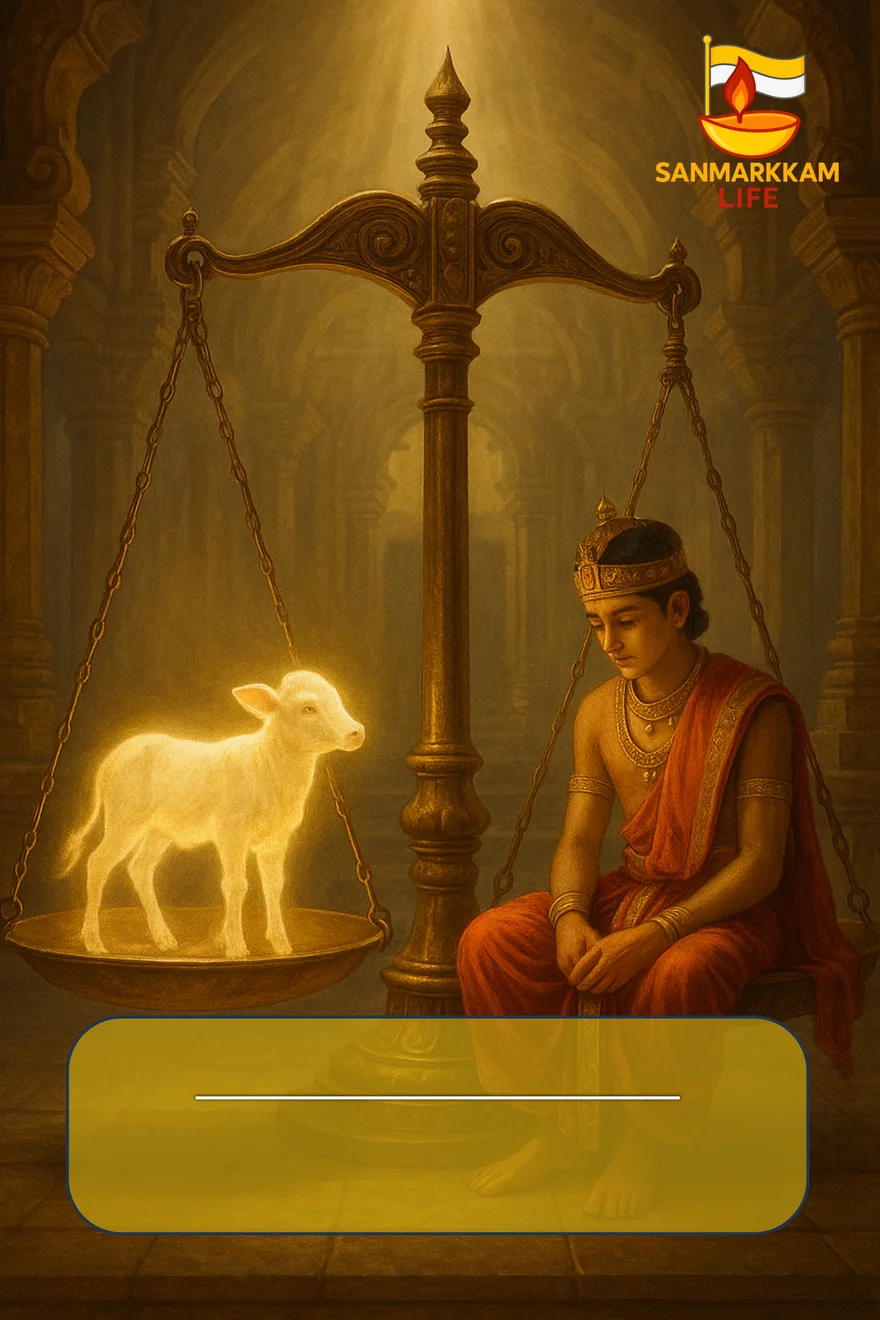
About the Manu Needhi Cholan story
Manu Needhi Cholan (மனுநீதிச் சோழன்), the Chola king of Thiruvarur whose Bell of Justice could be rung by anyone wronged, is the king of Manu Murai Kanda Vasagam (மனுமுறை கண்ட வாசகம்), Vallalar’s Tamil prose telling of his story. When his only son’s chariot crushed a calf and its mother rang the bell, the king did not spare his own son. In this story Vallalar shows justice resting on compassion for every living being, Jeevakarunyam. Read The Justice of King Manu here free, in Tamil with English translation, or see all our free books and the other prose writings of Vallalar.
Long ago, in Thiruvarur in the Chola land, there ruled a king named Manu, so just that the tiger and the cow went down together to drink at one ford. At his palace gate hung the Bell of Justice, for anyone who had suffered a wrong to ring. This book is the story of that king, told in Tamil prose by Ramalinga Adigal, Vallalar.
His only son, the prince Veedhi Vidangan, rides out in his chariot to worship the Lord. A young calf runs under the wheel and is crushed. Its mother walks to the palace and rings the bell with her horn.
Then comes the heart of the book. The king does not ask whom to blame. He searches himself: “What sin have I committed?” Forty-four questions follow, each naming a way one life can wound another. Did I make the bellies of the poor burn? Did I set people to work and cut their wages? Did I shut a bird in a cage to flutter in distress? Did I eat flesh for its taste and build up my body? Did I fill in a pond that held drinking water? Read slowly, the list is a mirror held up to every reader.
His ministers offer him easier ways: a rite of atonement, the law books, the custom of his forefathers, the lower rank of an animal. The king answers each of them from one truth. All lives are forms of God’s own power of consciousness. It is God who gives every life its body, and to tear any life from that body is murder, whoever does it. The cow’s grief is as great as a king’s. A calf’s life does not weigh less than a prince’s.
This is Jeevakarunyam, compassion for all living beings, which Vallalar set at the root of all spiritual life. The story does not teach punishment. It shows how fully he held every life to be equal. When the king refuses to rank one life above another, grace answers: Lord Thyagaraja appears, and the calf, the prince and the faithful minister Kalavallabhan rise as if from sleep. Justice that sees every life as one is met by Arut Perum Jothi, the Vast Grace Light, which gives life back.
This book gives the Tamil text, checked against the printed editions, with a translation. Each chapter follows one paragraph of the Tamil, and the nine parts follow the turns of the story.
Part II · The Kingdom and the King · 3 chapters
Part III · The Birth of the Prince · 7 chapters
Part IV · The Procession and the Calf · 9 chapters
Part V · The Bell of Justice · 5 chapters
Part VI · The King’s Reckoning · 4 chapters
Part VII · The Council of Justice · 13 chapters
Part VIII · The Sacrifice · 14 chapters
Part IX · Grace · 6 chapters
Glossary · 106 terms
Read it. Keep it. Share it.
This text is free for everyone: read online, download, print, translate and share. No permission needed, no fee, ever.
Receive new publications and teachings as they are released.
Listen to this text
The translation, read aloud, with the introduction (about 143 minutes). The Tamil is in the reader below and in the book.
Free for everyone. No account needed.
Read Online
This is a living translation — your suggestions matter
See a passage that could be clearer, more faithful to the Tamil, or better phrased? Select any text in the reader and suggest a revision. You can also read and vote on suggestions left by others.
- 1 Select any passage
- 2 Type your suggestion
- 3 Others read and vote
Invocation
Chapters 1–2
Invocation
காப்பு
நேரிசை வெண்பா
அன்ன வயல்சூழ் அணியாரூர் வாழ்மனுவாம்
மன்னன் முறைகண்ட வாசகத்தைப் – பன்னுதற்கு
நேய மிகத்தான் நினைப்போர்க் கருள்புழைக்கைத்
தூய முகத்தான் துணை.
Invocation
Nerisai Venba
To recount the story of the justice of King Manu, who lived in fair Thiruvarur, ringed by fields where swans abide, our support is the Elephant-faced Lord, pure of face, who gives His grace to those who think of Him with great love.
A Second Invocation
கங்கைச் சடையான்முக் கண்ணுடையான் அன்பர்தம்முள்
அங்கைக் கனிபோல் அமர்ந்திருந்தான் – அங்கை
முகத்தான் கணங்கட்கு முன்னின்றான் மூவாச்
சுகத்தான் பதமே துணை.
Our support is the feet of the Elephant-faced Lord, Lord of unaging bliss, who stands at the head of the hosts, and who dwells within the devotees of the Three-eyed One, whose matted hair bears the Ganga, as plainly as a fruit held in the palm of the hand.
The Kingdom and the King
Chapters 3–5
The Chola Land, Thiruvarur and King Manu
கடல்சூழ்ந்த உலகத்திலுள்ள எல்லாத் தேசங்களிலுஞ் சிறப்புடையதாய், காவிரி என்னுந் தெய்வத்தன்மையுள்ள நதியினால் எந்தக் காலத்திலுங் குறைவுபடாத நீர்வளப்ப முடையதாய் வாழைச் சோலை, பலாச்சோலை, மாஞ்சோலை, தென்னஞ்சோலை, கமுகஞ்சோலை, கருப்பஞ்சோலை முதலாகிய பலனுள்ள சோலைகள் அணியணியாக ஒன்றையொன்று சூழ்ந்தோங்க, அசோகு, குருக்கத்தி, சண்பகம், பாதிரி முதலான விருக்ஷங்களால் நெருங்கி, வண்டுகள் பாடுகின்ற மலர்ச்சோலைகளும், தாமரைத் தடாகங்களும், நீர் நிறைந்து அல்லி நீலம் முதலான புட்பங்கள் மலர்கின்ற ஓடைகளும், பொய்கைகளும், ஏரிகளும், குளங்களும் பலவிடங்களிலு முள்ளதாய், செந்நெல் முதலாகிய பயிர்கள் மாறாது முப்போகமும் விளைகின்ற குறைவற்ற விளைவையுடைய வயல்கள் நெருங்கி யுள்ளதாய், சிதம்பரம், பஞ்சநதம், மத்தியார்ச்சுனம், சம்புகேச்சுரம் முதலான திவ்வியக்ஷேத்திரங்கள் இடையிடையி லுள்ளதாய், இல்லற தருமத்தில் எள்ளளவும் பிழைபடாது செல்வத்திலும் கல்வியிலும் நிறைவுள்ள குடிகளுக்கிடமானதாய், பல வளப்பங்களுங் கொண்டு பூமிதேவிக்கு முகம்போல விளங்குகின்ற சோழதேசத்தில்; பாதாளலோகத்தைப் பார்த்திருக்கின்ற ஆழமுள்ள அகழியினாற் சூழப்பட்டு, இந்திரலோகத்தை எட்டிப்பார்க்கின்ற உன்னதமுள்ள கோபுரங்களையுடைய மதிலும், உய்யானம் நந்தவனம் பூஞ்சோலை முதலானவைகளும்,தெய்வதீர்த்தம், பிரமதீர்த்தம், வசந்தவோடை, செங்குவளையோடை முதலான நீர்நிலைகளு முள்ளதாய், தேர்நிலைகள், யானைக் கூடங்கள், குதிரைப்பந்திகள், சேனையிடங்கள், ஆஸ்தான மண்டபம், அரசமண்டபம், விசித்திரமண்டபம், விநோதமண்டபம், நியாயமண்டபம், நிருத்தமண்டபம், கல்விமண்டபம், கணக்கறிமண்டபம், பாடல்மண்டபம், பரிசனமண்டபம், சித்திரமண்டபம், தேவாசிரியமண்டபம், சித்திரத்தெற்றி, சிலம்பக்கூடம், ஆயுதச்சாலை, அமுதசாலை, அறச்சாலைகளும் உடையதாய், ரத்ன பீடிகைகளும், கனக மாளிகைகளும், பளிங்கு மாடங்களும், மணிப்பந்தல்களும், மகரதோரணங்களும், மங்கல கோஷங்களுமுள்ள கடைவீதி, கணிகையர்வீதி, சூத்திரர்வீதி, வைசியர்வீதி, அரசர்வீதி, அந்தணர்வீதி, ஆதிசைவர்வீதி, சைவர்வீதி, வைதிகர்வீதி, தபோதனரிருக்கை, சைவமுனிவர்மடம், உட்சமயத்தார் உறையுள் முதலான வளப்பங்களை உடையதாய், தியாகராஜப்பெருமான் எழுந்தருளிய கமலாலயம் என்னும் திருக்கோயிலை உள்ளே உடையதாய், சோழராஜர்கள் பரம்பரையாக அரசாட்சி செய்வதற்கு உரிய ராஜதானியாய், நிலமகள் திருமுகத்திலிட்ட திலகம் போல் விளங்கிய திருவாரூர் என்கிற நகரத்தில்; மூன்று சுடர்களிலும் முதற்சுடராகிய மேன்மையடைந்த சூரியகுலத்திற் பிறந்து அரசாட்சி செய்துவந்த சோழராஜர்களில் சிறந்தவராய், அறுபத்து நான்கு கலைகளிலும் வல்லவராய், உயிருக்கு உறுதியைத் தருகின்ற நல்ல கேள்விகளை யுடையவராய், எல்லா உயிர்களுக்கும் இதஞ்செய்கின்றவராய், வேதமோதுதலும், யாகஞ்செய்தலும், இரப்பவர்க்கீதலும், பிரஜைகளைக் காத்தலும், ஆயுதவித்தையில் பழகுதலும், பகைவரை அழித்தலும் என்னும் ஆறு தொழில்களும், வீரமுள்ள சேனைகளும், செல்வமுள்ள குடிகளும், மாறாத பொருள்களும், மதிநுட்பமுள்ள மந்திரியும், அன்புள்ள நட்பும், பகைவரால் அழிக்கப்படாத கோட்டையும் உடையவராய், வழக்கை அறிவிப்பவரையும் தங்களுக்குள்ள குறையைச் சொல்லிக்கொள்பவரையும் இலேசிலே தமது சமுகத்துக்கு அழைப்பித்து அந்த வழக்கைத் தீர்த்தும் அக்குறையை முடித்துங் கொடுப்பவராய், பாலொடு பழஞ்சேர்ந்தாற்போல முகமலர்ச்சியோடு இனியவசனஞ் சொல்லுகின்றவராய், பின்வருவதை முன்னே அறிந்துகொள்வதும் உறவினர், அயலார், சினேகர், பகைவர், இழிந்தோர், உயர்ந்தோர் முதலான யாவரிடத்தும் காலவேற்றுமையாலும், குணவேற்றுமையாலும் உண்டாகின்ற நன்மை தீமைகளை உள்ளபடி அறிந்து கொள்வதுமாகிய விவேகமுள்ளவராய், அகங்காரம் காமம் கோபம், லோபம் மோகம் பொறாமை வஞ்சகம் டம்பம் வீண் செய்கை முதலான குற்றங்களைத் தினையளவுங் கனவிலும் காணாதவராய், துர்க்குணங்களையுடைய சிறியோர்களைச் சேர்த்துக் கொள்வதை மறந்தாயினும் நினையாமல் நற்குணங்களில் நிறைந்து செய்வதற்கு அரிதான செய்கைகளையுஞ் செய்து முடிக்கவல்ல பெரியோர்களைச் சகாயமாகக் கொண்டு செய்யத்தக்க காரியங்களைத் தெரிந்து செய்தும், செய்யத்தகாத காரியங்களைத் தெரிந்து விடுத்தும், பகைவலியும் தன்வலியும் துணைவலியும் காலநிலைமையும், இடநிலைமையும் அறிந்து காரியங்களை நடத்தியும், அடுத்தவர்களது குணம் வல்லமை ஊக்கம் முதலான தன்மைகளை ஆராய்ந்து தெளிந்து அவரவர் தரங்களுக்குத் தக்க உத்தியோகங்களை அவரவர்க்குக் கொடுத்தும், பழமைபாராட்டியும், சுற்றந்தழுவியும், கண்ணோட்டம் வைத்தும், சாதியியற்கை, ஆசிரமவியற்கை, சமயவியற்கை, தேசவியற்கை, காலவியற்கை, முதலான உலகியற்கைகளை அறிந்து அவ்வவற்றிற்குத் தக்கபடி ஆராய்ந்து செய்தும் நல்லொழுக்கத்துடன் நடப்பவராய், குடிகளுக்கு அணுவளவு துன்பம் நேரிடினும் அதை மலையளவாக எண்ணித் தமக்கு வந்ததுபோல் இரக்கங்கொண்டு மனமுருகுவதனால் தாயை யொத்தவராய், அத் துன்பத்தைவிட்டு இன்பத்தை அடையத்தக்க நல்வழியை அறியும்படி செய்விப்பதனால் தந்தையை யொத்தவராய், அவர்களுக்கு அந்த நல்வழியைப் போதித்து அதிலே நடத்துகின்றபடியால் குருவை யொத்தவராய், அந்தக் குடிகளுக்கு இகபர சுகத்தைக் கொடுப்பதற்கு முன்னின்று அது பற்றி முயற்சி செய்யும்போது வரும் இடையூறுகளை நீக்குகின்றபடியாலும் அந்த ஒழுக்க வழியிலிருந்து தவறினால் அந்தக் குற்றத்துக்குத் தக்க தண்டனை விதித்து அவ்வழியில் பின்னும் நடத்துகின்ற படியாலும் தெய்வத்தை யொத்தவராய், குடிகளுக்கு ஆபத்து நேரிடும்போது கட்டியவஸ்திரம் அவிழ்ந்தவன் கைபோல் உடனே அந்த ஆபத்திலிருந்து நீங்கும்படி கைகொடுப்பதினால் சினேகனை யொத்தவராய், நல்லகாரியமிது கெட்ட காரியமிது என்று காட்டுகிறபடியால் கண்போன்றவராய், குடிகளுக்கு அச்சம் அவலம் முதலானவை நேரிடாமல் காத்து வருதலால் உயிர் போன்றவராய், குடிகள் தம்மை நினைக்குந்தோறும் ‘இப்படிப்பட்ட நற்குண நற் செய்கைகளையுடைய புண்ணியமூர்த்தியை அரசனாகப் பெற்ற நமக்குக் குறை யொன்றும் இல்லை’ என்று களிக்கின்றபடியால் பொன்புதையலை யொத்தவராய், கைம்மாறு வேண்டாது கொடுத்தலால் மேகத்தை யொத்தவராய், அறிவே ஆயிரங் கண்களாகவும் கைகளே கற்பகமாகவும் கண்களே காமதேனுவாகவும் திருமுகமே சிந்தாமணியாகவும் மனோதிடமே வச்சிராயுதமாகவுங் கொண்டபடியால் இந்திரனை யொத்தவராய், சிங்காதனமே செந்தாமரையாகவும் அறம் பொருள் இன்பம் வீடென்னும் நான்கு பொருளும் அடைதற்குரிய நான்கு மார்க்கமே நான்கு முகமாகவுங்கொண்டு அந்தந்த மார்க்கங்களில் அந்தந்தப் பொருள்களை விருத்தி பண்ணுகிறபடியால் பிரமனை யொத்தவராய், ஆக்கினாசக்கரமே சக்கராயுதமாகவும் செங்கோலே திருமகளாகவும் சிறந்த பெரும்புகழே திருப்பாற்கடலாகவும் யுக்தமல்லாத காரியங்களை யொழிந்திருப்பதே யோகநித்திரை யாகவுங் கொண்டு மண்ணுலகிலுள்ள உயிர்களைக் காத்து வானுலகிலுள்ள தேவர்களுக்கு யாகங்களால் அமுது கொடுத்து வருகின்றபடியால் திருமாலை யொத்தவராய், சோர்வில்லாமை தூய்மை வாய்மை என்னும் மூன்றுமே மூன்று கண்களாகவும் துணிவுடைமையே சூலமாகவுங் கொண்டு பாவங்களை யெல்லாம் நிக்கிரகஞ் செய்து வருகின்றபடியால் உருத்திர மூர்த்தியை யொத்தவராய், வாட்டத்தை நீக்கி மகிழ்ச்சி செய்கின்ற அருளுள்ள படியால் அமுதத்தை யொத்தவராய், சிவபக்தியில் மிகுந்தவராய், பொறுமையில் பூமியை யொத்தவராய், தருமமே உருவாகக் கொண்டு நடுநிலையிலிருந்து மனுநீதி தவறாது விளங்கிய மனுச்சோழர் என்னும் பெயரையுடைய சக்கரவர்த்தியானவர், கலிங்கர் குலிங்கர் வங்கர் கொங்கர் அச்சியர் கொச்சியர் தெங்கணர் கொங்கணர் தெலுங்கர் முதலான தேசத்தரசர்க ளெல்லாம் திறைகட்டி வணங்க, உலக முழுவதையும் ஒருகுடை நிழலில் வைத்துச் செங்கோல் செலுத்தி அரசாட்சி செய்யுங்காலத்தில்:
In the sea-girt world there is a land finer than every other: the Chola kingdom. The Kaveri, a river divine in nature, gives it water in plenty that fails at no season. Fruitful groves of plantain, jackfruit, mango, coconut, areca palm and sugarcane rise there row upon row, each girdling the next. In many places it has flower gardens crowded with ashoka, kurukkathi, champak and pathiri trees, where the bees sing; lotus tanks; and brimming streams, pools, lakes and ponds where white water lilies, blue water lilies and other flowers bloom. It is close-set with fields of unfailing yield, where red paddy and other crops ripen without fail in all three harvests of the year. Here and there in it stand holy shrines such as Chidambaram, Panchanadam, Madhyarjunam and Jambukeswaram. It is the home of a people full in wealth and in learning, who never fall short by so much as a sesame seed in the duties of household life. With all its riches, the Chola kingdom shines like the face of the Earth Goddess.
In that kingdom stood the city of Thiruvarur. It was ringed by a moat so deep that it gazed down into the underworld, and by walls whose towers rose so high that they peered into the heaven of Indra. It had pleasure parks, temple flower gardens and flower groves, and waters such as the Deiva Theertham, the Brahma Theertham, the Vasantha stream and the Red Lily stream. It had chariot stands, elephant stalls, horse stables and barracks; the audience hall, the royal hall, the hall of wonders, the hall of pastimes, the hall of justice, the dance hall, the hall of learning, the hall of accounts, the hall of song, the hall of attendants, the painted hall and the Devasiriya hall; a painted terrace, a hall for staff-fighting, an armory, a feeding hall and houses of charity. It had streets adorned with jeweled platforms, golden mansions, crystal terraces, gem-hung pavilions, arches crowned with the makara, and the sound of auspicious music: the bazaar street, the street of the courtesans, the street of the Sudras, the street of the Vaisyas, the street of the kings, the street of the Brahmins, the street of the Adi Saivas, the street of the Saivas and the street of the Vaidikas, the dwellings of the ascetics, the monasteries of the Saiva sages, and the houses of those of the inner faiths. Within it stood the holy temple called Kamalalayam, where Lord Thyagaraja abides. It was the royal capital from which the Chola kings ruled, generation after generation. Thiruvarur shone like the tilaka on the holy face of the Earth Maiden.
In that city there reigned an emperor named Manu Chola. He was the finest of the Chola kings, who were born of the exalted race of the Sun, the first of the three lights, and ruled the land. He was master of the sixty-four arts. He had heard much good teaching, the kind that gives the soul its lasting good. He did good to all living beings. He had the six duties of a king: reciting the Vedas, performing sacrifices, giving to those who ask, protecting his subjects, training in arms, and destroying enemies. He had valiant armies, prosperous subjects, unfailing wealth, a minister of subtle wisdom, loving friends, and a fortress no enemy could destroy. When anyone came to lay a case before him, or to tell of a grievance, he readily called them into his presence, settled the case and put the grievance right. He spoke sweet words with a glad face, as sweet as milk mixed with fruit. He had the discernment to know beforehand what was to come, and to know truly the good and the ill that arise from everyone, kin, strangers, friends, enemies, the low and the high, through differences of time and of temperament. Egotism, lust, anger, greed, delusion, envy, deceit, vanity, idle deeds: of such faults he knew not so much as a millet seed, even in a dream. Never, even in forgetfulness, did he think of keeping company with petty men of evil character. He took as his helpers great men, full of good qualities and able to carry through even deeds that are hard to do. He discerned what ought to be done and did it, and discerned what ought not to be done and left it alone. He conducted affairs knowing the enemy’s strength, his own strength and his allies’ strength, the state of the time and the state of the place. He examined the character, ability, zeal and other qualities of those who came to him, and when he had judged them clearly, gave each a post fitting his worth. He honored old ties, embraced his kin and looked on all with kindly regard. He knew the ways of the world, the ways of caste, of the stages of life, of religion, of country and of the times, and acted after weighing what each required. So he walked in good conduct.
If even an atom of suffering befell his people, he counted it as great as a mountain, felt pity as if it had befallen him, and his heart melted: so he was like a mother. He made them know the good way by which they might leave that suffering and reach happiness: so he was like a father. He taught them that good way and led them in it: so he was like a guru. He went before them to give them happiness in this world and the next, and removed the obstacles that rose as they strove for it; and if they strayed from that way of right conduct, he laid down a penalty fitting the fault and set them on that way again: so he was like God. When danger came upon his people, he gave them his hand at once to free them from it, as swiftly as a man’s hand flies to his garment when it slips: so he was like a friend. He showed them, “This is a good deed; this is a bad deed”: so he was like their eyes. He guarded them so that fear, grief and the like never befell them: so he was like their life. Whenever his people thought of him, they rejoiced: “We who have as our king so holy a one, of such good qualities and good deeds, lack nothing at all.” So he was like a treasure of buried gold. He gave without wanting anything in return: so he was like the rain cloud. He had his knowledge for a thousand eyes, his hands for the wish-granting tree, his eyes for the wish-granting cow, his face for the wish-granting gem, and his firmness of mind for the thunderbolt: so he was like Indra. He had his throne for the red lotus, and for his four faces the four paths to the four aims of life, virtue, wealth, pleasure and liberation, and on each path he made its aim flourish: so he was like Brahma. He had the wheel of his command for the discus, the scepter of justice for the goddess of Fortune, his great fame for the Ocean of Milk, and his keeping away from every unfitting deed for the sleep of yoga; he protected the living beings of the earth and fed the gods of heaven with nectar through sacrifices: so he was like Vishnu. He had tirelessness, purity and truthfulness for three eyes and resolve for the trident, and with them he struck down every sin: so he was like Rudra. His grace took away weariness and gave joy: so he was like nectar. He was great in devotion to Siva. In patience he was like the earth. He was dharma itself in bodily form; he stood impartial and never swerved from the justice of Manu.
This emperor, Manu Chola, held the whole world in the shade of a single royal umbrella and ruled it with the scepter of justice, while the kings of the Kalingas, Kulingas, Vangas, Kongas, Achchiyas, Kochchiyas, Tenkanas, Konkanas, Telugus and other lands all paid him tribute and bowed before him.
Peace Among All Living Beings
உலகமெங்கும் புலியும்பசுவும் கூடிப்போய் ஒரு துறையில் நீர்குடித் துலாவியும், சிங்கமும் யானையும் சேர்ந்து திரிந்தும், பருந்துங் கிளியும் பழகி மகிழ்ந்தும், கூகையுங் காகமும் கூடிப் பறந்தும், பூனையும் எலியும் பொருந்தி யிருந்தும், இந்தப்படி மற்றுமுள்ள விரோதமாகிய உயிர்களும் ஒன்றுக் கொன்று விரோதமில்லாமல் சினேகஞ்செய்து வாழ்ந்திருக்கவும், மரங்கள் புல்லுகள் முதலான நடையில்லாத உயிர்களும் வாடுதல் உலர்தல் உதிர்தல் வெட்டுண்ணல் முதலான குறைகளில்லாமல் வளர்ந்தோங்கி வாழ்ந்திருக்கவும், பெருங்காற்று பெருவெள்ளம் பெருமழை தீப்பற்றல் இடிவிழுதல் முதலான உற்பாதங்கள் சிறிதுமில்லாமல் சுகுணமான காற்றும் மிதமான வெள்ளமும் பருவமழையும் தவறா மல் உண்டாயிருக்கவும், பசிநோய் உடம்புநோய் அவமிருத்து உயிரச்சம் முதலான துக்கங்களொன்றும் சேராமல் சுகமே சூழ்ந்திருக்கவும், பிரம க்ஷத்திரிய வைசிய சூத்திரர் என்கின்ற ஜாதியாரும், பிரமசாரி கிரகஸ்தன் வானப் பிரஸ்தன் சந்நியாசி என்கின்ற ஆசிரமத்தாரும், சைவர் வைணவர் வைதிகர் என்கின்ற சமயத்தாரும், தங்கள் தங்களுக்குரிய ஆசாரங்களில் குறைவுபடாமல் வாழ்ந்திருக்கவும், அன்னதானம் சொர்ணதானம் கோதானம் பூதானம் முதலான தானங்களும் தேவாலயங் கட்டுவித்தல் திருக்குளமெடுத்தல் செழுஞ்சோலை வைத்தல் தண்ணீர்ப்பந்தல் வைத்தல் சத்திரங் கட்டுவித்தல் முதலான தருமங்களும், சாந்திராயண முதலான விரதங்களும், தியானஞ்செய்தல் ஜெபஞ்செய்தல் முதலான தவங்களும் தவறுபடாமல் ஓங்கியிருக்கவும், தியாகேசப் பெருமானுக்கும் மற்றுமுள்ள தெய்வங்களுக்கும் திரிகால பூசைகளும் திருப்பணிகளும் திருவிழா முதலான சிறப்புகளும் குறைவில்லாமல் நடக்கவும் அவரது ஆக்கினையே செய்வித்து வந்தது.
In that time it was his command alone that brought all this to pass. Throughout the world the tiger and the cow went together to drink at one ford and roamed about; the lion and the elephant wandered side by side; the kite and the parrot kept company and were glad; the owl and the crow flew together; the cat and the mouse lived in peace. In the same way all the other creatures that are enemies by nature lived as friends, with no enmity between them. The lives that do not move, such as trees and grasses, grew tall and flourished, free from withering, drying, shedding and being cut down. Of calamities such as great gales, great floods, great downpours, fires and lightning strikes there were none at all; gentle winds, moderate floods and seasonal rains came without fail. No sorrow such as the sickness of hunger, sickness of the body, untimely death or fear for one’s life came near; happiness alone surrounded all. Those of the castes called Brahmin, Kshatriya, Vaisya and Sudra, those of the stages of life called student, householder, forest-dweller and renunciant, and those of the religions called Saiva, Vaishnava and Vaidika all lived without falling short in the observances proper to each. Gifts of food, gold, cows, land and the like; works of charity such as building temples, digging holy tanks, planting rich groves, setting up water booths and building rest-houses; vows such as the Chandrayana; and austerities such as meditation and the repetition of sacred words: all flourished without fail. For Lord Thyagaraja and the other deities, worship at the three times of day, holy services, festivals and every other observance went on without lack.
Where Only Flowers Were Plucked
அவர் ஆளுகைக்குட்பட்ட உலகங்களில், பூவே பறிபடுவது, புனலே சிறைபடுவது, காற்றே அலைபடுவது, கல்லே கடின முடையது, மாவே வடுப்படுவது, வாழையே குலைபடுவது, வண்டே மதுவுண்பது, பந்தே அடிபடுவது, பரியே கட்டுண்பது, நெல்லே குத்துண்பது, நெற்கதிரே போர்படுவது, வயலே வளைபடுவது, மாதரிடையே குறைபடுவது, தரித்திரமே தரித்திரப்படுவது, துக்கமே துக்கப்படுவது பொய்யே பொய்படுவது. இவையல்லாமல், பொருள் பறிக்கப்படுவோரும், சிறைச்சாலையில் வைக்கப்படுவோரும், பகைவரால் அலைக்கப்படுவோரும், கடின மனமுள்ளவர்களும், வடுப்படுவோரும், குலைபடுவோரும், மதுவுண்போரும், அடிபடுவோரும், கட்டுண்போரும், குத்துண்போரும், போரிற்படுவோரும், வளைபடுவோரும், குறைபடுவோரும், தரித்திரப்படுவோரும், துக்கப்படுவோரும், பொய்படுவோரும் வேறேயில்லாமல் மேன்மையே விளங்கியிருந்தது.
In the lands under his rule, only flowers were plucked; only water was held captive; only the wind was tossed about; only stone was hard; only the young mango bore scars; only the plantain was weighed down, by its bunch; only bees drank intoxicating nectar; only the ball was beaten; only the horse was tethered; only paddy was pounded; only the sheaves of paddy were piled in stacks; only the fields were hemmed in; only the waists of women were found wanting; only poverty was impoverished; only sorrow grieved; only falsehood was proved false. Apart from these, there was no one plucked of their wealth, no one held captive in prison, no one tossed about by enemies, no one hard of heart, no one scarred, no one weighed down, no one drunk with liquor, no one beaten, no one tethered, no one pounded, no one fallen in war, no one hemmed in, no one in want, no one in poverty, no one in sorrow, no one proved false. Greatness alone shone everywhere.
The Birth of the Prince
Chapters 6–12
The King Prays for a Son
இந்தப் பிரகாரமாக மந்திரி முதலான உறுதிச் சுற்றங்களுடன் உலகாண்டிருந்த அம் மனுச்சோழரென்னும் சக்கரவர்த்தியானவர் புத்திரப் பேறில்லாமல் மனம் வருந்தி அதுபற்றியும் அறுபது வருஷ காலமாக அனேக தானங்களும் தருமங்களும் யாகங்களும் விரதங்களுஞ் செய்தும் புத்திரோற்பத்தி இல்லாமையால், “புத்திரச் செல்வம் பெறாதவர் பொருட்செல்வம் பெற்றும் பயனில்லையே; புத்திரன்போல் நமக்கு இந்த அரசச் செல்வம் இம்மை மறுமை இன்பங்களைக் கொடாதே; சந்ததியில்லாவிட்டால் பிற்காலத்தில் கண்களில்லாத முகமும் சூரியனில்லாத பகலும்போல, அரசனில்லாது இவ்வுலகந் தலைதடுமாறிப்போமே; ஆதலால் இனிப் புத்திரனைப் பெற்றுக் கொள்வதற்குத் தக்க முயற்சி நமது ஆண்டவனாகிய தியாகராஜப் பெருமானை வழிபடுவதே யல்லது வே றொன்றுமில்லை; ஆனால் மோக்ஷப் பேறு குறித்து நிஷ்காமியமாக இத்தனை நாளும் வழிபட்டு வந்த நாம் இப்போது புத்திரப்பேறு குறித்துக் காமியமாக நமதாண்டவனை வழிபடுவது தகுதியல்ல வாயினும், ‘தீராக் குறைக்குத் தெய்வமே முடிவு’ என்கின்றபடி எவ்விதத்திலும் தீராத புத்திரனில்லாக் குறையைச் சிவ பெருமானது திருவருளாலேதான் தீர்த்துக்கொள்ள வேண்டும்” என்று ஆலோசித்துத் துணிவுகொண்டு, தமது மனைவியாருடன் ஆகமவிதிப்படி கமலாலயம் என்னும் புண்ணிய தீர்த்தத்தில் ஸ்நானஞ்செய்து பயபக்தியுடன் பூங்கோயிலைப் பஞ்சாவரண வலமுஞ் செய்து உட்புகுந்து, தியாகராஜப் பெருமானது சந்நிதிக்கெதிரே அஷ்டாங்க பஞ்சாங்கமாக நமஸ்கரித்து, வணங்கிய முடியும், மலர்ந்த முகமும், நீர் பொழிகின்ற கண்ணும், துதிக்கின்ற நாவும், கூப்புகின்ற கையும், புளகமெழும்புகின்ற உடம்புங் கொண்டு நின்று, ‘புத்திரப் பேறில்லாத குறையைத் தீர்த்தருள வேண்டும் என்று விண்ணப்பித்துப்பலவிதமாகத் தோத்திரஞ்செய்து தமது அரண்மனைக்குச் சென்று இந்தப் பிரகாரமே நாள்தோறும் போய் வழிபட்டுப் பிரார்த்தித்துக் கொண்டே வந்தார்.
Thus the Emperor Manu Chola ruled the world, with his minister and the rest of his steadfast circle around him. But he had no son, and he grieved at heart. To that end he had performed many gifts, works of charity, sacrifices and vows for sixty years, and still no son was born to him. So he reflected: “For one who has not gained the wealth of a son, there is no use in gaining the wealth of riches. This royal wealth will not give us the joys of this life and the next as a son would. If we leave no heir, then in time to come this world, left without a king, will be thrown into confusion, like a face without eyes or a day without the sun. So now the only fitting means to obtain a son is to worship our Lord, Lord Thyagaraja; there is no other. True, all these days we have worshipped our Lord without desire, for the sake of liberation, and it is not fitting that we should now worship Him with desire, for the sake of a son. Yet, as the saying goes, ‘For a want that cannot be ended, God is the end.’ This want of a son, which can be ended in no other way, must be ended by the grace of Lord Siva alone.”
Having thought this through, he made his resolve. With his queen he bathed, as the Agamas prescribe, in the holy tank called Kamalalayam. With reverent awe he walked around the Poongoyil, the Flower Temple, through its five enclosures, and went in. Before the shrine of Lord Thyagaraja he made the full prostration, with eight limbs and with five touching the ground. Then he stood with bowed head, glowing face, streaming eyes, a tongue that praised, hands joined in worship, and a body thrilling with rapture, and he prayed, “Graciously end my want of a son.” He praised the Lord in many ways and returned to his palace. In this same way he went every day, worshipping and praying.
The Birth of the Prince
அவர் செய்யும் வழிபாட்டுக்கும் வந்தனைக்கும் இரங்கித் தியாகராஜப் பெருமான் புத்திரப் பேறுண்டாகும்படி அனுக்கிரகஞ்செய்ய, அந்த அனுக்கிரகத்தால் மகாராஜனுக்கு மகிழ்ச்சியுண்டாகும்படி வலம்புரிச் சங்கு விலையுயர்ந்த வெண்முத்தினைக் கருப்பங்கொண்டதுபோலத் தேவியார் தமது திருவயிற்றில் கருப்பங்கொண்டு, பத்து மாதமுஞ் சென்று நல்ல சுபதினத்தில், தர்மதேவதை தாண்டவமாடவும் வானகத்தார் மலர் சொரிந்து வாழ்த்தவும் வையகத்தார் மனங் களிக்கவும், அதிதியாரானவர் ஆதித்தனைப் பெற்றதுபோலவும் மல்லிகைக்கொடி மணமுள்ள மலரைப் பூத்ததுபோலவும், எவ்வெவர்களும் அதிசயிக்கத் தக்க சர்வ லட்சணங்களும் நிறைந்த வடிவுள்ள ஒரு புத்திரனைப் பெற்றார்.
Moved by his worship and homage, Lord Thyagaraja graciously granted that a son should be born. By that grace, to the great king’s joy, the queen conceived in her holy womb, as a right-spiraled conch conceives a precious white pearl. Ten months passed. On a good and auspicious day, while the deity of Dharma danced, the dwellers of heaven showered flowers and blessed, and the people of the earth rejoiced at heart, she gave birth to a son, as Aditi gave birth to the Sun, as a jasmine vine puts forth a fragrant flower. His form was full of every auspicious mark, so that all who saw him marveled.
The King’s Joy
புத்திரன் பிறந்த சந்தோஷமான சமாசாரத்தைப் பாங்கிகள் அதிசீக்கிரமாக வந்து தம்மை மறந்த மனக் களிப்புள்ளவர்களாக எதிர் நின்று “ஆண்டவனே! எங்கள் தலைவியார் திருவயிற்றிலிருந்து தேவரீர் புகழே வடிவாகவும் புண்ணியமே உயிராகவும் கொண்டு பொன்னுலகத்தைக் காக்கின்ற புரந்தரனும் நாணமடையப் பூவுலகத்தைக் காக்கத் தக்க வல்லமையுள்ள புத்திர சிகாமணி உதயஞ்செய்தது” என்று விண்ணப்பஞ்செய்யக் கேட்ட மனுச்சக்கரவர்த்தியானவர், தூரதேசத்திற் போயிருந்த கப்பல் துறைமுகத்தில் வந்ததென்று சொல்லக்கேட்ட வர்த்தகனைப் போலவும், கூடிப் பிரிந்த மங்கையின் குரலோசை கேட்ட நாயகனைப்போலவும், தாகங்கொண்டு தவிக்குங் காலத்தில் சமீபத்தே தண்ணீருண்டென்று சொல்லக்கேட்ட தேசசஞ்சாரியைப் போலவும், மனங்குளிர்ந்து உடல் பூரித்து அளவிடப்படாத களிப்புடையவராய், அந்தப் பாங்கிகளுக்கு விலையுயர்ந்த ஆடையாபரணங்களை வெறுப்படையும்படி பரிசு கொடுத்து, தாம் நீராடி நியமங்கள் முடித்து, வேதவித்துக்களாகிய பிராமணர்களுக்கு விதைதானம் சொர்ணதானம் கன்னிகாதானம் அசுவதானம் கஜதானம் பூதானம் கோதானம் முதலான தானங்களைக் கொடுத்து, புத்திரன் பிறந்த நாள்தொட்டுப் பன்னிரண்டு வருஷமட்டுங் குடிகள் வரிகொடாமல் சர்வ மானியமாகத்தாமே அனுபவித்துக்கொள்ளவும், திறை கட்டி வரும் அரசர்கள் ஏழு வருஷமட்டும் அந்தத் திறைகளைக் கட்டாமல் தாங்களே எடுத்துக்கொள்ளவும், சிறைச்சாலையிலிருந்த சத்துருக்களை விட்டுவிடவும், பொக்கிஷசாலையைத் திறந்துவிட்டு நகரிலும் நாட்டிலும் உள்ளோர் யாவரும் தங்கள் தங்களுக்கு வேண்டிய மட்டில் ஏழு நாள் வரையில் எடுத்துக் கொண்டு போகவும், தேவாலயங்களிலெல்லாம் புதிதாகத் திருப்பணிகளும் திரு விழா முதலான சிறப்புகளும் செய்விக்கவும் கட்டளையிட்டு, பின்பு தாம் முன் தேடிவைத்த திரவியத்தைத் தெரியக் கண்டு கொண்டவனைப்போலத் திரை மறைவிலிருந்த அச்செல்வக் குழந்தையை வெளிப்படக்கண்டு மனமகிழ்ச்சியடைந்து இளஞ் சூரியோதயம்போல இந்தப் புத்திரன் இவ்விடத்தில் உதயஞ்செய்தது சிவானுக்கிரகமேயல்லது வேறல்லவென்று வியப்படைந்து, சோதிட சாஸ்திரங்களில் வல்லமையுள்ள பெரியோர்களைக் கொண்டு ஒப்பற்ற செல்வம் கல்வி வெற்றி முதலிய அதிர்ஷ்டங்கள் நடனஞ் செய்கின்ற சாதக பலனைக் குறித்து, தியாகராஜப் பெருமானது திருவருளால் வந்ததுபற்றி அக்கடவுளின் திருப்பெயர் கொண்டு வீதிவிடங்கள் என்னும் நாமகரணமும் அன்னப்பிராசனம் சௌளம் முதலான சடங்குகளும் மிகுந்த விபவமாகவும் வேதயுக்தமாகவும் அது அது செய்யத்தக்க பருவங்களில் செய்வித்து, அந்தப் புதல்வனை வாச நீராட்டுவித்தும், இனிய உணவுகளை ஊட்டுவித்தும், பொன்னாலும் இரத்தினங்களாலுஞ் செய்த பூஷணங்களைப் பூட்டுவித்தும், மார்மேலும் தோள்மேலும் மடிமேலும் வைத்து வைத்து முத்தாடியும் திருந்தாத குதலைச் சொற்களைக் கேட்டு மகிழ்ந்தும், கற்பக விருக்ஷத்தின் கனியைக் கேட்கினும் அந்தக் கணமே தருவித்துக் கொடுத்தும், சிறிய விளையாடல்களைச் செய்யக் கண்டுகளித்தும், கற்புள்ளவள் கணவனை உபசரிப்பதுபோல உபசரித்தும், படிப்பில் ஆசையை வைத்தவன் பாடத்தைப் பாராட்டுவது போலப் பாராட்டியும், தன்னை உயர்ந்தவனாக்க நினைத்தவன் தருமத்தை வளர்ப்பதுபோல வளர்த்தும், முன் சிறுமையடைந்து பின் செல்வத்தைப் பெற்றவன் அச்செல்வத்தைப் பாதுகாப்பதுபோலப் பாதுகாத்தும், புத்திரசம்பத்தினால் வரும் பயனை அடைந்தவரா யிருந்தார்.
The queen’s maids came in the greatest haste with the happy news of the birth of a son. Beside themselves with joy, they stood before the king and announced: “Lord! From the holy womb of our mistress a crest-jewel of a son has dawned, with Your Majesty’s fame for his form and merit for his life, with power to guard the earth so well that even Indra, who guards the golden heaven, will be put to shame.”
When Emperor Manu heard this, he was like a merchant told that his ship, gone to a distant land, has come into port; like a lover who hears the voice of the woman he was united with and then parted from; like a traveler tormented with thirst who is told there is water close by. His heart was cooled, his body swelled, and his joy was beyond all measure. He gave those maids costly clothes and jewels as gifts until they had more than they could want. He bathed and completed his daily observances, and to the Brahmins learned in the Vedas he gave gifts of seed grain, gold, brides in marriage, horses, elephants, land, cows and more. Then he commanded: for twelve years from the day of his son’s birth, the people should pay no taxes but keep all they had, wholly free of levy; the kings who paid him tribute should keep that tribute for themselves for seven years; the enemies held in prison should be set free; the treasury should be thrown open, and for seven days all in the city and the country should take from it as much as each needed; and in every temple there should be new holy works, festivals and other celebrations.
After this, like a man who sees plainly before him the treasure he had gathered and laid away, he saw that precious child brought out from behind the screen, and rejoiced. He marveled that this son had risen here like the young sun at dawn, and that this was Siva’s grace and nothing else. Through elders skilled in astrology he had the child’s horoscope read, in which peerless wealth, learning, victory and every good fortune danced. Because the child had come by the holy grace of Lord Thyagaraja, he gave him that God’s holy name, Veedhi Vidangan. The naming, the first feeding with rice, the first cutting of the hair and the other rites he had performed in great splendor, as the Vedas prescribe, each at its proper age. He had his son bathed in scented water, fed with sweet foods and adorned with ornaments of gold and jewels. He set him on his chest, on his shoulders and on his lap, again and again, and kissed him, and delighted in his unformed baby talk. If the boy had asked even for the fruit of the wish-granting tree, he would have had it brought that very instant. He watched him at his little games with delight. He tended him as a chaste wife tends her husband; he cherished him as one who loves study cherishes his lessons; he raised him as one who longs to rise raises up dharma; he guarded him as one who was once poor and later gained wealth guards that wealth. So he enjoyed the fruit that the wealth of a son brings.
The Prince Grows in Learning and Virtue
இந்தப்படி இணையில்லாத செல்வப் பெருக்கத்தினால் வளர்க்க வாழையிளங் குருத்துப் போல வளர்ந்து வருகின்ற புத்திரனுக்கு, ஐந்தாம் வயதில் அட்சராப்பியாசஞ் செய்வித்து, ஏழாம் வயதில் சகல தேசத்தரசர்களுக்குந் தெரிவித்து, நகரை அலங்காரஞ் செய்வித்து பத்மராகம் கோமேதகம் வயிரம் வைடூரியம் முதலான இரத்தினகசிதமான கல்யாண மண்டபத்தில் வேத வேதாங்கங்களில் வல்லவரான பிராமணர்களும் சாபானுக்கிரக சாமர்த்தியமுள்ள தபோதனர்களும் ஆசீர்வதிக்கவும் மன்னர் மண்டலீகர் பட்டவர்த்தனர் மகுடவர்த்தனர் அமைச்சர் உறவினர் சினேகர் முதலானவர்கள் கண்டு களிக்கவும் சுமங்கலப் பெண்கள் சோபனம் பாடவும் பேரி, சங்கம், மிருதங்கம் முதலான மங்கல வாத்தியங்கள் முழங்கவும் நல்ல சுப முகூர்த்தத்தில் வேதவிதிப்பிரகாரம் உபநயன கல்யாணஞ் செய்வித்து, பலவகைத் தானங்களும் செய்து சகல வேதாகம சாஸ்திரங்களிலும் வல்லமையுள்ள ஆசாரியரைக் கொண்டு வித்தியாரம்பஞ் செய்வித்தார். சில நாள்களுக்குள்ளே வீதிவிடங்கனென்னும் அப்புத்திரனானவன் வேதங்கள் சாஸ்திரங்கள் புராணங்கள் ஸ்மிருதிகள் இதிகாசங்கள் முதலான கலைகளில் ஆசாரியனைப் பார்க்கிலும் எண்மடங்கு வல்லமையுள்ளவனாகி யானையேற்றம், குதிரையேற்றம், ரதாரோகணம், வில்வித்தை, வாள்வித்தை இந்திரஜாலம், மகேந்திரஜாலம் முதலான ஸமஸ்த வித்தைகளையுங் குறைவறக் கற்றுக்கொண்டு, ஆதிசேடனைப்போல் அறிவும், காமனைப்போல் கட்டழகும், ஆண்சிங்கம் போல் ஆண்மையும், மதயானைபோல் நடையும், மார்த்தாண்டன்போல் வாய்மையும், கற்பகவிருக்ஷம்போல் கொடையும் உடையவனாகி; சிவபக்தி, சீவகாருண்ணியம், பொறுமை, அன்பு, ஆசாரம், ஒழுக்கம் ஊக்கம், சாந்தம், சற்சனநேயம் முதலான நற்குணங்களுடன் உயிர்க்கு முடிவு நேரிடுமானாலும் உண்மையே பேசுவதும், உறுதியே சொல்லுவதும், இன்சொல்லே கூறுவதும், இதமே செய்வதும், பயனுள்ள காரியங்களையே பாராட்டுவதும், பிராமணர் தவத்தோர் முதலான பெரியோர்களைக் கண்டால் அன்போடும் அச்சத்தோடும் எதிர்கொண்டு தலையால் வணங்கி வாயால் வாழ்த்துவதுமாகிய நற்செய்கைகளைப் பெற்று மாதா பிதாக்களது மனக்குறிப்பறிந்து அவர் இச்சையின்வழி நடந்து மகிழும்படி செய்வித்து, இளமைப் பருவத்திற்றானே எல்லாம் அறிந்தவனாகி, கண்டோர் கொண்டாடவும் கேட்டோர் மனங் களிக்கவும், இளவரசுப் பட்டத்துக்குத் தகுந்த பருவத்துட னிருந்தான்.
Raised thus in matchless abundance, the son grew like the tender young shoot of a plantain. In his fifth year he was taught his letters. In his seventh year the king sent word to the kings of every land and had the city adorned. Then, in a festive hall set with rubies, jacinths, diamonds, cat’s-eyes and other gems, at a good and auspicious hour, as the Vedas prescribe, he held for him the festive rite of the sacred thread. Brahmins learned in the Vedas and the Vedangas, and ascetics with the power to curse and to bless, gave their blessings; kings, provincial rulers, titled kings and crowned kings, ministers, kinsfolk, friends and others looked on with joy; married women sang festive songs; and the great drum, the conch, the mridangam and other auspicious instruments sounded. He gave many kinds of gifts, and had the boy’s studies begun under a teacher who was master of all the Vedas, Agamas and shastras.
Within a few days the son, Veedhi Vidangan, became eight times more able than his teacher in the Vedas, the shastras, the Puranas, the Smritis, the Itihasas and the other branches of learning. He learned fully every skill: riding elephants, riding horses, driving chariots, archery, swordsmanship, and the arts of illusion called Indrajala and Mahendrajala. He had wisdom like Adisesha, beauty of form like Kama, manliness like a lion, the gait of an elephant in musth, truthfulness like the sun, and generosity like the wish-granting tree. He had good qualities: devotion to Siva, compassion for all living beings (Jeevakarunyam), patience, love, purity of observance, right conduct, zeal, calm, and friendship with the good. And he had good habits: even if it should cost him his life, he would speak only the truth, say only what is sound, use only sweet words, do only good, and value only useful works; and when he saw Brahmins, ascetics and other great ones, he would go out to meet them with love and reverent awe, bow his head to them and praise them with his lips. He knew his parents’ wishes, walked by them and gave them joy. While still young he came to know everything. Those who saw him praised him, those who heard of him rejoiced, and he reached the age fit to be made crown prince.
The Prince’s Wish
அப்படியிருந்த நாள்களில் ஒருநாள் அவ் வீதிவிடங்கனென்னும் இராஜபுத்திரன் தன் பருவத்துக்கொத்த இராஜகுமாரர்களும் மந்திரிகுமாரர்களும் சூழ்ந்துவர தன் பிதாவாகிய மனுச்சோழருடைய சமுகத்துக்கு வந்து பிதாவினது திருவடிகளுக்கு அஷ்டாங்க பஞ்சாங்கமாகத் தண்டனிட்டு எழுந்து தூசொதுக்கியும் உடம்பொடுக்கியும் கைகட்டியும் வாய்புதைத்தும் எதிரே நிற்க அப்போது மனுச்சக்கரவர்த்தியானவர் நெடுநாள் பிரிந்திருந்த கன்றினைக் கண்ட பசுவைப்போலவும் இடந் தெரியாதிருந்த புதையலை யெதிர்ப்படக் கண்டவனைப் போலவும் கண்கள் களிகூரக் கண்டு, உள்ளமும் உடலும் பூரித்துத் தமது இரண்டு கைகளாலும் தழுவி அணைத்தெடுத்து மடிமேல் வைத்து உச்சிமோந்து முதுகைத் தடவி “எனக்கு நெடுநாளாக விருந்த மனக்குறையைத் தவிர்த்து இம்மை மறுமைப் பயனைக் கொடுக்கும்படி பிறந்த அருமையாகிய அமுதத்தை யொத்த என் புத்திரனே! உன் மனதில் ஏதோவொரு எண்ணமுண்டானதாகத் தோன்றுகின்றது; அவ்வெண்ணம் இன்னதென்று வெளிப்படுத்த வேண்டும்” என்று கேட்க, அது கேட்ட வீதிவிடங்கன் “மூன்றுலகத்திலுங் கேடில்லாத கீர்த்தியை நாட்டிய பெருந்தன்மையுடைய தேவரீரைப் பிதாவாகப் பெற்ற அடியேனுக்கு எண்ணங் கொள்வதற்கு என்ன குறையிருக்கின்றது? நமது குலதெய்வமாகியும் இஷ்ட தெய்வமாகியும் கமலாலயத்தில் எழுந்தருளிய தியாகராஜப் பெருமானைத் தரிசித்துவர வேண்டுமென்னும் எண்ணம் ஒன்றுமாத்திரமுண்டு; இவ்வெண்ணம் இடையூறில்லாமல் நிறைவேறும்படி தேவரீர் திருவுள்ளங் கொள்ளவேண்டும்” என்று விண்ணப்பஞ் செய்தான்.
In those days, one day Prince Veedhi Vidangan came into the presence of his father, Manu Chola, with princes and ministers’ sons of his own age around him. He made the full prostration at his father’s holy feet, with eight limbs and with five touching the ground, then rose, gathered his garment, drew in his body, folded his hands, covered his mouth, and stood before him. Then Emperor Manu, like a cow that sees her calf after a long parting, like a man who comes face to face with a buried treasure whose place he never knew, gazed at him with eyes overflowing with joy. His heart and body swelled. He embraced him with both arms, lifted him onto his lap, kissed the crown of his head, stroked his back, and asked: “My son, precious as nectar, born to end the grief I carried so long and to give me the fruit of this life and the next! It seems some wish has arisen in your heart. Tell me what that wish is.”
Hearing this, Veedhi Vidangan made his request: “I have as my father Your Majesty, the great one who has planted unfailing glory in all three worlds. What lack could I have, to make me wish for anything? I have only one wish: to go and worship Lord Thyagaraja, our family God and our chosen God, who abides in Kamalalayam. May Your Majesty graciously consent, so that this wish may be fulfilled without hindrance.”
The King’s Consent
அது கேட்டு அரசனானவர் “சர்வ வல்லமையுள்ள சுயம்புவாகியும் கருணைக்கடலாகிய கடவுளாகியும் பிள்ளைக்கலி தீர்த்த பெருமானாகியும் விளங்கிய தியாகராஜப் பெருமானைச் சேவிப்பதற்குத் தடையுண்டோ? தனக்கிணையில்லாத தரும மூர்த்தியைத் தரிசிக்க வேண்டுமானால் தடுப்பவர் யார்? புண்ணியந் தேடப் புத்திரன் தொடங்கினால் தந்தை தடை செய்வானோ? நானே கற்பிக்கவேண்டிய நல்விஷயத்தை நீயே தெரிந்து செய்யத் தொடங்குவது நான் பூர்வஞ்செய்த புண்ணியமல்லவோ? ‘பிள்ளை தேடும் புண்ணியம் பிதாவுக்கும் உண்டு’ என்று பெரியோர் சொல்வது பிழைபடாதென்பதை நானறியேனோ? நெல் முதலான பயிர்க்கு நீர்விடுவோரையும், குருடர்க்குக் கோல் கொடுப்போரையும், இரவில் வந்தவர்க்கு இடங் கொடுப்போரையும், அஞ்சி வந்தடுத்தவர்க்கு அபயம் கொடுப்போரையும், தாகங் கொண்டோர்க்குத் தண்ணீர் கொடுப்போரையும், பசிகொண்டு பரிதபிப்போர்க்கு அன்னங் கொடுப்போரையும், சேற்றில் விழுந்து திகைக்கின்றோர்க்குக் கைகொடுப்போரையும், ஆற்று வெள்ளத்தில் அகப்பட்டோரைக் கரையேற்றுவோரையும், சத்திரங்கட்டித் தருமஞ் செய்வோரையும் தடுத்தாலும், குருதரிசனம் சிவஞானிதரிசனம் சிவதரிசனம் செய்வோரை ஒருகாலுந் தடுக்கப்படாது; ஆதலால் புத்திரனே உனக்குவேண்டிய சிறப்புக்களுடன் சுகமாகப்போய் ஆண்டவனைத் தரிசனஞ் செய்து சிவஞானமும் தீர்க்காயுளும் பெற்று வருவாய்” என்று கட்டளையிட்டார்.
Hearing this, the king commanded: “Can there be any bar to serving Lord Thyagaraja, who shines as the Self-existent One, all-powerful, as God the ocean of compassion, and as the Lord who ended our grief for a child? If one wishes to behold the matchless Embodiment of Dharma, who would stop him? If a son sets out to seek merit, would his father stand in his way? That you have understood for yourself this good thing, which I ought to have taught you, and have set out to do it: is that not the merit I earned long ago? Do I not know that the elders’ saying never fails, ‘The merit a son seeks belongs to his father too’? One might stop those who water paddy and other crops, those who give a staff to the blind, those who give shelter to those who come by night, those who give refuge to those who come in fear, those who give water to the thirsty, those who give food to those who suffer with hunger, those who give a hand to those floundering in the mire, those who bring to shore those caught in a river’s flood, and those who build rest-houses and do charity; but those who go to behold the guru, to behold a knower of Siva, to behold Siva, must never be stopped. So go, my son, in comfort, with all the honors you need; behold the Lord, and come back with the wisdom of Siva and long life.”
The Mother’s Blessing
அந்தக் கட்டளையை அன்புடன் தலைமேற்கொண்டு வணங்கி விடைபெற்று, மாதாவினிடத்திற் போய்ப் பக்தியுடனே பணிந்தெழுந்து கைகூப்பி நின்று “அநேக விரதங்களை அனுஷ்டித்து அடியேனைப் பெற்றெடுத்து, கண்களை இமைகள் காப்பதுபோற் காத்து வளர்த்த தாயே! அடியேன் தெய்வ சிகாமணியாகிய தியாகராஜப் பெருமானைத் தரிசனஞ் செய்யவேண்டும்; இதற்குத் தந்தையாருடைய சம்மதம் பெற்றுக்கொண்டேன்; இனி உமது உள்ளமும் ஒருமித்தருள்வேண்டும்” என்று குறையிரந்துகொண்டான். அதுகேட்ட தாயானவர் உருக்கத்துடன் மனமகிழ்ச்சி கொண்டு முகமலர்ந்து முலைகளிலிருந்து பால் பீரிடவும் கண்களில் ஆசை நீரரும்பவும் தம் அருமைத் திருமகனை நோக்கி “இறைவனையும் என்னையும் நற்கதியிற் சேர்க்கவந்த நாயகமே! நாங்கள் முன்செய்த தவப்பயனாலே கிடைத்த முத்தமே! எங்கள் வருத்தமெல்லாந் தீர்க்கவந்த மாணிக்கமே! கல்வியிற் சிறந்த கண்மணியே! சுந்தர வடிவமுள்ள சூரியனே! சாந்தகுணமுள்ள சந்திரனே! பேரறிவுடைய பிள்ளாய்! நெடுநாளாகப் பலவிதமான தருமம் தானம் தவம் முதலானவைகளைச் செய்தும் பெற்றுக்கொள்ளாமல், தியாகேசர் சந்நிதிக்கு நடந்து அந்தக் கடவுளின் அனுக்கிரகத்தால் உன்னைப் பெற்றுக்கொண்டோம். அப்படிப்பட்ட பெருங்கருணையுள்ள பெருமானை நீ தரிசிக்கவேண்டுவது அடுத்த காரியந்தான். ஆதலால் நீ போய்க் கண்குளிரக் கண்டு தரிசித்து, ‘உபநயனம் முதலான மங்கலக் கோலங்கண்ட நமது கண்கள் மணக்கோலமுங் கண்டு களிப்படைய வேண்டும்! என்று எண்ணியிருக்கிற என்னெண்ணம் விரைவில் முடியும்படி ஒரு வரத்தையும் பெற்றுவரக்கடவாய்” என்று விடை கொடுத்தார்.
He received that command upon his head with love, bowed, and took his leave. He went to his mother, bowed down before her with devotion, rose, stood with joined hands, and pleaded: “Mother, who kept many vows to bear me, and raised me, guarding me as the eyelids guard the eyes! I wish to behold Lord Thyagaraja, crest-jewel of the gods. For this I have obtained my father’s consent. Now may your heart, too, graciously agree.”
When his mother heard this, she was moved to tenderness and glad at heart; her face glowed, milk sprang from her breasts, and tears of love welled in her eyes. She looked at her precious son and said: “O leader, who came to bring the king and me to the blessed state! O pearl, gained by the fruit of the penance we did long ago! O ruby, who came to end all our sorrow! O apple of my eye, excellent in learning! O sun of beautiful form! O moon of gentle nature! O child of great wisdom! For a long time we did charity, gave gifts and practiced penance of every kind, and did not gain you; then we went to the shrine of Lord Thyagaraja, and by that God’s grace we gained you. That you should go to behold a Lord of such great compassion is only right. So go; behold Him till your eyes are cooled with seeing, and bring back a boon as well, so that my wish may soon come true. This is my wish: ‘Our eyes, which have seen him in the festive dress of the sacred thread and the other rites, must see him in his wedding dress too, and rejoice.'” So she gave him leave.
The Procession and the Calf
Chapters 13–21
The Procession
அவ்விடையைப் பெற்றுக்கொண்ட வீதிவிடங்கன் தன் அரண்மனைக்கு வந்து, தைலம், சந்தனம், கஸ்தூரி, பால், தயிர், நெய், பழம் முதலான அபிஷேக திரவியங்களும்; மாணிக்கமாலை, மரகதமாலை, முத்துமாலை, பவளமாலை, பொன்மாலை, வச்சிரமுடி, இரத்தினகுண்டலம் முதலான திருவாபரணங்களும்; கொன்றைமாலை, தும்பைமாலை, வில்வமாலை, சண்பகமாலை, முல்லைமாலை, மல்லிகைமாலை முதலான திருமாலைகளும்; வெண்பட்டு, கோசிகப்பட்டு, பீதாம்பரம் முதலான திருவாடைகளும், மற்றும்வேண்டிய திரவியங்களெல்லாமும் தியாகேசர் கோயிலுக்குக் காரியக்காரர்கள் வசத்தில் முன்னதாக அனுப்புவித்து, பின்பு தான் மஞ்சனச்சாலையில் வாச நீராடி வெண்பட்டுடுத்துச் சிவத்தியானத்துடன் திருநீறு தரித்துத் திலகமணிந்து கிரீடம், குண்டலம், கண்டசரம், வாகுவலயம், பதக்கம், சரப்பளி, கடகம், ஆழி, பொற்பூணுநூல், பொன்னரைஞாண், உதரபந்தனம், வீரகண்டை முதலான பூஷணங்களும், பூண்டுகொண்டு ஜோதிமயமான பீதாம்பர உத்தரியம் மேலே தரித்துக்கொண்டு நவரத்தினமிழைத்தவொரு பொற்பிரம்பைக் கையில் பிடித்துக்கொண்டு, அரண்மனைவாசலை விட்டு வெளியே புறப்பட்டு, வேத பாரகராகிய வேதியர்முதலானவர்களுக்குப் பலபலதானங்கள் செய்து, மனோவேகமும் பின்னடையத்தக்க வேகமான நடையுள்ள நான்கு குதிரைகளைக் கட்டிய மகாமேருவைப் போல உயர்வுள்ள ரத்தின கசிதமாகிய ரதத்தின்மேல் ஆரோகணித்துக்கொண்டு வேதவேதியர், மீமாம்சகர், தார்க்கீகர், வையாகரணர், சோதிடர், ஆயுள்வேதியர், வேதாந்தியர், ஆகமசித்தாந்தர், புராணிகர், சமய சாஸ்திரப் பிரசங்கர் முதலான வித்தியாவல்லவர்களும்; மந்திரி பிரதானி, தானாபதி முதலான காரியத்தலைவர்களும்; சினேகர், உறவினர், புரோகிதர் முதலானவர்களும்; மன்னர், மண்டலீகர், பட்டவர்த்தனர் மகுடவர்த்தனர் முதலான அரசர்களும் தங்கள் தங்கள் பெருமைக்குத் தக்க வாகனங்களிலேறிச் சூழ்ந்துவரவும், நெற்றிப்பட்டம் கிம்புரி முதலான அணிகளை அணிந்து அலங்காரஞ்செய்த மதயானைகள் கர்ச்சித்து வரவும், முத்துக்குஞ்சம் முத்துவடம் முத்துவாளி கிண்கிணிமாலை பொற்கலனை முதலான அணிகளால் அலங்கரித்த வலியுள்ள குதிரைகள் கனைத்து வரவும், வீரபட்டம் வீரசங்கிலி வீரகண்டை முதலான அணிகளை யணிந்த வீரர்கள் ஆரவாரித்து வரவும், மங்கலப்பாடகர் பாடவும், வந்தியர் மாகதர் புகழவும், மங்கல மங்கையர் வாழ்த்தவும், நாடகக் கணிகையர் நடனஞ்செய்யவும், பட்டாங்கு படிக்கவும், கட்டியங் கூறவும், அஷ்டமங்கலங்களை ஏந்திச் சுமங்கலிகள் சூழ்ந்து போகவும், வெள்ளை வட்டக் குடைகள் நிழற்றவும், வெண்சாமரை வீசவும், மயிற்குஞ்சங்கள் சுழற்றவும், பூந்தட்டேந்தவும் பேரிகை, தம்பட்டம், தக்கை, உடுக்கை, சச்சரி, தாளம், மத்தளம், தாரை, சின்னம், மல்லரி, சங்கம், எக்காளம், ருத்திரவீணை, நாரதவீணை, தும்புருவீணை, இராவணாஸ்தம், கின்னரி, புல்லாங்குழல் முதலான தோற்கருவி, துளைக்கருவி, கஞ்சக்கருவி, மிடற்றுக்கருவி, நரப்புக்கருவி என்கின்ற ஐவகையான முப்பத்திரண்டு வாத்தியங்களும் முழங்கவும், தேரிற்கட்டிய மணிகளினோசை கணீர்கணீரென்று சத்திக்கவும், ஆடுகின்ற மாதரது அடிகளிற் பூண்ட சிலம்போசை கலீர்கலீரென்று ஒலிக்கவும், சகல மங்கல சம்பிரம ஆடம்பரங்களுடன், மாளிகைகளின் வாயில்கள்தோறும் மலர்ப்பந்தரிட்டு மணிமாலைகள் தூக்கி வாழை கமுகுகள் நாட்டி மெழுகிக் கோலமிட்ட திண்ணைகளில் பூரண கலசங்களும் பொற்பாவைகளும் முளைப்பாலிகைகளும் முகவிளக்குகளும் வெண்சாமரைகளும் இணைக்கயல்களும் கண்ணாடிகளும் பூந்தட்டுகளும் மங்கலமாக வைத்து அலங்கரித்தும் பரிமள திரவியங்களைக் கலந்த பனிநீர் தெளித்துத் தூளியெழும்பாமல் களஞ்செய்தும் ஆடல்பாடல் முதலான விநோதங்களைக் கொண்டு விளங்கிய வீதியினிடத்து தேவேந்திரன் தியாகராஜ தரிசனஞ் செய்யப்போவது போல அவ் வீதிவிடங்கனென்னும் இராஜகுமாரன் தேரை நடத்தினான்.
Having received her leave, Veedhi Vidangan came to his own palace. He sent ahead to the temple of Lord Thyagaraja, in the care of his stewards, all that was needed: offerings for the holy bath, such as oil, sandal paste, musk, milk, curd, ghee and fruit; holy jewels, such as garlands of rubies, emeralds, pearls, coral and gold, a diamond crown and jeweled earrings; holy garlands of konrai, thumbai, vilva, champak, mullai and jasmine; holy cloths of white silk, kosika silk and yellow silk; and everything else required. Then he bathed in scented water in the bathing hall and put on white silk. Meditating on Siva, he put on the holy ash and wore the tilaka mark. He put on his ornaments: crown, earrings, necklace, armlets, pendant, chains, bracelets, ring, a golden sacred thread, a golden waist cord, a belly band, a hero’s anklet and the rest. Over them he threw an upper cloth of yellow silk that shone like light, and took in his hand a golden cane set with the nine gems. He went out through the palace gate and gave many gifts to the Vedic priests, masters of the Vedas, and to others. Then he mounted a jeweled chariot, lofty as great Mount Meru, yoked with four horses so swift that even the speed of thought would fall behind them.
Around him, riding in carriages that befitted the rank of each, came the masters of learning: Vedic scholars, Mimamsakas, logicians, grammarians, astrologers, physicians of Ayurveda, Vedantins, Agama-Siddhantins, reciters of the Puranas, expounders of the religious scriptures and others; the heads of affairs: the minister, the chief officers, the envoys and others; friends, kinsfolk, family priests and others; and the kings: rulers, provincial rulers, titled kings, crowned kings and others. Elephants in musth, decked with forehead plates, tusk caps and other ornaments, came trumpeting. Strong horses, decked with pearl tassels, pearl strings, pearl pendants, garlands of little bells, golden saddles and other ornaments, came neighing. Warriors wearing the hero’s band, the hero’s chain, the hero’s anklet and other ornaments came shouting. Singers of good omen sang; bards and minstrels sang his praises; women of good omen gave their blessings; dancing women of the theater danced; his titles were read out; heralds cried his coming; married women walked around him bearing the eight auspicious objects. White round parasols gave shade, white whisks were waved, peacock-feather fans were twirled, and trays of flowers were carried. All the thirty-two instruments of the five kinds, of skin, of breath, of bronze, of the voice and of string, sounded together: the perigai, thambattam, thakkai, udukkai and sachari drums, the cymbals, the maddalam, the tharai and chinnam horns, the mallari, the conch, the ekkalam, the Rudra veena, the Narada veena, the Tumburu veena, the ravanastam, the kinnari, the flute and others. The bells tied to the chariot rang out, kaneer, kaneer, and the anklets on the feet of the dancing women jingled, kaleer, kaleer.
With all this auspicious splendor and pomp he went along the street. At the door of every mansion, canopies of flowers had been put up, strings of gems hung, and plantain and areca trees set up. On the verandas, washed clean and decorated with kolam, people had placed, for good omen, full water pots, golden figurines, pots of sprouting seed, lamps, white whisks, pairs of carp, mirrors and trays of flowers. Rosewater mixed with perfumes had been sprinkled so that no dust would rise. The street shone with dance, song and every delight. Along that street Prince Veedhi Vidangan drove his chariot, like Indra, king of the gods, going to behold Lord Thyagaraja.
The Women of the Street
அப்பொழுது, இரதி இந்திராணி முதலான தேவமாதர்களை யொத்த அவ்வீதியிலுள்ள ஸ்திரீ ஜனங்களெல்லாம் அப்புத்திரனைக் கண்டு மணமுள்ள மலரை வண்டுகள் சூழ்ந்ததுபோலவும் இனிய சுவையுள்ள தேனை ஈக்கள் சுற்றியதுபோலவுஞ் சூழ்ந்துகொண்டு, கலை நெகிழ்ந்தும், கைவளை சோர்ந்தும், கண்ணீர் ததும்பியும், குழல் அவிழ்ந்தும், கொங்கைகள் விம்மியும், பசலைபோர்த்தும் மையலடைந்த மனத்தவர்களாய், “கரும்பை வில்லாகவுடைய காமனைப் பார்க்கிலும் எண்மடங்கு அழகுடைய இளவரசே! கன்னிகைப் பருவம் உள்ளவளே நான்; என்மேற் கடைக்கண் செய்யாயோ?” என்றும், “எழுதப் படாத சுந்தர வடிவமுள்ள இளங்காளையே! புருஷர் முகம் பாராத பூவையே நான்; என்னைப் புணர்ந்து போகாயோ? என்றும் “கண்களுக்கு நிறைந்த கட்டழகனே! காவல் அழியாத காரிகையே நான்; என்னைக் கலந்து போகாயோ?” என்றும், “சுபலக்ஷணங்கள் நிறைந்த சுந்தர வடிவனே! கல்யாணமில்லாத கன்னிகையே நான்; என்மேல் கருணை செய்யாயோ?” என்றும், “மனுச்சக்கரவர்த்தி பெற்ற மதயானையே! சிறுவயதுள்ளவளே நான்; என்னைத் திரும்பிப் பாராயோ?” என்றும், “அதிசயிக்கத்தக்க அழகனே! நிறையழியாத நேரிழையே நான்; சற்றே நின்று போகாயோ?” என்றும், “இந்த ராஜபுத்திரனுக்கு வீதிவிடங்கனென்று பெயரிட்ட பெரியோர்க்கு அனந்தந்தரம் அடிக்கடி தெண்டனிட்டாலும் போதாதே” என்றும், “வாசமுள்ள தைலம் பூசி மணமுள்ள மலர்மாலை சூழ்ந்து வாழைப்பூ இதழ்போல் வகிர்ந்து குயில்முகம் போல முடியிட்டுப் பளிங்குச் சிமிழ்க்குள்ளிருந்து தோன்றுகின்ற பருத்த நீலக்கல்போல் தாவள்ளியமான தலைச்சாத்துக்குள்ளிருந்து சிறுகித் தோன்றுகின்ற குடுமியும், பார்க்கின்றவரது பார்வைக்கு இன்பந்தருகின்ற தோற்றமும் மாறாத மலர்ச்சியும் மனோரஞ்சிதமான அழகும் குளிர்ச்சியும் ஒளியும் பெற்றுச் செந்தாமரை மலர்போல் விளங்கும் முகமும், கருமை மிகுந்து செம்மை கலந்து காருண்ணியந் ததும்பி இங்கிதமறிந்து சிறிதே இமைத்து மனோரம்மியமாய் மலர்போன்று நீண்ட கண்களும் ஒளிகொண்டு உயர்ந்த நீண்ட நாசியும், குண்டலமணிந்து நீண்டு அகன்ற செவியும், திரிபுண்டரந் தரித்துத் திலகந்தீட்டி அழகு பெற்று அகன்று உயர்ந்த நெற்றியும், பவளம்போற் சிவந்து திரண்ட உதடும், முல்லை யரும்புகள் போலச் சிறுகி நெருங்கி ஒளிவீசும் பற்களும், குறுகி மென்மையாகிச் சிவப்பேறிய நாவும், கண்டசரம் முதலான ஆபரணங்களை அணிந்து வலம்புரிச்சங்குபோல் திரண்ட கண்டமும், மத்தளம் போலத் திரண்டு மந்தர மலைபோல உயர்ந்து கண்டோர் கண்களையுங் கருத்தையுங் கட்டுகின்ற சுகந்தமாலை யணிந்த வெற்றியுள்ள தோளும், வீணைத்தண்டுபோல நீண்டு தாழ்ந்து கடகமணிந்த கையும், தாமரை மலர்போற் சிவந்து மிருதுவாகி மழைபோற் சொர்ணம் பொழிகின்ற முன்கையும், விளக்கமிகுந்து பதக்க முதலானவை அணிந்து களபகஸ்தூரிகள் பூசிக் கண்ணாடிபோல அகன்று மலைபோல உயர்ந்த மார்பும், சிறுகி உயர்ந்த வயிறும், ஆழ்ந்து அழகு பெற்ற உந்தியும், யானைத் துதிக்கை போன்று திரண்ட தொடையும், வட்டந் தோன்றாது தசைகொண்டு செழிப்புள்ள முழங்காலும், திரண்ட நீண்ட கணைக்காலும், தாமரை மலர் போன்று வீரகண்டை யணிந்த கால்களும், வரம்பு கடவாத வடிப்பமுள்ள வடிவமு முடைய இந்த இராஜபுத்திரனைக் கண்டு களிப்பதற்கு நானென்ன தவஞ் செய்தேனோ!” என்றும், “இராஜ சிங்கமாகிய இந்தக் குமரனைச் சிருஷ்டித்தவன் பிரமதேவனே யானால் இவனழகுக்குத் தக்க மாதினை இனி எங்கே உண்டுபண்ணுவானோ!” என்றும், “இவ்வழகனது வடிவைக்கண்டால் உருகாத கருங்கல்லும் உருகுமானால் பேதைமையுள்ள பெண்கள் மனம் உருகாதிருக்குமோ!” என்றும் “இவனது பூர்ணசந்திர பிம்பம் போன்ற புன்னகையொன்றுமே மூன்றுலகத்திலுமுள்ள பெண்களுக்கெல்லாம் பித்தேற்றுமே!” என்றும் பலவிதமாகத் தனித்தனி சொல்லி மோகங்கொண்டு நின்றார்கள்.
Then all the women of that street, who were like Rati, Indrani and the other goddesses, saw the prince and crowded around him, as bees swarm about a fragrant flower and flies cluster about sweet honey. Their garments slipped, their bangles loosened, their eyes brimmed with tears, their hair came undone, their breasts swelled, and the pallor of love-sickness spread over them; their hearts were lost in longing. Each of them spoke in her own way.
One said, “Young prince, eight times more beautiful than Kama with his bow of sugarcane! I am a maiden; will you not cast me a sidelong glance?” Another said, “Young bull, of a beauty no painter could draw! I am a maid who has never looked upon a man’s face; will you not unite with me before you go?” Another said, “Handsome one, who fill the eyes! I am a girl whose guard has never been broken; will you not be one with me before you go?” Another said, “Beautiful one, full of every auspicious mark! I am an unmarried maiden; will you not show me your favor?” Another said, “Mighty elephant, son of Emperor Manu! I am a young girl; will you not turn and look at me?” Another said, “Wondrously handsome one! I am a jeweled girl whose modesty is whole; will you not stop a moment before you go?” Another said, “Those elders who named this prince Veedhi Vidangan: even if we bowed down to them endless times, again and again, it would not be enough!”
Another said, “His tuft of hair, anointed with fragrant oil, wound about with sweet-smelling garlands, parted like the petal of a plantain flower and knotted like a cuckoo’s head, showing small within his white head-cloth like a large sapphire seen within a crystal casket; his face, shining like a red lotus, giving joy to every eye that sees it, ever in bloom, with enchanting beauty, coolness and radiance; his long eyes, like flowers, deep black touched with red, brimming with compassion, knowing what is fitting, blinking little, delightful to the heart; his nose, long, high and bright; his ears, long and wide, wearing earrings; his forehead, broad and high, beautiful with the three lines of holy ash and the tilaka mark; his lips, full and red as coral; his teeth, small, close-set and shining like jasmine buds; his tongue, short, soft and red; his neck, round as a right-spiraled conch, wearing necklaces and other ornaments; his victorious shoulders, rounded like a drum, high as Mount Mandara, wearing fragrant garlands, binding the eyes and the minds of all who see them; his arms, long and reaching low like the stem of a veena, wearing bracelets; his forearms, red and soft as the lotus, pouring gold like rain; his chest, full of radiance, wearing pendants and other jewels, anointed with sandal paste and musk, broad as a mirror and high as a mountain; his belly, slender and drawn in; his navel, deep and beautiful; his thighs, rounded like an elephant’s trunk; his knees, so full of flesh that no roundness of bone shows; his calves, rounded and long; his feet, like lotus flowers, wearing the hero’s anklet; his whole form shapely and nowhere passing due measure: what penance did I do, to see this prince and rejoice!”
Another said, “If it was Brahma who created this youth, a lion among kings, where will he now find the means to make a woman fit for his beauty!” Another said, “If even black granite that never melts would melt at the sight of this handsome one’s form, how could the hearts of simple women stay unmelted!” Another said, “His smile alone, like the disc of the full moon, will drive the women of all three worlds mad!” So, each speaking in her own way, they stood lost in longing.
The Men of the Street
அவ்வீதியிலுள்ள வாலிபர் வார்த்திபர் முதலான புருஷ ஜனங்களெல்லாங் கண்டு, “ஆ! ஆ!! இந்தப் புத்திரனே இராஜ புத்திரன்; இவனுக்குமுன் மற்ற இராஜ புத்திரரெல்லாம் இராக்ஷச புத்திரரே” என்றும், “இவன் வடிவே வடிவு; இவன் வடிவுக்குமுன் மற்றவர் வடிவெல்லாம் மர வடிவே” என்றும், “இவன் கற்ற வித்தையே வித்தை; இவனுக்கு முன் மற்றவர் கற்ற வித்தையெல்லாம் மாயவித்தையே” என்றும், “இவன் குணமே குணம்; இவனுக்குமுன் மற்றவர் குணமெல்லாம் வில்லின் குணமே” என்றும், “இவனே இளவரசு; இவனுக்கு முன் மற்ற இளவரசெல்லாம் பூவரசே” என்றும், “இவனே சீமான்; இவனுக்குமுன் மற்றச் சீமான்களெல்லாங் கலைமான்களே” என்றும், “இவன் வீரமே வீரம்; இவன் வீரத்துக்குமுன் மற்றவர் வீர மெல்லாம் சவ்வீரமே” என்றும், “இவன் யௌவனமே யௌவனம்; இவன் யௌவனத்துக்கு முன் மற்றவர் யௌவனமெல்லாம் வெவ்வனமே” என்றும், “இவன் பாக்கியமே பாக்கியம்; மற்றவர் பாக்கியமெல்லாம் நிர்ப்பாக்கியமே” என்றும், “இவனைப் பெற்றவரே பெற்றவர்; மற்றவரெல்லாம் பெண் பெற்றவரே” என்றும், இந்தக் குணரத்தினமான புதல்வனைப் பெறுதற்கு நமது மகாராஜனும் அவரது மனைவியாரும் என்ன நோன்பு நோற்றாரோ” என்றும், “வெற்றியையுடைய வீரசிங்கம்போன்ற இந்தப் புத்திரனது திருமுகமண்டலத்தில் சாந்தந் ததும்புகின்றதே” என்றும், “இவனது கண்கள் கருணை பொழிகின்றனவே” என்றும், “இவனது வடிவில் அழகு ஒழுகுகின்றதே” என்றும், “நெடுநாளாகக் கண்டுகளிக்க வேண்டுமென்று எண்ணி எதிர்பார்த்திருந்த நமக்கு இன்று தியாகராஜப் பெருமான் திருவருளல்லவோ இந்த இராஜ புத்திரனை இவ் வீதியில் வரும்படி செய்தது? இனி அவ்வருளுக்கு என்ன கைம்மாறு செய்வோம்” என்றும், “இந்தப் புத்திரன் தியாகேசப்பெருமான் வரத்தினால் தோன்றினான் என்பதை இவனது அற்புதமான வடிவமே காட்டுகின்றதே என்றும், “நமதரசனுக்குச் சந்ததி யில்லாமையால் பிற்காலத்தில் உலகம் என்ன பாடுபடுமோ என்று எண்ணி இளைத்திருந்த நமது துன்பத்தையெல்லாம் நீக்கி இன்பத்தைக் கொடுத்த இப்புத்திரனுக்கு நாம் செய்யும் உபகாரம் ஒன்றுமில்லையே” என்றும், மனுச்சோழ மகாராஜனைப்போல நம்மையெல்லாம் பாதுகாத்து வருவானென்பதற்கு வேறே அடையாளம் வேண்டுமோ? இவனிடத்திற் கருணை துளும்புகின்ற கடைக்கண்களே காட்டுகின்றன” என்றும் பலவிதமாகத் தனித்தனி சொல்லிக் கொண்டு சூழ்ந்து நின்றார்கள்.
All the men of that street, young and old, saw him, and each said in his own way: “Ah! Ah! This son is a true prince; beside him all other princes are sons of demons!” “His form is true form; beside his form, the forms of others are forms of wood!” “The learning he has gained is true learning; beside him, what others have learned is mere conjuring!” “His character (gunam) is true character; beside him, the gunam of others is the gunam of a bow: a mere string!” “He alone is a crown prince (ilavarasu); beside him, all other crown princes are mere portia trees (poovarasu)!” “He alone is a lord (seemaan); beside him, all other lords are mere stags (kalaimaan)!” “His valor (veeram) is true valor; beside his valor, the valor of others is mere poison (savveeram)!” “His youth (yauvanam) is true youth; beside his youth, the youth of others is a scorching wasteland (vevvanam)!” “His fortune is true fortune; the fortune of all others is misfortune!” “Those who begot him are true parents; all the rest have begotten only daughters!” “What vows did our great king and his queen keep, to beget this son, a jewel of virtues?” “Peace overflows from the holy face of this son, who is like a victorious lion among heroes!” “His eyes rain compassion!” “Beauty flows from his form!” “We have waited so long, hoping to see him and rejoice; was it not the holy grace of Lord Thyagaraja that brought this prince down our street today? What can we ever give in return for that grace?” “His wondrous form itself shows that this son was born by the boon of Lord Thyagaraja!” “Because our king had no heir, we were wasting away with worry over what the world would suffer in time to come. This son has taken away all our sorrow and given us joy, and there is nothing we can do for him in return!” “Do we need any other sign that he will protect us all as the great king Manu Chola does? The corners of his eyes, brimming with compassion, show it!” So, each speaking in his own way, they stood around him.
The Calf Under the Wheel
இந்தப் பிரகாரம் அவ்வவ் வீதியிலுள்ள ஸ்திரீ ஜனங்களும் புருஷ ஜனங்களும் பார்த்துப் பார்த்துப் பலவிதமாகப் புகழ்ந்து நெருங்க வீதிவிடங்கன் தேரிலேறிச் செல்லும்போது, ஒரு வீதியில், தேரிலே கட்டிய குதிரைகள் தேர்ப்பாகன் வசத்தைக் கடந்து தெய்வத்தின் வசமாகி, அதிவேகமாக அத்தேரை இழுத்துக்கொண்டு சென்றன. அத் தருணத்தில் தாய்ப்பசுவானது பின்னே வர முன்னே வந்த அழகுள்ள ஒரு பசுங்கன்றானது ‘இளங்கன்று பயமறியாது’ என்ற மொழிப்படியே துள்ளிக்குதித்துக்கொண்டு எதிர் வந்து, இராஜகுமாரனைச் சூழ்ந்து வருகிற சனத்திரள்களுக் குள்ளே ஒருவருமறிந்து கொள்ளாதபடி ஊழ்வினையாற் கண்மயக்கஞ் செய்வித்து உட்புகுந்து, அதிவேகமாகச் செல்லுகின்ற தேர்ச் சக்கரத்தில் அகப்பட்டு அரைபட்டு உடல் முறிந்து குடல்சரிந்து உயிர்விட்டுக் கிடந்தது.
Thus Veedhi Vidangan went on in his chariot, while the women and men of street after street gazed and gazed at him, praised him in many ways and pressed close. In one street the horses yoked to the chariot passed beyond the charioteer’s control and came under a divine power, and they dragged the chariot along at great speed. At that moment a lovely young calf, running ahead while its mother followed behind, came leaping and frisking toward it, as the saying goes, “A young calf knows no fear.” Destiny clouded every eye, so that no one in the crowds around the prince saw it. It slipped in among them, was caught under the wheel of the racing chariot and crushed; its body broken and its entrails spilled out, it lay dead.
The Prince’s Lament
உடனே அந்தப் பசுங்கன்று தனது தேர்ச்சக்கரத்தில் அகப்பட்டதைக் கேட்ட வீதிவிடங்கன் இடியோசை கேட்ட நாகம் போலத் திடுக்கிட்டு, நடுநடுங்கித் தேரிலிருந்து கீழே விழுந்து, எண்ணப்படாத துன்பத்தோடும், பயத்தோடும் எழுந்துபோய் அப் பசுங்கன்று இறந்து கிடப்பதைக் கண்டு, மதிமயங்கி மனம் பதைத்துக் கையுங்காலும் நடுக்கெடுத்துப் பெருமூச்சுவிட்டு உடம்பு வியர்த்துச் சோபமடைந்து விழுந்து, சிறிதே தெளிந் தெழுந்து கண்களிலே நீர் ஆறாகப் பெருக நின்று, “சிவசிவா! சிவசிவா!! சங்கரா! சங்கரா!! சம்புவே! சம்புவே!! மஹாதேவா! மஹாதேவா!! தியாகராஜப்பிரபு! தியாகராஜப்பிரபு!! தேவரீரைத் தரிசிக்கவேண்டு மென்று வந்த அடியேனுக்கு இப்படிப் பட்ட இடரும் வரலாமா? நன்றறியாத பாவி இவன் நம்மைத் தரிசிக்கத் தக்கவனல்ல னென்று திருவுளங் கொண்டு தானோ என்னை இந்தப் பழிக்கு ஆளாக்கியது? தேவரீரைத் தரிசனஞ் செய்ய எண்ணி வந்த அடியேன் கால்வருந்த நடந்து பயபக்தியுடனே வந்து தரிசிக்க வேண்டும்; அவ்வாறு செய்யாமல், செல்வச் செருக்கினால் தேரிலேறிக் கொண்டு ஆடம்பரங்களுடன் பக்தியில்லாது பகல்வேஷக்காரன் போல டம்பவேஷங் காட்டி வந்த அன்பில்லாத பாவியாகிய என் பிழையைக் குறித்து நோவதல்லது, எம்பெருமானிடத்திற் குறை சொல்லத் தகுமோ? இப்படிப்பட்ட பெரும்பாதகம் செய்யத்தானோ பிள்ளையாகப் பிறந்தேன்? விரிந்த பாற்கடலில் விஷம் பிறந்ததுபோல் மறைநெறி தவறாத மனுவின் வமிசத்தில் எதிரற்ற பாவியாகிய நான் ஏன் பிறந்தேன்? பழிபாவங்களைக் கனவிலும் கண்டறியாத மனுச்சோழராகிய என் பிதாவுக்குப் பெரும்பழியைச் சுமத்தத்தானோ பிறந்தேன்? சிவபெருமானைத் தரிசித்துச் சீர்பெறலாமென்று எண்ணி வந்த எனக்குச் சிவதரிசனங் கிடையாது தீராப்பழி கிடைத்ததே! ஓகோ! ‘எண்ணம் பொய்யாகும் ஏளிதம் மெய்யாகும்’ என்ற வார்த்தை என்னிடத்திலே இன்று அனுபவப்பட்டதே! ஐயோ! நான் கற்ற கல்வி யெல்லாம் கதையாய் முடிந்ததே; நான் கேட்ட கேள்வியெல்லாம் கேடாய் முடிந்ததே; நான் அறிந்த அறிவெல்லாம் அவலமாய் விட்டதே; நான் தெளிந்த தெளிவெல்லாம் தீங்காய் விட்டதே! அரஹரா! இப்படிப்பட்ட தீங்கு வருமென்று அறிந்தால் தேரிலேறேனே, பசுவைக் கொலை செய்வதே பாவங்களி லெல்லாம் பெரும் பாவம், அதைப் பார்க்கிலும் பசுங்கன்றைக் கொலைசெய்வது பஞ்சமா பாதகத்தினும் பதின்மடங்கு அதிகம் என்று பெரியோர் சொல்லக் கேட்டறிந்திருக்கிற நான் இன்று அந்தப் பாதகத்துக்கு ஆளாகியும் உயிரை விடாமல் உடலைச் சுமந்திருக்கின்றேனே; இளங்கன்று எதிரே வரவும் அதைப்பாராமல் அதன்மேல் தேரை நடத்தியது செல்வச் செருக்கல்லவோ என்று உலகத்தார் பழிக்கும் பழிக்குத்தான் உடம்பெடுத்தேன்; நான் புத்தி பூர்வமாக எள்ளளவாயினும் அறிந்திருப்பேனானால் இப்படிப்பட்ட அபாயம் நேரிடவொட்டேன்; என்ன செய்வேன்! என்ன செய்வேன்!! மனுச்சோழர் காலத்தில் அவர் புத்திரன் ஒரு பசுங்கன்றைக் கொன்றான் என்னும் பழிமொழியை உலகத்தில் நிலைபெற நாட்டினேனே! நீதி தவறாது உலகத்தை யெல்லாம் ஆளுகின்ற மனுச்சக்கரவர்த்தி யென்னும் மகாராஜனுக்குப் பிள்ளையாகப் பிறக்கும்படி இருந்த நல்வினை இப்போது பேயாகப் பிறப்பதற்குத் தக்க தீவினையாய் விட்டதே! இந்தப் பிறப்பிலே இப் பழியை ஏற்றுக் கொள்வதற்கு முன் பிறப்பில் என்ன பாவஞ் செய்தேனோ? தூய்மையுள்ள சூரிய குலத்திற்கு ஆதியாகிய மனுவென்பவரும் அவர் வழிக்குப்பின் வழிவழியாகத் தோன்றிய குலோத்துங்க சோழர், திருநீற்றுச்சோழர், காவிரிகரைகண்ட சோழர், மனுநீதிச்சோழர், இராஜேந்திரசோழர், இராஜசூடாமணிச்சோழர், இராஜராஜசோழர், உறையூர்ச்சோழர், மண்ணளந்தசோழர், கங்கைகொண்ட சோழர், தேவர்சிறைமீட்ட சோழர், மரபுநிலைகண்ட சோழர், எமனைவென்ற சோழர், சுந்தரச்சோழர், மெய்ந்நெறிச் சோழர் முதலான என் மூதாதைகளான முன்னோர்களெல்லாம் தீமையைச் சேராது செங்கோல்நடத்தி அடைந்த கீர்த்தி இக்காலத்தில் எடுக்கப்படாத பழியைச்சுமந்த என்னால் மறைந்து போகும்படி நேரிட்டதே! ஐயோ! இதை எண்ணும்போது, நான் குலத்தைக் கெடுக்க வந்த கோடரிக் காம்பானேனே! மரபழிக்கவந்த வச்சிராயுதமானேனே! கன்றுக்குப் பாலூட்டாதவனைக் கண்டாலும் பாவமென்று சொல்லுகிற பெரியோர்கள் சேங்கன்றைத் தேர்க்காலிலிட்ட என்னைக் குறித்து என்ன சொல்வார்கள்? இந்தக் கன்று எங்கே பிறந்ததோ? எங்கே வளர்ந்ததோ? எங்கே போக எண்ணியதோ? இங்கே வந்து இறக்க நேரிட்டதே! சுந்தரமுள்ள இக் கன்று இறந்ததைக் கண்ட எனக்கே இவ்வளவு துக்கமுண்டாயிருக்கின்றதே! இதை ஈன்ற தாய்ப்பசு கண்டால் என்ன பாடு படுமோ? இச் செய்தியை என் பிதாவானவர் கேட்பாரானால் ஏதாய் முடியுமோ? வார்த்தைமாத்திரத்திலே பழியென்று சரசஞ் செய்கின்றவர்களையுந் தண்டிக்கின்ற தந்தையார் திருமுகத்தில் தகுதியல்லாத பழியைச் சுமந்து தண்டனைக்காளாகிய நான் எவ்வாறு விழிப்பேன்? இனி இவ்வுலகில் பழிக்காளாகி உண்டுடுத்து உலாவி உயிர் வைத்திருக்க மாட்டேன்; இன்றே என்னுயிரை இழந்துவிடுகிறேன்!”
At once Veedhi Vidangan heard that the calf had been caught under his chariot wheel. He started like a cobra that hears the thunder, trembled from head to foot, and fell from the chariot to the ground. With grief and fear beyond all thought he rose and went, and saw the calf lying dead. His mind reeled, his heart throbbed, his hands and feet shook, he heaved great sighs, sweat broke out over his body, and he fainted and fell. Recovering a little, he rose and stood, tears pouring from his eyes like a river, and cried:
“Siva Siva! Siva Siva!! Sankara! Sankara!! Sambhu! Sambhu!! Mahadeva! Mahadeva!! Lord Thyagaraja! Lord Thyagaraja!! I came to behold You: should such a calamity come upon me? Did You decide in Your heart, ‘This ungrateful sinner is not fit to behold Us,’ and so make me bear this guilt? I meant to behold You; I should have come on foot till my feet ached, with reverent devotion. Instead, in the pride of wealth I mounted a chariot and came in pomp, without devotion, putting on a vain show like a masquerader by day. I am a sinner without love. I may grieve over my own fault; is it right to find fault with my Lord? Was I born a son only to commit so great a sin? As poison was born in the wide Ocean of Milk, why was I born, a sinner without equal, in the line of Manu, which never strays from the path of the Vedas? Was I born only to lay a great blame on my father Manu Chola, who has never known blame or sin even in a dream? I came thinking to behold Lord Siva and be blessed; I have not had the sight of Siva, and I have gained a blame that can never be removed! Oho! The saying ‘What you plan turns false, what you mocked turns true’ has come true in me today! Alas! All the learning I acquired has ended as an empty tale; all the teaching I heard has ended in ruin; all the knowledge I gained has turned to grief; all the clarity I reached has turned to harm! Hara Hara! Had I known such harm would come, I would never have mounted the chariot!
“The great ones say that to murder a cow is the greatest of all sins, and that to murder a young calf is ten times worse even than the five great sins. I heard this and knew it; today I have fallen into that very crime, and still I do not give up my life, but go on carrying this body! I took a body only to bear the reproach of the world: ‘A young calf came in front of him, and he drove his chariot over it without looking. Was that not the pride of wealth?’ Had I known of it by so much as a sesame seed, I would never have let such a disaster happen. What shall I do! What shall I do!! I have planted in the world, to stand forever, the reproach, ‘In the time of Manu Chola, his son killed a calf’! The good karma by which I was born the son of the great king, Emperor Manu, who rules the whole world never swerving from justice, has now become evil karma, fit for birth as a ghost! What sin did I commit in a former birth, to take on this blame in this one? Manu, founder of the pure race of the Sun, and after him, generation upon generation, my forefathers, Kulothunga Chola, Thiruneetru Chola, Kaveri-karai-kanda Chola, Manuneethi Chola, Rajendra Chola, Raja Choodamani Chola, Rajaraja Chola, Uraiyur Chola, Mann-alantha Chola, Gangai-konda Chola, Devar-sirai-meetta Chola, Marabu-nilai-kanda Chola, Emanai-venra Chola, Sundara Chola, Meinneri Chola and the rest, all ruled with the scepter of justice without touching evil, and won glory. Now that glory must vanish through me, who carry a blame never borne before! Alas! When I think of it, I have become the axe handle come to ruin my clan! I have become the thunderbolt come to destroy my line!
“The great ones say that even to see a man who keeps a calf from its milk is a sin. What will they say of me, who put a young calf under a chariot wheel? Where was this calf born? Where did it grow? Where did it mean to go? It came here, only to die! Even I, who have seen this beautiful calf dead, feel such grief; what will the mother cow who bore it suffer when she sees it? If my father hears this news, what will come of it? My father punishes even those who jest about a wrong in mere words; how shall I look upon his holy face, carrying an unworthy blame and deserving punishment? I will not stay alive in this world under blame, eating, dressing and walking about. This very day I will give up my life!”
The Counsel of the Brahmins and Ministers
என்று பலவிதமாகப் பரிதபித்து, துக்க சமுத்திரத்தில் அழுந்திக் கரை காணாதவனாகி நின்றபோது, உடன் சூழ்ந்துவந்த அந்தணர் அமைச்சர் முதலானோர் ராஜகுமாரனைப் பார்த்துத் தாமும் விசனமடைந்தவர்களாய், “ஓ விவேகமுள்ள வீதிவிடங்கனே! நீர் என்ன கெடுதி நேரிட்டதென்று இப்படிப் பிரலாபிக்கின்றீர்? அந்தப் பசுவின் கன்றை நீர் கொல்லவேண்டு மென்று கொன்றீரோ? அல்லது அந்தக் கன்று தேர்க்காலில் அகப்படுவதை அறிந்தும் அஜாக்கிரதையாயிருந்தீரோ? அக்கன்று ஓடிவந்ததைச் சூழ்ந்திருந்த நாங்கள் ஒருவரும் அறியோமே; நீர் எப்படி அறிவீர்? அது கர்மவசத்தாலே எல்லார் கண்களிலும் மண்களைத் தூவி வலிய வந்து மடிந்ததே; அதற்கு நீர் என்ன செய்வீர்? மிருக ஜாதிகளிலே உயர்வுள்ள பசுவின் கன்று இறக்கநேரிட்டதே யென்று எண்ணி யெண்ணிச் சோர்ந்து போகின்றீர். ஆனால் அதற்கென்ன செய்வோம்? பொன்கத்தி என்று கழுத்தரிந்து கொள்ளலாமோ? இதனால் நமக்குப் பழி பாவம் ஒன்றுமில்லை; ஆயினும் இதுபற்றி உமது மனது ஆலைபாய்ந்து அவலங் கொள்ளுகின்றபடியால், வேதத்தில் விதித்திருக்கின்ற பிராயச்சித்தங்களுள் இதற்குத் தக்கது எதுவோ அதைக் கேட்டறிந்து செய்து கொள்ளலாம்; நீர் சித்தங் கலங்காமல் தேரிலேறும்” என்று சொன்னார்கள்.
So he lamented in many ways, sunk in a sea of grief and finding no shore. As he stood there, the Brahmins, ministers and others who had come with him looked at the prince, and they too were grieved. They said: “O wise Veedhi Vidangan! What harm do you think has been done, that you lament like this? Did you kill that cow’s calf because you meant to kill it? Or did you know it would be caught under the chariot wheel and still take no care? Not one of us around you saw the calf run in; how could you have known? By the force of its karma it threw dust in everyone’s eyes, came of its own accord, and died. What could you have done? You keep thinking, ‘The calf of a cow, highest among the animals, has died,’ and you sink in despair. But what can we do about that? Because a knife is made of gold, should one cut one’s throat with it? No blame or sin falls on us for this. Still, since your mind is crushed like cane in the mill and full of grief over it, we can ask which of the atonements laid down in the Vedas fits this case, and you may perform it. Be calm in mind, and mount the chariot.”
The Prince Remembers Sibi
அதுகேட்ட வீதிவிடங்கன் “நடுவாகப் பேசுகின்ற நல்லோர்களாக விருந்தும் காலவேற்றுமையால் கருத்துவேறுபட்டு முகநட்பாகப் பேசி முகந்துடைக்கின்றவர்கள்போற் சொன்னீர்கள். இதென்ன ஆச்சரியம்! பூர்வம் எங்கள் வம்சத்தில் சிபிச்சக்கரவர்த்தி என்பவர் ஒருவர் ஒரு வேடன் துரத்திக்கொண்டு வரப்பயந்து அடைக்கலமாகப் புகுந்த புறாவுக்கு அபயஹஸ்தஞ்செய்து, பின்பு அவ்வேடன் வந்து புறாவைக் கேட்டு வழக்கிட்டபோது, அந்தப் புறாவுக்கு ஈடாகத் தமது சரீரத்திலுள்ள மாமிசத்தை யெல்லாம் அரிந்தரிந்து தராசில் வைத்தும் நிறைகாணாமலிருக்க, அதுகண்டு தாமும் அந்தத் தராசிலேறினார். அவர் பட்சி ஜாதிகளில் சாமானியப் பிறவியாகிய புறாவின் உயிர்க் கொலைக்கே அஞ்சித் தம் உடம்பைக் கொடுத்ததுமன்றி உயிரையுங் கொடுத்தாரானால், அப்பட்சி ஜாதிகளில் விசேடப் பிறப்பாகிய கருடன் முதலான உயிர்களினிடத்து எப்படிப்பட்ட காருண்ணியமுள்ளவராய் இருக்கவேண்டும்? அதனினும் உயர்ந்த மிருக ஜாதிகளில் எவ்வகைப்பட்ட கிருபையுடையவராய் இருக்கவேண்டும்? அதனினும் அம்மிருக ஜாதிகளில் விசேடமாகிய பசுக்களினிடத்தில் எப்படிப்பட்ட இரக்கமுள்ளவராய் இருக்கவேண்டும்? அதனினும் பசுவின் கன்றுகளிடத்தில் எவ்வகைப்பட்ட தயவுள்ளவராய் இருக்க வேண்டும்? அப்படிப்பட்டவருடைய வம்சத்தில் நான் பிறந்தும், இன்று வீதியில் வரும்போது யாரோ பயங்காட்டித் துரத்த, அதனால் நடுங்கி என்னெதிரே அடைக்கலமாகத் துள்ளியோடி வந்த இந்தப் பசுங்கன்றை அபயஹஸ்தங் கொடாமல், அநியாயமாகத் தேர்க்காலில் அகப்பட்டிறந்துபோகச் செய்தேனே! இப்படிப்பட்ட என்னை என்ன செய்தால் தீரும்? என்னை இதற்குத்தக்க பிராயச்சித்தஞ் செய்து கொள்ளும்படி சொன்னீர்கள்; எங்கள் வம்சத்திலிருந்த அரசர்கள் இரக்கத்துடன் நீதி தவறாது அரசு செலுத்தி வந்த கிரமத்தையும், என் பிதாவாகிய மனுச்சோழர் நடுநிலை தவறாமல் எவ்வுயிர்களையும் தம்முயிர்போலப் பாதுகாத்து வருகின்ற முறைமையையும், அரசர்க்குக் கோபூசை செய்வது கடனென்ற வேதவாக்கியத்தையும், அரசர் பசுக்களுக்கு யாதொரு குறைவும் நேரிடவொட்டாமல் மிகுந்த ஜாக்கிரதையுடன் விருத்தி செய்விக்க வேண்டுமென்கிற பெரியோர் வாக்கியத்தையும், ஐயோ! எங்கே அனுப்பிவிட்டு இங்கே பிராயச்சித்தஞ் செய்து கொள்ளுவேன்!” என்று துயரத்துடன் சொல்லினான்.
Hearing this, Veedhi Vidangan said in sorrow: “You are good men who speak impartially; yet with the change of times your minds have changed, and you have spoken like those whose friendship is only for the face, who wipe a man’s face and do nothing more. How strange this is! Long ago in our line there was Emperor Sibi. A dove, chased by a hunter, flew to him in fear for refuge, and he raised his hand over it to grant it safety. Then the hunter came, demanded the dove and pressed his claim; and the emperor cut away the flesh of his own body, piece after piece, and laid it on the scales to equal the dove. When even then the scales would not balance, he climbed onto the scales himself. If he so feared the murder of a dove, a common birth among the birds, that he gave not only his body but his life as well, how great must his compassion have been for the eagle and the other noble births among the birds? Higher still are the animals: what mercy must he have had for them? Among the animals the cow is noblest: what pity must he have had for cows? Beyond that, what kindness must he have had for the calves of cows? I was born in that man’s line; and today, as I came along the street, when someone frightened this calf and chased it, it came leaping toward me, trembling, for refuge; and I did not give it my hand of safety, but caused it to be caught under the chariot wheel and die, unjustly! What could ever set right one such as me? You told me to perform a fitting atonement for this. The way the kings of our line have ruled with compassion, never swerving from justice; the rule by which my father Manu Chola, never departing from impartiality, protects every living being as his own life; the word of the Veda that a king is bound to worship the cow; the word of the great ones that a king must care for cows with the utmost vigilance and make them thrive, letting no harm come to them: alas! where shall I send all these away, so that I may perform an atonement here?”
“It Was the Calf’s Fate”
அதுகேட்ட அவ்வந்தணர் முதலானவர்கள் “வாராய் இராஜபுத்திரனே! நாங்கள் முகத்துக் கிச்சையாக முன்னொன்று பேசிப் பின்னொன்று சொல்லுகின்றவர்களல்ல; நெடுநாளாக எங்களுடன் பழகியிருந்தும் எங்கள் சுபாவம் இன்னமும் உமக்கு நன்றாகப் புலப்படவில்லை என்று தோன்றுகின்றது. உலகம் தலைகீழாகுமானாலும் உள்ளபடி சொல்லுவோமே யல்லது புதிதாகத் தொடுத்துப் பொய் பேசமாட்டோம். நாங்கள் சொல்லும் வார்த்தையில் நம்பிக்கை வைத்துக் கேட்கக் கடவீர். அந்தப் பசுங்கன்று ஒருவர் துரத்த அதனால் பயந்து அடைக்கலமாக வேண்டுமென்கின்ற அறிவோடு உமக்கெதிரே ஓடிவந்ததல்ல; அல்லது தானே துள்ளிக்குதித்து ஓடிவந்ததுமல்ல; அதை இன்னவிடத்தில் இன்ன காலத்தில் இன்னபடி இறக்குமென்று விதித்திருந்த அதன் தலைவிதியே அதனைத் துரத்திக்கொண்டுவந்து தேர்க்காலில் அகப்படுத்திச் சிதைத்துவிட்டது; அதன் விதி அப்படியிருக்க நீர் வீணாக விசனப்படுவதில் என்ன பலன்? ‘கும்பகோணத்துப் பள்ளன் கொள்ளை கொண்டுபோகத் தஞ்சாவூர்ப் பார்ப்பான் தண்டங் கொடுத்தான்’ என்னும் பழமொழிபோல அதனுயிரை விதி கொள்ளை கொள்ள உம்முயிரைத் தண்டங் கொடுப்பதேன்? நீர் ஒன்றுக்கும் அஞ்சாமல் தேரிலேறும்” என்று சொன்னார்கள்.
Hearing this, the Brahmins and the others said: “Come now, Prince! We are not men who say one thing to your face to please you and another afterward. Though you have been with us so long, it seems our nature is still not clear to you. Even if the world turned upside down, we would say only what is so; we would never invent something new and tell lies. Listen to our words and trust them. That calf did not run up to you knowing it must seek refuge because someone had chased and frightened it; nor did it come leaping on its own. It was its own fate, which had decreed that it would die in such a place, at such a time, in such a way, that drove it here, caught it under the chariot wheel and crushed it. Its fate being so, what is the use of your grieving in vain? There is a proverb: ‘The Pallan of Kumbakonam made off with the loot, and the Brahmin of Thanjavur paid the fine.’ Just so, fate has carried off the calf’s life: why should you pay your own life as the fine? Fear nothing, and mount the chariot.”
The Prince Turns Back
அதுகேட்டு ராஜபுத்திரன், “சிவதரிசனம் செய்ய எண்ணித் தேரிலேறும்போதே கால்தவறியும் இடது தோளும் இடது கண்ணும் துடித்தும் காட்டிய உற்பாதங்களை ஆலோசியாமல் புறப்பட்ட என்மதியை நினைத்துத்தான் துயரப்படுவேனோ! அரசர் குலத்திற் பிறந்தும் என்னை இழிகுலத்தார் செய்யும் செய்கையைச் செய்வித்த என்விதியை நினைத்துத்தான் துயரப்படுவேனோ! மாசில்லாத சூரிய குலத்துக்கு மாசுண்டாகும்படி செய்ததைக் குறித்துத் துயரப்படுவேனோ! பிதாவுக்குப் பழிசுமத்தப் பிள்ளையாகப் பிறந்ததைக் குறித்துத் துயரப்படுவேனோ! இந்தக் கன்று இறந்ததை நினைத்துத்தான் துயரப்படுவேனோ! இக்கன்றின் இறப்பைக் கண்ட தாய்ப்பசு துக்கப்படுமென்பதை நினைத்துத் துயரப்படுவேனோ! நானொருவன் எதற்கென்று துயரப்படுவேன்! என்ன செய்வேன்! செய்யத் தக்கதொன்றும் இன்ன தென்று அறியேனே! ஆயினும் ‘முற்ற நனைந்தார்க்கு ஈரமில்லை’ என்பதுபோல முழுதும் பழிப்பட்ட எனக்கு இனி யென்ன துக்கமிருக்கின்றது! இனிப் பெரியோர்சொல் கடக்கப்படாது என்பதுபற்றி உமது சொற்படியே இதோ இரதத்தில் ஏறுகின்றேன்! என்னை எப்படிப் புனிதனாக்க வேண்டுமோ அப்படிச் செய்து கடைத்தேற்றுவது உங்களுக்கே கடன்” என்று சொல்லி, ஏறி, இரதத்தை வந்த வழியே திருப்பிவிட்டுப் பிராயச்சித்தம் அறிந்து செய்விக்கத்தக்க பெரியோர்களிடத்துக்குப் போயினான்.
Hearing this, the prince said: “Am I to grieve over my own folly, that set out without heeding the omens shown me as I mounted the chariot to go and behold Siva, when my foot slipped and my left shoulder and left eye twitched? Am I to grieve over my fate, which made me, born in a royal line, do the deed that people of low birth do? Am I to grieve that I have brought a stain on the stainless race of the Sun? Am I to grieve that I was born a son only to bring blame on my father? Am I to grieve over the death of this calf? Am I to grieve that the mother cow will suffer when she sees her calf dead? I am one man: over which of these shall I grieve! What shall I do! I do not know what can be done! And yet, as the saying goes, ‘One who is soaked through feels the wet no more’: what more grief can there be for me, who am wholly steeped in blame? Since the word of elders must not be set aside, see, I mount the chariot as you say. It is for you to make me pure in whatever way it must be done, and to bring me through.” Saying this, he mounted, turned the chariot back the way it had come, and went to the elders who knew the atonement and could have it performed.
The Bell of Justice
Chapters 22–26
The Mother Cow’s Grief
இந்தப் பிரகாரம் இராஜகுமாரன் போனபின்பு, இறந்துவிட்ட அக்கன்றை ஈன்ற தலையீற்றுப் பசுவானது தன் கன்று துள்ளிக் குதித்தோடிய வழியேபோய் அந்தக் கன்று கீழேவிழுந்து கிடப்பதைத் தூரத்தே கண்டவளவில் குலைகுலைந்து நடுநடுங்கி புத்திமயங்கி ஒன்றுந் தெரியாமல் சூறைக்காற்றில் அகப்பட்ட துரும்பைப்போல் சுழன்று சுழன்று ஓடிச் சமீபத்தில் வந்து உடல் சிதைந்தும் குடல் சரிந்தும் உயிர்விட்டுக் கிடப்பதைப் பார்த்துச் சோர்ந்துவிழுந்து பிரக்கினை தப்பிப் பிணம்போற் கிடந்து, பின்பு சற்றே தெளிந்தெழுந்து பெருமூச்சுவிட்டு அந்தக் கன்றைச் சுற்றிச் சுற்றிக் கோவென்று அலறியலறி அதனுடம்பை முகர்ந்து முகர்ந்து, “இதென்ன தீவினையோ; இதென்ன இந்திரசாலமோ! இதென்ன விபரீதமோ! வாலசைத்துக் கால்விசைத்து எனக்குமுன் துள்ளியோட இப்போது பார்த்தேனே! இத்தனை விரைவில் இப்படிப்பட்ட இடியிடிக்கும் என்று எள்ளளவும் அறியேனே! காவிரி முதலான தீர்த்த யாத்திரை செய்தும், சிதம்பரம் முதலான ஸ்தலயாத்திரை செய்தும், திருக்கோயில்களிலும் திருவீதிகளிலும் உள்ள புல் முதலானவைகளை வாயினாற் களைந்து திருப்பணி செய்தும், புல் மேயாமலும் நீர் குடியாமலும் நெடுநாள் விரதங்காத்தும் உன்னைப் பெறப்பட்ட பாடு தெய்வம் அறியுமே! அவ்வளவு பாட்டையும் அவலமாக்கிப் போட்டு, சேங்கன்றே! என்னைத் தெருவில் விட்டாயே! உன்னைப் பெறுகிறதற்கு நோற்ற நோன்புகளால் வந்த இளைப்பு இன்னும் ஆறவில்லையே! இதற்குள் இப்படிப்பட்ட ஆறாத பெரு நெருப்பை அடிவயிற்றில் வைத்தாயே! இந்தத் துக்கத்தை இனி எந்த விதத்தினாற் சகித்துக்கொள்ளுவேன்! ‘பாவிக்குப் பாக்கியந் தக்காது’ என்பதற்குச் சரியாகப் பளிங்கு போன்ற நிறமும், பால் வடிகின்ற முகமும், சிறுகித் திரண்ட திமிலும், கடைந்தெடுத்தது போன்ற கால்களும் வாழைச் சுருள் போன்று வளர்ந்த வாலும், சித்திரக்கன்று போன்று சுபலக்ஷணங்களைப் பெற்ற வடிவுமுடைய நீ நிர்ப்பாக்கியமுள்ள எனக்குத் தக்காமற் போய்விட்டாயே! உன்னுடைய சுந்தரமுள்ள வடிவத்தைக் கண்டாற் காமதேனுவுங் கட்டி யணைத்து முகங்குளிர்ந்து முத்தங் கொள்ளுமே! நான் உன்னைப் பற்றியல்லவோ உயிர்தரித்து உலகத்தில் உலாவியிருந்தேன்! இன்னும் ஒருதரம் உன்னழகிய முகத்தைக்கண்டு என் மடிசுரந்து பால் சொரியக் காண்பேனோ! ஐயோ! உன்னை ‘ஆயிரங் கன்றுகளிலும் அழகுள்ள கன்று’ என்று கண்டோர் சொல்லக் களிப்புடன் கேட்ட என் காதுகளால் இன்று ‘இளங்கன்றை இறக்க விட்டு மலட்டுப் பசுப்போல் வருந்துகின்றதே’ என்று பலபேரும் பழித்துப் பேசுகின்ற வார்த்தையை எவ்வாறு கேட்பேன்? என்று எண்ணியெண்ணி இளைப்படைந்து மூர்ச்சித்து, மறுபடியுந் தெளிந்து இறந்து கிடக்கின்ற கன்றினுடம்பை உற்றுப் பார்த்து இரதத்தின் சக்கரம் ஏறுண்டு இரத்தஞ்சொரிய அழுந்திக் கிடக்கின்ற வடுவைக் கண்டு, “ஓகோ!! என் ஏழை மதியால் ஏதோ ஒரு சொற்பமான அபாயத்தால் விழுந் திறந்ததென்று எண்ணி யிரங்கினேனே! இவ்வடுவைப் பார்க்கும்போது தேர்ச்சக்கரம் ஏறுண்டு உடல் சின்னப்பட்டு இறந்ததாகத் தெரியவருகின்றதே! ஆ! ஆ!! உனக்கு இப்படிப்பட்ட பெரிய அபாயம் வந்து சம்பவிக்கும்படி நானென்ன பாவஞ் செய்தேனோ! ஓ குழந்தாய்! நீ தேர்க்காலில் அகப்பட்டபோது எப்படிப் பயந்தாயோ! என்ன நினைந்தாயோ! எவ்வாறு பதைத்தாயோ! உயிர்போய் உடல் குழம்பிக் கிடக்கின்ற உன்னைப் பார்க்கப் பார்க்கப் பெற்ற வயிறு பற்றி யெரிகின்றதே!” என்று கண்ணீர் விட்டுக் கதறிக் கதறி அழுதழுது புரண்டு புரண்டு விம்மி விம்மி வெதும்பி வெதும்பிப் பெருமூச்சுவிட்டு விழுந்து விழுந்து மெய்மறந்து கிடந்து, பின்பு எழுந்து “என் கன்றினைத் தேர்க்காலில் அழுத்திக் கொன்ற காருண்யமில்லாத கண்மூடியைக்கண்டால் என்னிரண்டு கொம்புக்கும் இரையாக்காது விடுவேனோ! மைந்தரைப் பெறாத மலட்டுத்தன முள்ளவர்களும் இப்படிச் செய்யத் துணிவு கொள்ளார்கள்! ஆ! இது செய்யத் துணிந்தவன் இன்னுமென்ன செய்யத் துணியான்!” என்று வெம்பியும் “துன்பஞ் செய்விக்கும் துஷ்டர்களுக்கும் கொலை செய்கின்ற கொடுந் தொழிலோர்க்கும் இடங்கொடாத இந்நகரம் இன்று வலியற்ற உயிர்களை மாய்த்து விடுகின்ற வஞ்சகர்க்கும் இடங்கொடுத்ததே! ஐயோ, இதில் அரசனில்லையோ! நீதியில்லையோ! நெறியில்லையோ! இதென்ன அநியாயமோ!” என்று முறையிட்டும், தன் கன்றையிழந்ததனால் உண்டாகிய துக்கத்தைச் சகிக்க மாட்டாததாய் வருந்தி, ‘நமக்கு நேரிட்ட துக்கத்தை நமது இறைவராகிய மனுச்சோழரிடத்திற் சென்று குறிப்பித்து நிவர்த்தி செய்து கொள்ளுவோம்’ என்றெண்ணி அக்கன்றைப் பசுந்தழைகளால் மூடி, கண்ணீர் சொரிந்து கதறிக் கொண்டே மனுச்சக்கரவர்த்தியின் வாயிலில் வந்து, குடிகளுக்குக் குறைவு நேரிட்டால் அதை அரசனுக்கு அறிவிக்கும்படி அவ்வரண்மனை வாயிலில் கட்டியிருக்கிற ஆராய்ச்சிமணியைத் தன் கொம்பினால் மிகுந்த விசையோடும், வலியோடும் அடித்தசைத்தது.
After the prince had gone in this way, the cow that had borne the dead calf, her first calf, went along the path where her calf had run, leaping and frisking. As soon as she saw from afar the calf lying fallen on the ground, she was shaken to the core and trembled all over. Her mind reeled, and knowing nothing, she ran whirling and whirling like a straw caught in a whirlwind, and came near. When she saw it lying lifeless, its body crushed and its entrails spilled out, she collapsed, lost consciousness, and lay like a corpse. Then, coming a little to herself, she rose and heaved a great sigh. She went round and round the calf, crying aloud again and again, smelling its body again and again: “What evil karma is this? What magic is this? What calamity is this? Just now I saw you leaping and running ahead of me, swinging your tail and kicking up your legs! I did not know, not by so much as a sesame seed, that such a thunderbolt would strike so soon! God knows what I went through to have you: pilgrimages to holy waters such as the Kaveri, pilgrimages to sacred places such as Chidambaram, holy service in the temples and the temple streets, clearing the grass and weeds with my mouth, and long days of vows, neither grazing on grass nor drinking water. You have brought all that toil to nothing, my bull-calf, and left me out in the street! The weariness of the fasts I kept to bear you has not yet cooled, and already you have set in the pit of my belly a great fire that will never cool! How shall I bear this sorrow now? True to the saying, ‘Good fortune does not stay with a sinner,’ you have not stayed with luckless me: you, with your color like crystal, your face dripping with milk, your small and rounded hump, your legs as if turned on a lathe, your tail grown long like a rolled plantain leaf, and your form with every auspicious mark, like a calf in a painting! If even the divine cow Kamadhenu saw your beautiful form, she would hug you close, her face would glow with delight, and she would kiss you! Was it not for you that I kept my life and went about in the world? Shall I ever again see your lovely face and feel my udder fill and pour out milk? Alas! With these ears I heard with joy all who saw you say, ‘The most beautiful calf among a thousand calves.’ How shall I hear with them today the words of the many who mock me: ‘She let her young calf die, and now she grieves like a barren cow’?”
Thinking this over and over, she grew faint and swooned. Coming to herself again, she looked closely at the body of the dead calf and saw the wound where the wheel of a chariot had run over it, pressed deep and pouring blood. “Oh! In my poor understanding I grieved, thinking you had fallen and died by some small mishap! Now that I see this wound, I know that a chariot wheel ran over you, your body was torn, and so you died! Ah! Ah! What sin did I commit, that so great a calamity should come upon you? O my child! How frightened you must have been when you were caught under the chariot wheel! What did you think? How you must have struggled! The more I look at you lying here, your life gone and your body crushed, the more the womb that bore you burns!” So she wept, crying out again and again, weeping and weeping, rolling on the ground, sobbing and sobbing, burning and burning with grief, heaving great sighs, falling down again and again, and she lay senseless.
Then she rose and seethed: “If I find the pitiless blind fool who crushed my calf under his chariot wheel and killed it, shall I let him go without making him food for both my horns? Even the barren, who have never borne children, would not dare to do such a thing! Ah! What would one who dared to do this not dare to do?” And she cried out her complaint: “This city gave no room to the wicked who cause suffering, nor to those whose cruel trade is murder; today it has given room to treacherous men who destroy helpless lives! Alas, is there no king here? Is there no justice? Is there no right way? What injustice is this!” Unable to bear the sorrow of losing her calf, she suffered, and she thought, “I will go to our lord, Manu Chola, make known to him the sorrow that has come upon me, and have it set right.” She covered the calf with fresh green leaves and, shedding tears and crying out, came to the gate of Emperor Manu. At that palace gate hung the Bell of Justice (Aaraaychi Mani), the bell of inquiry, tied there so that if any wrong befell the people, it could be made known to the king. With her horn, with great force and strength, she struck the bell and set it swinging.
The Bell of Justice Rings
அப்படியசைத்தபோது அந்த நகரத்திலுள்ள ஜனங்களெல்லாம், “ஒரு காலத்திலுங் கேட்டறியாத ஆராய்ச்சிமணியினது ஓசையையின்று நூதனமாகக் கேட்டோம்; என்ன விபரீதமோ!” என்று ஒருவர்க்கொருவர் பேசிக்கொள்ள, அந்த மணியிலிருந்து காதமட்டுங் கேட்கக் கணீரென்று ஓசையுண்டானது. அவ்வோசையைச் சபா மண்டபத்தில் மந்திரி முதலானவர்கள் சூழச் சிங்காதனத்தின்மேல் வீற்றிருந்த மனுச்சக்கரவர்த்தியானவர் கேட்டு, மாதர்கள் காலிலணிந்த சிலம்போசை கேட்ட மாதவர்போலவும், அழுகுரலோசை கேட்ட அந்தணர் போலவும், சண்டையிரைச்சலைக் கேட்ட சற்சனர் போலவும், புலி முழக்கங்கேட்ட புல்வாய்போலவுந் திடுக்கிட்டு, திகைப்படைந்து சிங்காதனத்திலிருந்து பெருங்காற்றால் அடியற விழுந்த பனைமரம் போலக் கீழே விழுந்து மூர்ச்சை யடைந்து, சிறிது நேரஞ் சென்று தெளிந்தெழுந்து உடல் நடுங்கி உள்ளம் பதைத்து உயிர் சோர்ந்து நா உலர்ந்து கண்கலங்கி நடை தள்ளாடி அதிவேகமாக அரண்மனை வாசலுக்கு வருமுன், வாயில் காப்பாளர் அரசனுக்கெதிரே அஞ்சி யஞ்சி வந்து அடியில் விழுந்தெழுந்து, “ஆண்டவரே! அரண்மனை வாயிலில் கட்டியிருக்கிற ஆராய்ச்சிமணியை ஒரு தலையீற்றுப் பசுவானது தன் கொம்பினால் அடித்து ஓசை யுண்டாக்கியது” என்று விண்ணப்பஞ்செய்ய, அதுகேட்டு விரைவில் வந்து, அவ்வாராய்ச்சிமணியின் அருகே உடல் மெலிந்து முகஞ்சோர்ந்து கண்ணீர் சொரிந்து கதறி நிற்கின்ற பசுவைக் கண்டு, சாவியாய்ப் போன தன் பயிரைக்கண்ட தரித்திரனைப்போல் மனம் நைந்து நைந்துருகி நொந்துநொந்து வருந்தி, “ஐயோ! சாதுவான இந்தப் பசுவுக்கு என்ன துன்பம் நேரிட்டதோ! இதன் குறையை இன்ன தென்று மதித் தறிந்துகொள்ள வல்லமை யில்லாதவனாக இருக்கின்றேனே!” என்று பதைத்துத் தம் அருகில் அச்சத்துடன் நிற்கின்ற அமைச்சர்களைப் பார்த்து ‘எனக்குப் புகழும் புண்ணியமும் வரும்படி செய்விக்கின்ற உங்கள் மந்திரிச் செய்கை நன்றாக விருந்தது! உங்கள் அஜாக்கிரதையினால் அல்லவோ இந்தப் பசுவுக்கு ஏதோ வொரு குறை நேரிட்டது!” என்று கோபித்துப் பார்க்க, அது கண்டு அச்சங் கொண்ட மந்திரிகளுள் அப்பசு துயரப்படுவதற்குக் காரணம் இன்னதென்று முன்னே அறிந்தும் அரசனிடத்திற் சொல்வதற்கு அஞ்சியிருந்த ஒரு மந்திரியானவன் ‘இனி இதை நாம் மறைத்து வைத்தாலும் வேறொருவரால் வெளிப்படுமாதலால் நாமே அறிந்த மட்டில் அறிவிப்போம்’ என்றெண்ணி அரசனை வணங்கித் “தலைவனே! உமது புத்திரன் இன்று ஏறிப்போன இரதத்தின் சக்கரத்தில் இளங்கன்று ஒன்று எதிரே குதித்து வந்து அகப்பட்டு இறந்துவிட்டது; அந்தக் கன்றை யீன்ற இந்தப் பசுவானது ஆற்றாத்துயர் கொண்டு ஆராய்ச்சிமணியை யசைத்தது! என்று சொன்னான்.
When she shook it, all the people in the city said to one another, “Today, for the first time, we have heard the sound of the Bell of Justice, which no one has ever heard at any time! What calamity is this?” From the bell rose a clear, ringing peal that could be heard ten miles away. Emperor Manu, seated on his throne in the hall of assembly with his ministers and others around him, heard that sound. He started like great ascetics who hear the anklets on women’s feet, like Brahmins who hear the sound of wailing, like good people who hear the uproar of a quarrel, like a deer that hears the roar of a tiger. Stunned, he fell from the throne to the ground like a palmyra tree torn up by the roots in a great wind, and he fainted. After a little while he came to himself and rose. His body shaking, his heart in turmoil, his life failing within him, his tongue dry, his eyes clouded with tears, his steps unsteady, he hurried toward the palace gate. Before he reached it, the gatekeepers came to meet the king, trembling with fear, fell at his feet, rose, and made their petition: “My lord! A cow that has borne her first calf has struck the Bell of Justice that hangs at the palace gate with her horn and made it ring.” Hearing this, he came quickly, and he saw the cow standing beside the Bell of Justice, her body wasted, her face drooping, tears pouring down, crying out. Like a poor man who sees his crop withered to empty husks, his heart was crushed and melted, and he ached with pain. “Alas! What suffering has come upon this gentle cow? And I have not the power to make out what her grievance is!” he cried in anguish. He looked at the ministers standing near him in fear: “A fine work you have made of your office as ministers, which is to win me fame and merit! Is it not through your carelessness that some wrong has come to this cow?” And he glared at them in anger. Seeing this, the ministers were afraid. Among them was one who already knew the cause of the cow’s grief but had been afraid to tell the king. He thought, “Even if I hide this now, it will come out through someone else; so I will make known myself what I know.” He bowed to the king and said, “Sovereign! Today a young calf came leaping in front of the chariot your son was riding, was caught under its wheel, and died. This cow, who bore that calf, has rung the Bell of Justice in a grief she cannot bear!”
The King’s Heartbreak
அச்சொல்லானது வெந்த புண்ணில் வேலுருவியதுபோல் மணியொலிகேட்டு வருந்தியிருந்த செவிகளினுள்ளே சென்றுருவிச் சுருக்கிட்டுவெதுப்பவிழுந்து, விஷந்தலைக்கேறினாற்போல வேதனையடைந்து, அஞ்சுபுலனும் அறிவுங் கலங்கிப் பஞ்சப் பிராணனும் பதைபதைத்தொடுங்க, பேச்சு மூச்சில்லாமற் சோர்ந்து கிடந்து, அருகிலிருந்த அமைச்சர்கள் செய்த சாந்தோபசாரத்தினால் சோர்வுநீங்கி அப்பசுவை யடிக்கடி பார்த்துப் பார்த்து, கண்ணீர் கடல்வெள்ளம் போல் பெருகவும் நெருப்பில் விட்ட நெய்யைப் போல் நெஞ்சம் உருகவும் “ஐயோ! இந்தப் பசுவுக்கு இப்படிப்பட்ட துக்க முண்டாவதற்கு நானே முக்கிய காரணமாக இருந்தேனே; தன் கன்றுக்கு அபாயமொன்று மில்லாதிருக்கினும் சுபாவத்திலே காணுந்தோறுங் கதறி யுருகுகின்ற அன்பையுடைய இந்தப் பசுவானது தன் கன்று இறந்து கிடக்கின்றதைக் கண்டபோது எப்படி யுருகியதோ! என்ன பாடுபட்டதோ! கன்று சமீபத்திலிராமல் சற்றே தூரத்திலிருக்கினும் பார்த்துப் பார்த்துப் பதைக்கின்றதும், ‘அம்மா! அம்மா! என்று அலறுகின்றதுமாகிய சுபாவச் செய்கைகளையுடைய பசுவானது, கன்று இறந்து கண்மறைவிற் கிடக்கின்றதை எண்ணி எண்ணி எப்படிப் பதைக்கின்றதோ! ஐயோ! அடிக்கடி அலறுகின்றதே! புலி முதலான துஷ்ட மிருகங்களிலொன்று எதிரிடுமானால் முன்சென்று தன்னுயிரைக் கொடுத்தாயினுங் கன்றினுயிரைக் காக்க வேண்டு மென்னுங் கருத்துள்ள பசுவுக்கு, இறந்த கன்றை எதிர்கண்டபோது எப்படி உயிர் பதறியதோ! சிவசிவா! சிறுகன்று தேர்க்காலில் அகப்பட்டபோது எப்படித் துடித்ததோ என்று எண்ணுந் தோறும் என்னுள்ளம் பகீரென்று பதைக்கின்றதே! இந்தப் பசுவானது குள்ளனைக் கொண்டு ஆழம்பார்க்க வந்தது போலவும், பேயைத் தெய்வமென்று பிள்ளைவரங் கேட்க வந்தது போலவும், கொல்லையாள் காட்டியைக் கூலி கேட்க வந்தது போலவும், விழலினிடத்து நிழலுக்கு வந்தது போலவும், என்னைக் கொண்டு தன் துயரைத் தீர்த்துக்கொள்ள எண்ணியல்லவோ இவ்வாராய்ச்சிமணியை அசைத்து இவ்விடத்து நிற்கின்றது! இதற்கு என்ன செய்வேன்!
Those words went into his ears, already pained by the sound of the bell, like a spear driven into a burn. They pierced, stung and seared him, and he fell. He was in agony, as if poison had risen to his head. His five senses and his mind were thrown into confusion; his five vital breaths fluttered and sank; and he lay spent, without speech or breath. The ministers beside him tended him with soothing care, and he revived. He looked at the cow again and again, his tears swelling like a flood of the sea, his heart melting like ghee poured on fire: “Alas! I myself have been the chief cause of such grief coming to this cow! Even when no danger touches her calf, this cow by her very nature has such love that she calls out and melts each time she sees it. How she must have melted when she saw her calf lying dead! What she must have gone through! It is a cow’s nature that if her calf is not near but only a little way off, she looks and looks for it in distress and cries, ‘Amma! Amma!’ How this cow must be in anguish now, thinking again and again of her calf lying dead, out of her sight! Alas! She cries out again and again! A cow is of such a mind that if a tiger or any other fierce beast came against them, she would go before it and save her calf’s life even by giving her own. How her very life must have shuddered when she found her calf lying dead before her! Siva, Siva! Each time I think how the little calf must have writhed when it was caught under the chariot wheel, my heart lurches in terror! This cow has rung this Bell of Justice and stands here thinking to end her grief through me. She is like one who would sound the depth of the water with a dwarf, like one who takes a demon for a god and asks it for the boon of a child, like one who asks a scarecrow for wages, like one who seeks shade under thin reed-grass! What shall I do for her?
A King Who Cannot Restore a Life
“எமன் கையிலகப்பட்ட உயிர் எந்த விதத்தாலுந் திரும்பாதென்று உலகத்தார் சொல்லும் உறுதியான வார்த்தை வீண்போக, முன்னொரு காலத்தில் நமது நகரத்தில் ஓரந்தண னீன்ற சிறுவன் அகாலத்தில் மரணமடைய, அதுபற்றி அவ்வந்தணன் துயர்கொண்டு தமது சமூகத்தில் வந்து, “சிவநெறி திறம்பாமற் செங்கோல் செலுத்துகிற உமது காவலைக் கடந்து அகாலத்திலே அந்தகன் வந்து இரவும் பகலுந் தவஞ்செய்து யான் அருமையாகப் பெற்ற ஒரு பேறான புத்திரனை உயிர்கொண்டு போனானே தலைவனே! இது தகுமோ!” என்று முகமும் மனமுஞ் சோர்ந்து முறையிட்டுக் கொள்ள, அதுகேட்டு மனமுருகி நொந்து, சிவபெருமான் திருவடியன்றி மற்றொன்றிலும் மனம் வையாத தமது வல்லமையால் எமலோகத்தி லிருந்த உயிரை மீட்டுக் கொண்டு வந்து முன்னிருந்த உடலில் விட்டு, அவ்வந்தணனை மகிழ்ச்சி செய்வித்து, அன்றுதொட்டு எமனைத் தாமுள்ளவரையிலும் தமது நகரத்திலும் நாட்டிலும் வரவொட்டாமற் செய்த என் குலமுதல்வராகிய சைவச்சோழரைப்போல, அவ்வளவு பெரிதான காரியஞ் செய்யாவிட்டாலும், இப் பசுங்கன்றின் உயிரொன்றை மாத்திரமானாலும் மீட்டுக்கொடுக்க வலியற்றவனாக விருக்கின்றேனே! அவமிருத்து நேரிட்டபோது சஞ்சீவகரணி என்னுந் தெய்வத்தன்மையுள்ள மருந்தைக் கொடுத்துப் பிழைப்பிக்கச்செய்த என் குலத்தலைவர்களிற் சிலர்போல் அம்மருந்தையாயினும் பெற்றுக்கொள்ளத்தக்க தவஞ்செய்தேனோ! தமது அஜாக்கிரதையினால் பிற உயிர்க்குக் கெடுதி நேரிட்டபோது அது பொறாமல் தம்முயிரை விட்டுவிட்ட சில அரசர்களைப் போல என் அஜாக்கிரதையினால் நேரிட்ட இப் பசுங்கன்றின் முடிவைக் கேட்டறிந்த நான் உயிரையாயினும் விட்டேனோ! அன்னிய தேசத்தரசர் குற்றஞ் செய்தோரைக் கொலை செய்தாரென்று கேட்டாலும் ‘குற்றம் வந்ததென்ன! கொலை செய்ததென்ன! என்று குலைநடுங்குகின்ற நல்லோர்கள் மரபில், நான் குற்றம் வரவும் கொலைசெய்யவும் அரசுசெலுத்தி, அந்த நல்லோர்கள் இயல்புக்கு நாணமுண்டாகத் தானோ வீட்டின் வாயிலில் வெள்ளெருக்குப் பூத்ததுபோலத் தோன்றினேன்!
“The people of the world say, as a certain truth, that a life once caught in the hands of Yama, the god of death, never returns by any means. Long ago that saying was proved empty in our own city. A young boy born to a Brahmin died before his time. Stricken with grief, the Brahmin came into the presence of the first of my line and pleaded, his face and heart downcast: ‘Sovereign! You wield the scepter of justice without swerving from the path of Siva; yet Yama has passed through your guard before the time and carried off the life of my only son, the precious gift I won by penance night and day! Is this right?’ Hearing this, my ancestor’s heart melted in pain. By his power, the power of one who set his mind on nothing but the holy feet of Lord Siva, he brought the life back from the world of Yama, placed it again in the body it had left, and made the Brahmin glad. From that day, for as long as he lived, he did not let Yama enter his city or his land. Such was Saiva Chola, the first of my line. Even if I cannot do so great a deed as he did, I am too weak to bring back even this one life, the life of this young calf! When untimely death struck, some of the heads of my line gave the divine medicine called Sanjeevakarani and brought the dead back to life: have I done penance enough to obtain even that medicine? Some kings, when harm came to another life through their carelessness, could not bear it and gave up their own lives. I have heard of the death of this young calf, which came through my carelessness: have I even given up my life? I come of a line of good men who, on hearing even that the king of another land had killed a man who did wrong, would shake to the core and cry, ‘That a crime should happen! That a murder should be done!’ And I have so ruled that a crime has happened and a murder has been done! Was it only to bring shame on the nature of those good men that I appeared among them, like white calotropis flowering at the doorway of a house?
A Father’s Pride in the Dust
“நாம் அரசாட்சிசெய்ய ஏற்பட்ட நாள்தொட்டு இந்நாள் வரையிலும் எவ்வுயிரும் எவ்விதத்திலும் யாதொரு குறையுமில்லாமல் வாழ்ந்து மகிழ்ந்திருக்க, நீதியுடன் முறை தவறாது செங்கோல் செலுத்தி வரும்படி சிவானுக்கிரகம் பெற்றோமே’ என்பதுபற்றி ஒருநாழிகைக்கு முன் வரையிலும் உண்டாயிருந்த மனக்களிப்பையெல்லாம் மண்ணிற் கவிழ்த்தேனே! ‘நாமும் பழிபாவங்களுக்குப் பயந்தே அறநெறி தவறாது அரசுசெலுத்தி வருகிறோம், பழைய தரித்திரனுக்குப் பணங்கிடைத்ததுபோல் நமக்கும் சிவானுக்கிரகத்தால் ஒரு சிறுவன் பிறந்தான், அவனும் கற்றவர் மகிழக் கல்வி கேள்விகளில் நிறைந்து பண்பும் பருவமும் உடையவனானான்; இனி நமக்கென்ன குறை’ என்று எண்ணி எண்ணி இறுமாப்படைந்தேனே! ‘புத்திரப்பேறு பெற்றுப் புனிதனானோம்’ என்று பூரித்திருந்தேனே! ‘நமது புத்திரன் இளவரசுப் பட்டத்திற்கேற்றவனானான், இனிக்கல்யாணஞ் செய்விப்போம்’ என்று கனவு கண்டிருந்தேனே! ‘நமது புத்திரன் நற்குணங்களை யுடையவனாக விருக்கின்றான், பெற்றெடுத்த நமது பேர் கொண்டுவருவான்’ என்று மனோராச்சியம் பண்ணி மகிழ்ந்திருந்தேனே! இளங்கன்று எதிர்வரவுங் கண்கெட்டுக் கருத்தழிந்தவன்போல் தேரை நடத்தித் தீராப்பழிபூண்டானே! ஐயோ! இவன் என் செங்கோலைப் பிடிக்கத்தக்க செல்வப்பிள்ளை யாகாமல் தென்னம்பிள்ளை யானானே!
“Until barely half an hour ago I was glad at heart, thinking, ‘From the day I took up the rule until this day, I have had the grace of Siva to wield the scepter of justice rightly, never failing in justice, so that every living being has lived in joy, lacking nothing in any way.’ Now I have spilled all that gladness on the ground! I thought it over and over and swelled with pride: ‘I rule in fear of blame and sin, never leaving the path of virtue. As an old pauper comes upon money, so by the grace of Siva a son was born to me. He is full of learning and of wisdom heard from the wise, to the delight of the learned, and he has come of age with a noble nature. What do I lack now?’ I was brimming with joy: ‘I have had the blessing of a son; I am made pure.’ I was dreaming: ‘My son is now fit to be crowned prince; next I shall have him married.’ I was building castles in the air and rejoicing: ‘My son has good qualities; he will bring honor to the name of the father who begot him.’ Yet when a young calf came before him, he drove on like a man with no eyes and no sense, and he has taken on a blame that can never be wiped away! Alas! Instead of a precious child fit to hold my scepter, he has become the child of a coconut palm, a mere seedling!
The King’s Reckoning
Chapters 27–30
The King’s Lament for His Son
“சிவதரிசனஞ் செய்யப் போகிறவன் தேரூர்ந்தே போகப்படாது; அவ்வாறு போயினும் நாற்புறத்திலும் நடப்போர்களை விலக்கும்படி ஆள்விலக்கிகளைவிட்டு, முன்னே பரிக்காரர் வரவு குறித்துப் போகப் பின்னே மெல்லெனத் தேரை விடவேண்டும்; அப்படிச் செய்யாமல் பாலியப்பருவம் பயமறியாது என்பதற்குச் சரியாகப் பரபரப்பாகத் தேரை நடத்திப் பசுங்கன்றைக் கொன்றான்! ஐயோ! இவன் கல்வியறிவுள்ளவனாக விருந்தும் அறிவழிந்து அரசன் பிள்ளையாகாமல் அணிற்பிள்ளை யானானே! கொடிய பாதகங்களிலெல்லாம் கொலைப் பாதகமே தலையென்று வேதமுதலாகிய கலைகளில் தானும் படித்தறிந்தான், சான்றோர் சொல்லவுங் கேட்டறிந்தான்; அப்படி யறிந்திருந்தும் அப்பாதகஞ் சேரவொட்டாமல் தன்னைக் காத்துக்கொண்டு பட்டப்பிள்ளை யாகாமல் பழிப்பிள்ளையானானே; ஐயோ! புதல்வனைப் பெற்றால் புண்ணியம் பெறலாம் என்றெண்ணிய எனக்கு மலடாயிருந்தாலும் வாழ்வுண்டென்று நினைக்கும்படி நேரிட்டதே! நான் நெடுநாளாகத் தியாகராஜப் பெருமானை வேண்டிக்கொண்டது இப்படிப்பட்ட பெரிய பழிக்காளாகிய பிள்ளையைப் பெறத்தானோ! பிள்ளையென்ன செய்யும்! பெருமான் என்ன செய்வான்! ‘மாதாபிதாக்கள் செய்தது மக்களுக்கு’ என்னும் பெரியோர் வார்த்தையின்படி நான் செய்த தீவினையே என் புத்திரனுக்கு நேரிட்ட தென்று நினைத்து என்னை வெறுத்துக்கொள்ள வேண்டுமென்றாலும், இந்தப் பிறப்பில் என் புத்தியறிந்து ஒரு தீங்குஞ் செய்ததில்லையே! இந்தப் பிறப்பில் இல்லாவிட்டாலும் முற்பிறப்பிலே
“One who goes to behold Siva should not ride there in a chariot. Even if he does go so, he must send men ahead to clear the people walking on all four sides; the outriders must go before him announcing his coming; and he must drive the chariot gently behind them. He did not do this. True to the saying, ‘Youth knows no fear,’ he drove the chariot in haste and killed the young calf! Alas! Learned and wise as he is, he lost his wits: instead of a king’s child, he has become a squirrel’s child! He himself has read in the Vedas and the other sciences that of all cruel sins, the sin of murder is the chief, and he has heard the wise say it. Yet knowing this, he did not guard himself from that sin: instead of a child to be crowned, he has become a child of blame! Alas! I thought that by begetting a son one gains merit; now I am brought to think that even the childless have a life worth living! Was it only to have a son who would fall into such great blame that I prayed so long to Lord Thyagaraja? But what can the child do? What can the Lord do? The elders say, ‘What the mother and father do comes upon the children.’ By that word I should think that it is my own evil deed that has fallen on my son, and I should despise myself. Yet in this birth I have never knowingly done a single wrong! If not in this birth, then in a former birth:
What Sin Have I Done?
நல்லோர் மனத்தை நடுங்கச் செய்தேனோ!
Did I make the hearts of good people tremble?
வலிய வழக்கிட்டு மானங் கெடுத்தேனோ!
Did I force a dispute on anyone and ruin his honor?
தானங் கொடுப்போரைத் தடுத்து நின்றேனோ!
Did I stand in the way of those who give in charity?
கலந்த சினேகரைக் கலகஞ் செய்தேனோ!
Did I sow discord between close friends?
மனமொத்த நட்புக்கு வஞ்சகஞ் செய்தேனோ!
Did I betray a friendship where hearts were one?
குடிவரி யுயர்த்திக் கொள்ளை கொண்டேனோ!
Did I raise the people’s taxes and plunder them?
ஏழைகள் வயிறு எரியச் செய்தேனோ!
Did I make the bellies of the poor burn?
தருமம் பாராது தண்டஞ் செய்தேனோ!
Did I punish without regard for what is right?
மண்ணோரம் பேசி வாழ்வழித்தேனோ!
Did I speak with bias in a land dispute and ruin someone’s living?
உயிர்க்கொலை செய்வோர்க்கு உபகாரஞ் செய்தேனோ!
Did I help those who murder living beings?
களவு செய்வோர்க்கு உளவு சொன்னேனோ!
Did I spy for thieves?
பொருளை இச்சித்துப் பொய் சொன்னேனோ!
Did I tell lies out of desire for wealth?
ஆசைகாட்டி மோசஞ் செய்தேனோ!
Did I raise false hopes and cheat?
வரவுபோக் கொழிய வழியடைத்தேனோ!
Did I block a path so that no one could come or go?
வேலையிட்டுக் கூலி குறைத்தேனோ!
Did I set people to work and cut their wages?
பசித்தோர் முகத்தைப் பாராதிருந்தேனோ!
Did I refuse to look at the faces of the hungry?
இரப்போர்க்குப் பிச்சை இல்லையென்றேனோ!
Did I refuse alms to those who begged?
கோள் சொல்லிக் குடும்பங் குலைத்தேனோ!
Did I carry tales and break up a family?
நட்டாற்றிற் கையை நழுவவிட்டேனோ!
Did I let go of someone’s hand in the middle of the river?
கலங்கி யொளித்தோரைக் காட்டிக்கொடுத்தேனோ!
Did I betray those who hid in terror?
கற்பழிந்தவளைக் கலந்திருந்தேனோ!
Did I lie with a woman who had broken her chastity?
காவல் கொண்டிருந்த கன்னியை அழித்தேனோ!
Did I violate a maiden kept under guard?
கணவன்வழி நிற்போரைக் கற்பழித்தேனோ!
Did I violate women faithful to their husbands?
கருப்பமழித்துக் களித்திருந்தேனோ!
Did I destroy a child in the womb and rejoice?
குருவை வணங்கக் கூசிநின்றேனோ!
Did I shrink from bowing to my guru?
குருவின் காணிக்கை கொடுக்க மறந்தேனோ!
Did I forget to give my guru his offering?
கற்றவர் தம்மைக் கடுகடுத்தேனோ!
Did I treat the learned with harshness?
பெரியோர் பாட்டிற் பிழைசொன்னேனோ!
Did I find fault with the songs of the great?
பக்ஷியைக் கூண்டில் பதைக்க அடைத்தேனோ!
Did I shut a bird in a cage to flutter in distress?
கன்றுக்குப் பாலூட்டாது கட்டிவைத்தேனோ!
Did I keep a calf tied up and not let it have its milk?
ஊன்சுவை யுண்டு உடல் வளர்த்தேனோ!
Did I eat flesh for its taste and build up my body?
கல்லும் நெல்லும் கலந்து விற்றேனோ!
Did I mix stones with paddy and sell it?
அன்புடையவர்க்குத் துன்பஞ் செய்தேனோ!
Did I cause suffering to the loving?
குடிக்கின்ற நீருள்ள குளந் தூர்த்தேனோ!
Did I fill in a pond that held drinking water?
வெய்யிலுக் கொதுங்கும் விருக்ஷ மழித்தேனோ!
Did I destroy a tree that gave shelter from the sun?
பகைகொண்டு அயலோர் பயிரழித்தேனோ!
Did I destroy my neighbors’ crops out of enmity?
பொதுமண்டபத்தைப் போயிடித்தேனோ!
Did I go and pull down a public hall?
ஆலயக் கதவை அடைத்து வைத்தேனோ!
Did I keep the temple doors shut?
சிவனடியாரைச் சீறி வைதேனோ!
Did I rage at the devotees of Siva and revile them?
தவஞ் செய்வோரைத் தாழ்வு சொன்னேனோ!
Did I belittle those who do penance?
சுத்த ஞானிகளைத் தூஷணஞ் செய்தேனோ!
Did I slander those of pure wisdom?
தந்தைதாய் மொழியைத் தள்ளி நடந்தேனோ!
Did I push aside the word of my father and mother?
தெய்வ மிகழ்ந்து செருக்கடைந்தேனோ!
Did I scorn God and grow proud?
என்ன பாவம் செய்தேனோ! இன்னதென்றறியேனே!
What sin have I committed! I do not know what it is!
The King’s Self-reproach
“ஐயோ! இந்தப் பசுவின் சோர்ந்த முகத்திற் கண்ணீர் ததும்புகின்றதைக் கண்ட என் கண்களை நுங்கு சூன்றெடுப்பதுபோலப் பிடுங்கி யெறியேனோ! ‘இதன் கன்றை உன்புத்திரன் தேர்க்காலில் ஊர்ந்து கொன்றான்’ என்று சொல்லக்கேட்ட என் செவிகளைச் செம்பு நீருருக்கிவிட்டுச் செவிடாக்கேனோ! இந்தப் பசு ஆராய்ச்சிமணியினால் தன் குறையை யறிவித்த நாழிகை தொட்டு இந்நாழிகை வரையிலும் அக்குறையைத் தீர்ப்பதற்கு வேண்டிய உறுதிமொழியைக் கூறாதிருக்கிற என் நாவைச் சூடுள்ள நெருப்பாற் சுட்டுவிடேனோ! இதற்குத் துன்பமுண்டாக்கினவன் இன்னானென்று அறிந்தும், அவனை இன்னும் தண்டனை செய்யாது தாழ்த்திருக்கின்ற என் கைகளைக் கத்தியைக் கொண்டு கண்டித்து விடேனோ! இதன் கன்றைப் பிழைப்பிப்பதற்குத் தக்க நன்முயற்சியைத் தேடி நாலுதிக்குகளிலும் நடவாத என் காலைக் கோடரிகொண்டு குறுக்கே வெட்டேனோ! இதன் மெலிவை யடிக்கடி கண்டும் வற்றியொடுங்காத மலபாண்டமாகிய என் உடம்பை வாளாயுதங்கொண்டு மடித்துக்கொள்ளேனோ! இதன் பரிதாபத்தையும் நமக்கு நேரிட்ட பழியையும் எண்ணி உருகியழியாத உள்ளத்தை வலிய விஷத்தையிட்டு மாய்த்து விடேனோ! நிலையிலா உயிர்க்கஞ்சி இவைகளில் ஒன்றுஞ் செய்யாது உயிர் வைத்திருக்கின்றேனே! என்ன செய்வேன்! பாவிக்குத் தீர்க்காயுள் என்பதற்குச் சரியாகப் பெரும் பாவியாகிய என்னுயிர் தனக்குத் தானேயும் போகின்றதில்லையே! “நல்ல பூஜாபலத்தினால் தெய்வபக்தியுடன் செங்கோல் செலுத்தி வருகின்றான் மனுச்சோழன்” என்று மண்ணுலகத்தாரும் விண்ணுலகத்தாரும் புகழ்ந்த புகழெல்லாம் பொய்யாய்ப் போய்விட்டதே! நான் அப்புகழை வேண்டினவனல்ல; ஆதலால் அது போகட்டும்; உயிரினும் ஒன்பது பங்கு அதிகமாகத் தேடிவைத்த புண்ணியமும் போகின்றதே!
“Alas! These eyes of mine saw the tears brimming on this cow’s weary face: should I not gouge them out and fling them away, as one scoops the soft kernels out of a palm fruit? These ears heard it said, ‘Your son ran over her calf with his chariot wheel and killed it’: should I not pour molten copper into them and make them deaf? From the moment this cow made her grievance known by the Bell of Justice until this moment, my tongue has not spoken the firm word needed to set it right: should I not burn it with hot fire? I know who brought this suffering on her, and still my hands delay and have not punished him: should I not cut them off with a knife? My legs have not walked to the four quarters seeking some good means to bring her calf back to life: should I not cut them through with an axe? Again and again I have seen her wasting away, yet this body of mine, this pot of filth, has not dried up and shrunk: should I not slay it with the sword? My heart does not melt away and perish at the thought of her pitiful state and of the blame that has come upon me: should I not kill it with strong poison? Afraid for a life that does not last, I have done none of these things and still keep my life! What shall I do? True to the saying, ‘The sinner lives long,’ my life, the life of a great sinner, will not even leave of itself! The beings of earth and of heaven praised me: ‘By the power of good worship, Manu Chola wields the scepter of justice with devotion to God.’ All that praise has turned out false! I never sought that praise, so let it go. But the merit I gathered, prizing it nine times above my life, is going too!
What is My Scepter?
“ஆ! நான் நீதி தவறாது அரசு செய்கின்றேன் என்பதை நினைத்தால் எனக்கே ஏளனமாக விருக்கின்றதே! சேங்கன்றைத் தெருவிற் சிதைக்கவும் ஒருமித்த என் செங்கோலை அளவுகோலென்பேனோ! அஞ்சனக்கோ லென்பேனோ! எழுதுகோ லென்பேனோ! ஏற்றக்கோ லென்பேனோ! கத்தரிக்கோ லென்பேனோ! கன்னக்கோ லென்பேனோ! குருடன்கோ லென்பேனோ! கொடுங்கோ லென்பேனோ! துடைப்பக்கோ லென்பேனோ! துலாக்கோ லென்பேனோ! மரக்கோ லென்பேனோ! வைக்கோ லென்பேனோ! அல்லது இன்று இறந்த பசுங்கன்றாகிய பிரேதத்தைப் புரட்டிச் சுடுகின்ற பிணக்கோ லென்பேனோ! என்ன கோலென்று எண்ணுவேன்! இளங்கன்றைக் கொலை செய்யவுஞ் சம்மதித்திருந்த என் ஆக்கினா சக்கரத்தைக் கிரகச்சக்கர மென்பேனோ! வருஷ சக்கர மென்பேனோ! தண்டசக்கர மென்பேனோ! அல்லது இச்சேங்கன்றைச் சிதைத்த தேர்ச்சக்கர மென்பேனோ! என்ன சக்கரமென் றெண்ணுவேன்! இந்தப் பசுவின் கன்றுக்கு அபாயம் நேரிடக் காத்திருந்த என் காவலைச் சிறு பெண் காக்கின்ற தினைக்காவ லென்பேனோ! குருடன் காக்கின்ற கொல்லைக் காவலென்பேனோ! புல்லாற் செய்த புருடன் காக்கின்ற புன்செய்க் காவலென்பேனோ! வரும்படி யில்லான் காக்கின்ற வாயிற்காவ லென்பேனோ! பயிரைக்காக்க வைத்த பண்ணைக்காவ லென்பேனோ! வேலை வேண்டிக் காக்கின்ற வெறுங்காவ லென்பேனோ! அல்லது இக்கன்றை அடக்கஞ் செய்யக் காத்திருக்கின்ற அரிச்சந்திரன்காவ லென்பேனோ! என்ன காவலென்று எண்ணுவேன்! என்ன செய்வேன்! ஐயோ! இப்படிப்பட்ட பாவியாகிய என்னை மனு வென்று பேரிட்டழைப்பது காராட்டை வெள்ளாடென்றும், அமங்கள வாரத்தை மங்களவாரமென்றும், நாகப்பாம்பை நல்லபாம்பென்றும் வழங்குகின்ற வழக்கம் போன்றதல்லது உண்மையல்லவே! இனி, இப்பசுங்கன்று உயிர்பெற் றெழுந்திருப்பதற்கு உபாயம் என் புத்திரனுயிரையன்றி யென்னுயிரையும் என் மனையாளுயிரையும் என்னரசாட்சியையும், எனக்கு உரித்தாகிய எல்லாப் பொருள்களையுங் கொடுத்துவிட்டால் நேரிடுமென்று சொல்வோருண்டானால், இதோ கொடுத்துவிடுகிறேன். அவ்வாறு சொல்வோரு மில்லையே! இதற்கு நேரிட்ட துக்கமும் எனக்கிதனாலுண்டாகிய துயரமும் எப்படித் தீருமோ! இப்படி யென்றறியேனே! என்ன செய்வேன்!” என்று பலவிதமாகப் பரிதபீத்திருந்தார்.
“Ah! When I think that I rule without failing in justice, I laugh at myself in scorn! My scepter of justice consented even to the crushing of a bull-calf in the street. Shall I call it a measuring rod? A stick for applying kohl? A writing stylus? The pole of a water-lift? A pair of scissors? A burglar’s crowbar? A blind man’s stick? A tyrant’s rod? A broomstick? The beam of a balance? A wooden stick? A wisp of straw? Or shall I call it the corpse-pole that turns the body of this young calf, dead today, as it burns? What kind of rod shall I take it to be? My wheel of command consented even to the murder of a young calf. Shall I call it the wheel of the planets? The wheel of the years? A potter’s wheel? Or shall I call it the chariot wheel that crushed this bull-calf? What kind of wheel shall I take it to be? My watch over my people waited while harm came to this cow’s calf. Shall I call it the watch a little girl keeps over a millet field? The watch a blind man keeps over a backyard plot? The watch a man made of straw keeps over a dry field? The watch at a gate kept by a man with no income? The watch set over a farm to guard the crops? The idle watch of one who keeps it only to be given work? Or shall I call it the watch of Harishchandra, waiting to lay this calf to rest? What kind of watch shall I take it to be? What shall I do? Alas! To call a sinner like me by the name Manu is like the custom of calling a black goat a ‘white goat,’ an inauspicious day ‘the auspicious day,’ and a cobra ‘the good snake’: a way of speaking, and not the truth! If anyone should say that this young calf could be brought back to life if I gave up my son’s life, and with it my own life, my wife’s life, my kingdom and everything that is mine, here and now I will give them. But there is no one even to say so! How shall the grief that has come upon her, and the sorrow it has brought on me, ever be ended? I do not know how! What shall I do?” So he lamented in many ways.
The Council of Justice
Chapters 31–43
The Ministers Counsel Atonement
இந்தப் பிரகாரம் பரிதபித்து வருந்துகின்ற மனுச்சக்கரவர்த்தியை அருகிலிருந்த அமைச்சர்கள் நோக்கிக் கைகுவித்துத்தொழுது நின்று, “ஓ மனுநீதி தவறாத மஹாராஜனே! விதி வசத்தாலே வலிய வந்து மடிந்த இளங் கன்றைக் குறித்து நீர் துன்பப்படுவது உயிர்களிடத்து உமக்குள்ள காருண்ணியத்துக்கு இயல்பேயென்று எண்ணி இதுவரையும் எதிரொன்றுஞ் சொல்லாது சும்மா இருந்தோம்; இனிக் காரியக் கெடுதியில் வாய்மூடிக் கொண்டிருப்பது மந்திரிகளுக்கு அழகல்லவென்றபடியால், நாங்கள் சொல்லும் வார்த்தையைக் கேட்டருளவேண்டும். உமது புத்திரன் சீவகாருண்ணியமே தேகமாகக் கொண்டவன். தான் பூமியதிராது எந்தச் செந்துக்கள் எதிர்வந்து அகப்பட்டுக் கொள்ளுமோவென்று கீழ்நோக்கி அஞ்சி யஞ்சி மெல்லென நடக்கின்றபோது, வேறோர் அதிர்ச்சியினால் நடுங்கிச் சிற்றெறும்புகள் விரைவாக ஊர்ந்து போகின்றதைப் பார்த்துத் திடுக்கிட்டு, ‘ஓகோ என்ன பாவம்! இந்த உயிர்களுக்கு நடுக்கம் உண்டாக நடந்தோமே’ என்று எண்ணி முகஞ்சோர்ந்து பிரமைகொண்டு நிற்க நாங்கள் அனேக முறை பார்த்திருக்கின்றோம். அப்படிப்பட்ட கிருபையுள்ளவன் இந்தக் கன்றை அசாக்கிரதையினால் கொன்றானென்று எண்ணுவதற்கு இடமில்லை. அன்றியும் அவருடன் சூழ்ந்து போன பிராமணர் முதலானோர்களுக்கும், தேரைச் சூழ்ந்துபோன எங்களுக்கும், தேர்க்குமுன் நடந்த ஜனங்களுக்கும், தெருவில் நின்று பார்த்திருந்த பிரஜைகளுக்கும் இலேசமுந் தெரியாதபடி அக்கன்று மாயமாகக் குதித்துவந்து மடிந்தது’; அன்றியும் தேர்க்கு முன்னே யானைவீரர் குதிரைவீரர் முதலானோர் அணியணியாக யூகம் வகுத்ததுபோல நெருங்கிப்போக, விருது பிடிப்போர், எச்சரிக்கை சொல்வோர்,கட்டியங் கூறுவோர், பட்டாங்கு படிப்போர், சோர்வு பார்ப்போர், ஆள்விலக்குவோர் முதலானவர்கள் நடக்க, இத்தனைபேரையுங் கடந்து, தேர்க்குச் சமீபத்தில் சிங்கக்குட்டியாயிருந்தாலும் வரமாட்டாது; இதுவோ கோல்பிடித்தவனைக் கண்டால் கூப்பிடுதூரம் ஓடுகின்ற இயல்பையுடைய இளங்கன்று; இந்தக் கன்று அந்தக் காவலை யெல்லாங் கடந்து தேர்க்குச் சமீபத்தில் எதிரே துள்ளியோடி வந்ததென்றால், இந்திரசால மென்றுதான் எண்ணவேண்டுவதாக விருக்கின்றது! ஆதலால் அக்கன்றை அதன் விதியே இப்படிப்பட்ட ஆச்சரிய மரணஞ் செய்வித்ததன்றி உமது புத்திரன் செய்வித்ததல்ல, இந்தக் காரியம் இப்படியிருக்க, புத்திரன் கொன்றானென்று அவனை நோவதும் அவனைப் பெற்றதனாற் பழி வந்ததென்று உம்மை நீர் நோவதும், எய்தவன் இருக்க அம்பை நோவதுபோலவும் அம்பு செய்து கொடுத்த கருமானை நோவதுபோலவும் அல்லவோ இருக்கின்றது? நீர் சகல கலைகளையுங் கற்றுக் கேள்வியில் மிகுந்து, அரசர்களெல்லாம் புகழ்ந்து கொண்டாடத்தக்க தன்மையை யுடையவர்; உமக்கு இது விஷயத்தில் நாங்கள் விரித்துச் சொல்ல வேண்டுவதென்ன? இனித் துன்பப்படுவதை விட்டு, ‘உயிர்க் கொலை தம்மை யறியாது நேரிட்டாலும் பிறர் செய்யக் கண்டாலும் அதற்குத்தக்க சாந்தி செய்துகொள்ள வேண்டும்’ என்னும் விதிப்படி வினைவசத்தால் நேரிட்ட இந்தக் கன்றின் கொலைக்கு முன்னிலையாகவிருந்த உமது புத்திரனையும் பெரியோர்களைக் கொண்டு இதற்குத் தக்க பிராயச்சித்தத்தை யறிந்து செய்விக்க வேண்டுவதே உமக்கு முறை” என்று சொன்னார்கள்.
As Emperor Manu lamented and grieved in this way, the ministers beside him turned to him, joined their palms in reverence, and said: “O great king, who never fail in the justice of Manu! The young calf came of its own accord, driven by fate, and died. We thought your grief over it only natural to the compassion you have for living beings, and so until now we have kept silent and said nothing against it. But it is not fitting for ministers to keep their mouths shut when a matter is going wrong, so please hear what we have to say. Your son has Jeevakarunyam, compassion for all living beings, for his very body. He walks softly so that the earth does not shake, looking down in fear lest some creature come in his way and be caught under his feet. Many times we have seen him, as he walked so, see little ants scurrying away, frightened by some other tremor; he would start in alarm, thinking, ‘Oh, what a sin! I have walked so as to make these lives tremble,’ and stand there downcast and dazed. There is no ground to think that one so full of mercy killed this calf through carelessness. Besides, the calf came leaping in as if by magic and died, without the least sign to the Brahmins and others who went around him, to us who went around the chariot, to the people walking before the chariot, or to the citizens standing in the street watching. Moreover, in front of the chariot, elephant-riders, horsemen and others went close together, rank on rank, as if drawn up for battle; and banner-bearers, criers calling out warnings, heralds proclaiming his titles, reciters of praise, men watching for any lapse, men clearing the way and others walked there. Even a lion cub could not get past all these people and come near the chariot. And this was a young calf, whose nature is to run a shouting distance away at the sight of a man holding a stick! If this calf got past all that guard and came running and leaping right in front of the chariot, we can only think it was magic! So it was the calf’s own fate that brought on this strange death; your son did not. Since this is how things stand, to blame your son for killing it, and to blame yourself because blame has come from begetting him: is that not like blaming the arrow while the archer stands by, or blaming the smith who made the arrow? You have learned all the sciences, you are rich in wisdom heard from the wise, and you are such that all kings praise and honor you. What need is there for us to explain this to you at length? Now leave off grieving. There is a rule: ‘If the murder of a living being happens through oneself unknowingly, or if one sees another do it, one must perform the rite of atonement fitting for it.’ By that rule, this calf’s murder came about by the force of karma, and your son stood as its occasion. The right course for you is to have the elders determine the expiation fitting for it, and to have your son perform it.”
The King Rebukes His Ministers
அதுகேட்ட மனுச்சக்கரவர்த்தியானவர் வியர்வு, துடிப்பு, நகை முதலான கோபக்குறிகள் தோன்ற மந்திரிகளைப் பார்த்து, “அமைச்சர்களே! உங்கள் நியாயம் நன்றாயிருந்தது; நீங்கள் சொல்லிய நீதி உங்களுக்கே ஒப்பாகுமல்லது தருமதேவதை சம்மதிக்குமோ! கன்றையிழந்து வருந்துகின்ற இப்பசுவின் சஞ்சலத்தையாவது சாந்தப்படுத்துமோ? இப்படி நீங்கள் சொல்லியது என் முகத்தைக் குறித்தோ? என் புத்திரன் உயிருக் கிரங்கியோ? அல்லது உங்கள் ஜீவனத்தை எண்ணியோ? எது பற்றியோ? உலகத்தையாளும் அரசன் ஆசை பற்றியாவது வெகுளி பற்றியாவது தாட்சண்ணியம் பற்றியாவது உறவு பற்றியாவது நடுநிலையாக நியாயங்கண்டு சொல்லாமல் மாறுபட்டால், அதை மறுத்து, ‘இது விஷயத்தில் அரசன் நம்மைக் கொல்லுவானாயினுங் கொல்லட்டும், அவனுக்கு உறுதி கூறுவதே நமக்குக் கடன்’ என்று நிச்சயித்துக்கொண்டு, நியாயங்கண்டு நடுநிலையாகச் சொல்வது மதியுடைய மந்திரிகளுக்குத் தருமமாக விருக்க, நீங்கள் அதை நினையாமல் இப்படிச் சொல்லியது என்ன நினைத்தோ? சந்திரசூரியர் திசைமாறினாலும், சமுத்திரந் தடை மீறினாலும், மகாமேரு நிலைகுலைந்தாலும் மனங் கலங்காது விவகாரங்களிற் பழுதுவாராது பாதுகாக்கின்ற குணத்தையுடைய நீங்கள், இன்று நீதியில்லாத சில குறும்பரசரைக் கூடி, அவ்வரசர் தூளியென்றால் நிர்த்தூளியென்றும், கரும்பு கசப்பென்றால் எட்டிக்காய்போற் கசப்பென்றும், தாயைக் கொலைசெய்வது தக்கதென்றால் வேதத்தின் முதற்காண்டத்தில் விதித்திருக்கின்ற தென்றும், வெள்ளத்திற் கல் மிதக்குமோவென்றால் ஆற்றில் அம்மி மிதக்கக் கண்டோமென்றும், காக்கை வெளுப்பென்றால் நேற்றைப்பொழுதில் நிற்கக் கண்டோமென்றும், கல்லின்மேல் நெல்லு முளைக்குமென்றால் கொத்தாலாயிரங் குலையாலாயிர மென்றும், கள்ளனைப் பிடிக்கலாமோ வென்றால் பிடித்தால் பெரும் பாவமல்லவோ வென்றும், பொய் ஆயிரமட்டுஞ் சொல்லலாமோ வென்றால் ஐயாயிரமட்டுஞ் சொல்லலாமென்று விதியிருக்கிறதென்றும், பெண்சாதியுள்ளவனுக்குப் பிள்ளை கொடுப்பது ஆரென்றால் ஐயா! பெண் கொடுத்தவனே பிள்ளை கொடுக்க வேண்டுமென்றும், ஒருவன் மனையாள் மற்றொருவனைக் கூடலாமோ வென்றால் அடக்கத்தில் ஆயிரம் பேரோடு கூடினாலுங் குற்றமில்லை யென்றும், இந்தக்கழுவில் இவனை யேற்றலாமோ வென்றால் கழுவுக்குத்தக்க கனமில்லை யென்றும், என் பிள்ளையும் எச்சரிக்கைக்காரன் பிள்ளையும் ஒருவனை யொருவன் உதாசினமாகத் திட்டினாராம் இதற்கென்ன செய்யலா மென்றால் உமது சற்புத்திரன் வாய்க்குச் சர்க்கரையிட வேண்டும் மற்றவன் வாய்க்கு மண்ணிட வேண்டுமென்றும் சொல்லுகின்ற துர்மந்திரிகளைப் போல, நியாயம் பாராது, நயிச்சிய வார்த்தைகளைச் சொன்னீர்கள்; இது காலவேற்றுமையென்றே யெண்ணுகிறேன்.
When Emperor Manu heard this, the signs of anger showed in him: sweat, trembling, a bitter laugh. He looked at the ministers and said: “Ministers! A fine argument you have made! The justice you speak of may suit you, but will the deity of righteousness consent to it? Will it even ease the anguish of this cow grieving for her lost calf? Did you speak so to spare my face? Out of pity for my son’s life? Or thinking of your own livelihood? For what reason? If a king who rules the world, through desire or anger, through favor or kinship, fails to find what is just and speak it impartially, and turns aside, the duty of wise ministers is to oppose him. They resolve, ‘Even if the king kills us for this, let him kill us; our duty is to give him sound counsel,’ and they find what is just and say it impartially. Forgetting that, what were you thinking when you spoke like this? It is your nature to keep affairs free of fault, with minds unshaken, though the moon and sun should change their course, though the ocean should break its bounds, though great Mount Meru should be shaken from its place. Yet today, with no regard for justice, you have spoken words of flattery, like the evil ministers who keep company with petty kings who have no justice. If such a king says ‘Dust,’ they say ‘Nothing but dust!’ If he says sugarcane is bitter, they say ‘As bitter as the poison-nut!’ If he says it is proper to murder one’s mother, they say ‘It is laid down in the first section of the Veda!’ If he asks whether a stone can float in a flood, they say ‘We saw a grinding stone floating in the river!’ If he says crows are white, they say ‘We saw one standing there only yesterday!’ If he says paddy will sprout on a rock, they say ‘A thousand grains to the bunch, a thousand to the cluster!’ If he asks whether a thief may be caught, they say ‘Would it not be a great sin to catch him?’ If he asks whether one may tell up to a thousand lies, they say ‘The rule allows up to five thousand!’ If he asks who gives a child to a man who has a wife, they say ‘Sir! The one who gave him the bride must give him the child!’ If he asks whether one man’s wife may go with another, they say ‘If it is kept quiet, there is no fault even with a thousand!’ If he asks whether this man may be put on this stake, they say ‘He is not heavy enough for the stake!’ If he says, ‘They say my son and the crier’s son insulted each other with contempt; what shall be done about it?’ they say ‘Sugar must be put in the mouth of your noble son, and dirt in the other’s mouth!’ Like such evil ministers, you have spoken words of flattery. I can only think that this is the change of the times.
No Other Law for His Own Son
“தன்னைக் கொடுத்தாவது தருமத்தைத் தேட வேண்டுமென்னும் பெரியோர் வார்த்தையைப் பிடிப்பது சற்குணமுடையோர்க்குத் தகுதியென்றும், தாய் தந்தை யிடத்திலாயினுந் தராசுக்கோல்போலச் செப்பமாக நின்று தீர்ப்புக்கொடுக்க வேண்டுவது அரசர்க்கு அவசியம் வேண்டிய சற்கருமமென்றும் எனக்கு அடிக்கடி அறிக்கையிட்ட நீங்கள், இன்று, அதோகதியில் தள்ளிவிடத்தக்க அநியாயத் தீர்ப்பை யங்கீகரிக்கப் போதிக்கின்றீர்கள். இது உங்களிடத்து நேரிட்ட அவஸ்தை வச மென்றே யெண்ணுகிறேன். ஒருவரிடத்துத் தண்டனை விதிக்கும்போது எவ்வுயிர்களும் தன்னுயிர்போல் எண்ணுவதும், எந்தப்பொருள் எந்தப்பிரகாரமாயிருந்தாலும் அந்தப் பொருளினுண்மையை யறிந்து கொள்வதும், உருவுநோக்காது அறிவை நோக்குவதும், ஊழ்வினை நோக்காது செய்வினை நோக்குவதுமாகிய இப்படிப்பட்ட இலக்கணங்களுக்குப் பொருந்த விதிக்க வேண்டுமென்று எனக்கு அறிவித்துவந்த நீங்கள், இன்று என் புத்திரன் இரக்கமுள்ளவனென்றும், அவன் அசாக்கிரதையினால் கொன்றதல்லவென்றும், பழவினையாற் பசுங்கன்று மடிந்ததென்றும், அதனால் அதற்குத் தக்க பிராயச்சித்தஞ் செய்விக்க வேண்டுமென்றும், வாதியை மாத்திரம் வரவழைத்துக் கொண்டு நடுக் கொள்ளைக்காரன் நியாயந் தீர்த்தா னென்பது போற் சொல்லி நின்றீர்கள். ஓஹோ! அமைச்சர்களே! உங்களை, ‘அந்நாளிருந்த அமைச்சர்களல்ல, இந்நாளில் என்னைக்கெடுக்க நினைத்துக்கொண்டு எங்கே யிருந்து வந்தவர்களோ!’ என்று எண்ணுகின்றேன். ஐயோ! எனக்கு இப்படிப்பட்ட அநியாயத்தைக் கற்பித்தோ இம்மை மறுமை யின்பங்களை வருவிப்பீர்கள்! என்றும் மீளாத சிவகதியை யடையத் தக்க உறுதி வார்த்தைகளைப் பேசிய நீங்கள், இன்று, என்றும் மீளாத அவகதியை யடையத்தக்க இழிவுள்ள வார்த்தைகளைப் பேச எங்கே கற்றுக்கொண்டீர்களோ! ஆ! ஆ!! இந்த ஓரவஞ்சனையை உற்று நினைக்குந்தோறும் நெஞ்சந் திடுக்கிடுகின்றதே! உங்கள் சொற்படி இது காரியத்தில் உடன்பட்டேனானால் தருமமும் தவமும் சலிப்படையுமே! இக்காலத்தில் எனக்கு மேற்பட்டவர்களில்லை யென்று வழக்கழிவு செய்து வஞ்சித்துப் பேசுவேனானால், காலம் போகும் வார்த்தை நிற்குமே! மனுநூலில் சொல்லிய நீதியின்படி நடத்துகின்றபடியால் மனுச்சோழன் மனுச்சோழனென்று நெடுந்தூரம் நீண்ட பெயரைச் சுமந்தநான் இதற்குச் சம்மதித்தேனானால், எழுத்தறியாதவன் ஏட்டைச் சுமந்தது போலவும், கண்ணில்லாதவன் கண்ணாடியைச் சுமந்தது போலவும், வாசனையறியாதவன் மலரைச் சுமந்ததுபோலவும் வீணாகவே இந்தப் பெயரை எடுத்துக்கொண்டானென்று ஏழுலகத்தாரும் இகழ்ந்து பேசுவார்களே! இன்றைக்கு என் புத்திரன் செய்த இந்தக் கொடுங் கொலையாகிய பாதகத்துக்குப் பரிகாரஞ் செய்து, இலேசாக விட்டு, நாளைக்கு மற்றொருவன் இதைப் பார்க்கினுஞ் சிறிய கொலை யொன்று செய்யக் கண்டு, அவனைக் கொலை செய்விப்பேனானால், ‘தருமமறியாத இவ்வரசன் தனக் கொன்று பிறர்க்கொன்று செய்கின்றான் என்று பார்த்தவர்களெல்லாம் பழித்துப் பேசுவார்களே; அல்லது ‘தன் வீட்டு விளக்கென்று முத்தமிட்டால் சுடாது விடாது’ என்பது போல என்புத்திரன் செய்த கொலை யென்று ஆசையால் அடக்கிக் கொள்வேனானால், அது பற்றி வரும் பழிபாவங்கள் என்னை யடையாமலிருக்குமோ? ஆதலால், இப் பசுவானது அருமையான இளங்கன்றை இழந்து வருந்துகின்றதைத் தவிர்க்க வழியில்லாதவனாகிய நானும், இந்தப் பசுவைப்போல நெடுநாளாக வருந்தி அருமையாகப் பெற்ற என் புத்திரனைப் பழிக்குப் பழியாகக் கொன்று வருத்தங் கொள்வதே தகுதி” என்று சொல்லினார்.
“Many a time you have told me: ‘It befits the virtuous to hold fast to the word of the elders: seek righteousness even at the cost of yourself.’ And: ‘This is the good deed most needed in kings: to stand as true as the beam of a balance and give judgment, even when it concerns their own mother and father.’ Today you are urging me to accept an unjust judgment that would cast me down to the lowest state. I can only think that some evil state has come over you. You used to teach me that when sentencing anyone, one must pass sentence in keeping with these marks of right judgment: to regard every life as one’s own life; to find out the truth of a matter, whatever form it takes; to look to understanding, not to outward form; to look to the deed done, not to fate from past deeds. Yet today you say that my son is merciful, that he did not kill through carelessness, that the young calf died by its past karma, and that therefore a fitting expiation should be performed for it. You stand there talking like the robber who sat as judge, sent for the plaintiff alone, and gave his verdict. Oho, ministers! I look at you and think, ‘These are not the ministers of former days. Where have they come from now, bent on my ruin?’ Alas! Is it by teaching me such injustice that you will bring me joy in this life and the next? You once spoke sound words that lead to the state of Siva, from which there is no return. Where did you learn today to speak base words that lead to the state of ruin, from which there is no return? Ah! Ah! Each time I think closely on this partiality, my heart starts in dread! If I agree to this as you say, righteousness and penance will be shaken! If, thinking that there is no one above me in these times, I pervert the case and speak falsely, the time will pass, but the word will remain! Because I rule by the justice taught in the Book of Manu, I bear a name that has spread far and wide: ‘Manu Chola! Manu Chola!’ If I consent to this, the people of the seven worlds will mock me: ‘He took on this name for nothing, like an illiterate man carrying a palm-leaf book, like a blind man carrying a mirror, like one with no sense of smell carrying a flower!’ If today I let my son off lightly with an expiation for the sin of this cruel murder he has done, and tomorrow I see another man commit a murder smaller than this one and have him killed, all who see it will revile me: ‘This king knows nothing of righteousness: he does one thing for his own and another for others!’ Or if, out of love, I hush it up because the murder was done by my son, will the blame and sin that follow from it not reach me? As the saying goes, ‘Kiss a lamp because it is your own house’s lamp, and it will burn you all the same.’ Therefore, since I have no way to end this cow’s grief for the precious young calf she has lost, it is right that I too, like this cow, should kill my son, whom I had as a rare gift after grieving for long years, a life for a life, and so suffer grief as she does.” So he spoke.
The First Minister: Kinds of Killing
அதுகேட்டு மனங்கலங்கிய மந்திரிகளுக்குள் ஒரு மந்திரியானவர் அரசனை வணங்கித் “தருமநெறி தவறாத தலைவனே! சாவதானமாகத் தயவுசெய்து என் வார்த்தையைக் கேட்டருள வேண்டும். ஆன்மாக்களுக்கு அறிவின் உயர்வு தாழ்வு பற்றியே புண்ணிய பாவங்களும் ஏறிக் குறைந்திருக்கும் என்னுஞ் சுருதி வாக்கியத்தின்படி தர்மார்த்த காம மோக்ஷங்களைப் பெறுதற்கு யோக்கியமான அறிவுள்ள மனிதப் பிறவியெடுத்த ஜீவர்களுக்குள் ஆனை மதப்பட்டு அடவி அழித்தது என்னும் நியாயம்போல மதத்தினால் காமக்குரோத முதலானவைபற்றி ஒருவரை யொருவர் கொலை செய்தாரானால் அக்கொலைக்கு ஈடாக கொன்றவரைக் கொலை செய்விக்கக் கடவரென்றும், அப்படி யன்றிக் காக்கை யேறிப் பனம்பழம் விழுந்தது என்னும் நியாயம்போல் வலிமை பகைமை முதலானவை யில்லாமல் விதிவசத்தால் ஒருவர் இறந்ததற்கு வியாஜமாக முன்னிட்டவர்களை அவ்வாறு இனி முன்னிடவொட்டாமலிருக்கத் தண்டித்து முன்னிட்டதனால் வந்த பாவத்துக்குப் பரிகாரஞ் செய்விக்கக் கடவரென்றும், அப்படியன்றி அமுதம் ஊட்டுகின்றபோது அதுவே விஷமாகிக் கொன்றதென்னும் நியாயம்போல் நல்ல வழியில் நிறுத்தும் பொருட்டு அச்சமுறுத்தித் தண்டிக்கும்போது அபாயம் நேரிட்டு இறந்ததற்கு வேறு காரணமாகியிருந்த தந்தை குரு அதிகாரி முதலானோர்களை அநசன முதலான அரிய விரதங்கள் தவங்கள் செய்விக்கக் கடவரென்றும், மிருகம் பட்சி முதலான மற்ற உயிர்களுக்கு மனிதர்களால் கொலைநேரிட்டால் அந்தந்த உயிர்களின் தரத்துக்கும் அவரவர் குணாகுணங்களுக்குஞ் செய்கைகளுக்குங் காரணங்களுக்குந் தக்கபடி யறிந்து பிராயச்சித்தஞ் செய்விக்கக் கடவரென்றும், பொதுவாக அறநூல்களில் விதித்திருக்கப்பட்ட விதியை இன்று கன்றின் கொலைபற்றி நீர் செய்விக்க எண்ணிய அபூர்வமான விதி விலக்குகின்றதே; இது தகுதியைக் கடக்கின்ற குற்றமென்று சொல்வதற்கு இடமுண்டுபண்ணுமே” என்றார்.
Hearing this, the ministers were troubled at heart. One of them bowed to the king and said: “Sovereign, who never stray from the path of righteousness! Please be patient and kindly hear my words. The Sruti says that merit and sin rise and fall for souls according to the height or lowness of their understanding. Following that word, the books of righteousness lay down this rule. Among beings who have taken human birth, with the understanding fit to attain the four aims of righteousness, wealth, pleasure and liberation: if one murders another in the frenzy of lust, anger and the like, as in the maxim ‘The elephant in rut lays waste the forest,’ then the one who killed is to be put to death in return for that murder. But if someone dies by fate, with no force or enmity, as in the maxim ‘The crow lands and the palm fruit falls,’ then those who stood as the mere occasion of the death are to be punished, so that they may not be the occasion of such a thing again, and made to perform an atonement for the sin that came from being its occasion. And if someone dies by mishap while being frightened and punished to keep him on the good path, as in the maxim ‘The nectar being fed turned to poison and killed,’ then those who were the cause in this other way, such as a father, a guru or an officer, are to be made to perform hard vows and penances such as fasting. And if murder comes upon animals, birds and other lives at the hands of men, an expiation is to be determined and performed according to the rank of each life, and to the good and bad qualities, the acts and the reasons of each one. That is the rule laid down generally in the books of righteousness. The unheard-of sentence you mean to carry out today for the murder of a calf sets that rule aside. It will give men cause to call it a fault that oversteps what is fitting.” So he said.
One Lord in Every Life
அதுகேட்ட அரசன் “மந்திரியே” நீர் பயனைத் தரும் விருக்ஷத்திலுள்ள பழத்தைப் பாராது பிஞ்சைப் பிடித்ததுபோல் பிடித்தீர். நன்றாயிருந்தது உமது வார்த்தை! அறிவின் உயர்வு தாழ்வுகளைப் பற்றிப் புண்ணிய பாவங்கள் ஏறிக் குறையுமென்றுபூர்வபாகத்திற் சொல்லிய சுருதி, உத்தரபாகத்தில் பரமேசுவரன் ஆன்மாக்கள் தோறும் விகற்பமில்லாமல் நிறைந்திருக்கின்றபடியால், மாயையின் காரியமாகி வேறுபட்ட அறிவை நோக்காமல், அப்பரமேசுவரனை நோக்கி எல்லா உயிர்களையும் சமமாக எண்ணி நடக்க வேண்டும் என்ற உத்தரபாகத்தின்படி, பிறப்பு, குணம், சாதி, தொழில் முதலான விகற்பங்களை நாடாது உயிர்க் கொலையினிடத்துச் சமானமாகத் தண்டிப்பதே தகுதி; என் புத்திரன் தேரிலேறிக் கொண்டு செல்வச் செருக்கினால் மறதி பற்றியே இப் பசுவின் கன்றைக் கொன்றான், ஆதலால் இவன் காக்கை ஏறிப் பனம்பழம் விழுந்தது போல வியாஜமானவனுமல்லன், அமுதமூட்டி விஷமானதுபோல் நன்மை செய்விக்கப்போய்க் கொலைக்குக் காரணமானவனுமல்லன், ஆனை மதப்பட்டு அடவி யழித்தது என்று நீர் சொல்லிய நியாயத்துக்குச் சரியாக விருக்கின்றான், ஆதலால் இவனைக் கொல்வதே முடிவு” என்று சொன்னார்.
Hearing this, the king said: “Minister! On a tree that bears good fruit, you have passed over the ripe fruit and seized the unripe. A fine speech indeed! In its former part the Sruti says that merit and sin rise and fall according to the height and lowness of understanding. But in its latter part it says: ‘Since the Supreme Lord fills every soul without distinction, do not look to understanding, which differs as an effect of Maya; look to the Supreme Lord, and live treating all lives as equal.’ According to that latter part, the right course is to punish the murder of a living being equally, without regard to such distinctions as birth, quality, caste and occupation. My son rode out in his chariot and, through heedlessness born of the pride of wealth, killed this cow’s calf. So he is not a mere occasion, as in ‘The crow lands and the palm fruit falls.’ Nor did he become the cause of a murder while trying to do good, as in ‘The nectar being fed turned to poison.’ He fits exactly the maxim you gave: ‘The elephant in rut lays waste the forest.’ Therefore the decision stands: he must be killed.”
The Second Minister: Rank and Conduct
அதுகேட்டு மற்றொரு மந்திரியானவர் அரசனைத் தொழுது “மகாராஜனே! சுருதியில் எல்லா உயிர்களையும் உயர்வு தாழ்வு நோக்காது சமனாக நோக்கவேண்டுமென்று உத்தரபாகத்தில் விதித்திருக்கின்றது அந்தணரொழுக்கத்துக் கன்றி அரசரொழுக்கத்துக்குப் பொருந்தாதே; அது பொருந்துமானால், பிராமணர் முதலான குலாசாரமும் பிரமசாரி முதலான ஆசிரம ஆசாரமும் பெரியோர் சிறியோர் நல்லவர் தீயவர் என்கிற கிரமப்பாடுகளும் வேறுபட்டு உலகநிலை தவறி அரசாட்சி மழுங்கிவிடுமே, இது ஒழுக்கத்தைக் கடக்கின்ற குற்றமென்று சொல்வதற்கு இடங் கொடுக்குமே, ஆதலால் பூர்வபாகத்தில் விதித்த விதிப்படி அறநூல்களிற் குறித்த நியாயங்களைக் கொண்டு தீர்ப்பிடுவதே நெறியாகும்” என்று சொன்னார்.
Hearing this, another minister bowed to the king and said: “Great King! What the latter part of the Sruti lays down, that all lives must be regarded as equal without looking to high and low, belongs to the conduct of Brahmins; it does not fit the conduct of kings. If it were applied to kings, the customs of the castes, beginning with the Brahmins, and the rules of the stages of life, beginning with the celibate student, and the order that ranks people as great and small, good and bad, would all be overturned. The order of the world would fail, and the king’s rule would lose its edge. That would give men cause to call it a fault that oversteps right conduct. So the right way is to judge by the principles set down in the books of righteousness, following the rule laid down in the former part.”
Why Every Murder Weighs the Same
அதுகேட்டு மனுச்சோழர் நகைத்து “அமைச்சரே! நீர் வழிக்குத் துணையாக வருவான்போல் வந்து நடுக்காட்டிற் பயங்காட்டிப் பணம் பறிக்கின்றவன் போலப் பயம் காட்டுகின்றீர். பரமேசுவரன் அவ்வவ்வுயிர்களிடத்திலும் வேறுபடாமல் விளங்குகின்றபடியால் எவ்வுயிர்களையும் பொதுவாக நோக்கவேண்டும் என்ற உத்தரபாகத்தின் விதியை நான் அனுசரித்துக்கொண்டது உயிர்க்கொலையாகிய பாவநிவர்த்திக்கு மாத்திரமே யல்லது மற்றொன்றிலுமல்ல. இக் கருத்தை அறிந்து கொள்ளாமல் ‘கருத்தறியாதவன் சொன்னதே கொள்வான்’ என்பதுபோலக் கொண்டு ஒழுக்கங்கடந்த குற்றம் வருமென்று கூறினீர். ஆனால் மற்றவை யெல்லாம் நிற்க, கொலைப்பாதக நிவர்த்திக்கு மாத்திரம் எவ்வுயிர்களையுஞ் சமமாகக் கொள்ளவேண்டுமென்பது எவ்வகையாலென்பீரேல்: உயிர்களெல்லாஞ் சிற்சத்தியினுருவமாகலானும் எல்லா உயிர்களுக்கும் இறைவனே தனுகரணங்களைக் கொடுத்தலானும், அவனது சிற்சத்தியாகிய உயிர்களை அவன் கொடுத்தருளிய உடம்பினின்றும் நீக்குதல் நினைக்கப்படாத அபராதமாகலானும், எந்தெந்த உயிர்களும் இயல்பினால் அல்லாமல் இம்சையினால் உடம்பை விட்டுப் பிரியும்படி நேரிட்டால் அந்தந்த உயிர்களுக்கும் அவ்வவ் வுடம்பை விட்டு நீங்கும்போதுண்டாகும் வருத்தம் பெரிதாக இருக்குமாகலானும், அன்றியும் கொலை செய்யுமிடத்து, கரும்பையும் எள்ளையும் ஆலையிலுஞ் செக்கிலும் வைத்தாட்டும்போது நெருக்கிலகப்பட்டு அரைபட்டு நசுக்குண்டு சின்னாபின்னப்பட்டு அக்கரும்பிலும் எள்ளிலுமிருந்து ரசமும் நெய்யும் எப்படிக் கலங்கி வருமோ அப்படியே, உடல் நசுக்குண்டு அரைபட்டுச் சின்னமாக அதிலிருந்து நடுநடுங்கி அறிவுகெட்டுத் திகைப்படைந்து கலங்கி வருவது எவ்வுயிர்களுக்கும் பொதுவாகலானும், தமக்குக் கொலை நேரிடுவதை அறிந்தபோது உடம்பு நடுங்கியும், பதைத்தும், வியர்த்தும் தடதடத்துந் தள்ளாடியும், கால்சோர்ந்தும், கண்கலங்கியும், இருளடைந்தும், காதுகள் கும்மென்று அடைபட்டும், நாசி துவண்டும், வாய்நீருலர்ந்தும், நாக்குழறியும், வயிறு பகீரென்று திகிலடைந்தும், மனம் திகைத்துப் பறை யடித்தாற்போற் பதபதவென்று அடித்துத் துடித்துத் துக்கமுஞ் சோர்வுங் கொண்டு மயங்கவும், பாய்மரச் சுற்றி லகப்பட்ட காக்கை போலவும், நீர்ச்சுழியி லகப்பட்ட வண்டு போலவும், சுழல் காற்றில் அகப்பட்ட துரும்பு போலவும், உயிர் சுழன்று சுழன்று அலையவும் உண்டாகின்ற பயங்கரம் எவ்வுயிர்களுக்கும் இயல்பாகலானும், இறந்தவுடன் அவ்வுயிர்கள் இழப்பினாற்பட்ட இம்சையுமன்றி உடனே பிறப்பினாலும் வருத்தமடைந்து துக்கப்பட வேண்டுமாகலானும், நாம் வேண்டி ஓருயிரைப் பிறப்பிப்பதற்குச் சுதந்தரமில்லாதபடியால் நாம் வேண்டி ஓருயிரை இறப்பிப்பதற்கும் சுதந்திரமில்லை; இறப்பிப்பதற்கும் பிறப்பிப்பதற்கும் இறைவனே சுதந்தரமுள்ளவனென் றெண்ணாமல் ஆகாமியத்தால் கொலை செய்வதனால் மீளாநரகம் நேரும் என்றறிந்து கொள்வீர்; ஆதலால் எவ்வுயிர்களிடத்துங் கொலைப்பாதகத்தைச் சமமாகக் கொள்ளவேண்டும். இந்த நியாயத்தின்படி என்புதல்வனைப் பழிக்குப் பழியாகக் கொன்று விடுவதே முடிவு” என்று சொன்னார்.
Hearing this, Manu Chola laughed: “Minister! You are trying to frighten me, like a man who joins a traveler as a companion for the road, then frightens him in the middle of the forest and robs him of his money. The latter part says that since the Supreme Lord shines in each and every life without difference, all lives must be regarded alike. I have followed that rule only for the removal of the sin of the murder of living beings, and in nothing else. Not grasping this meaning, you took it as in the saying, ‘He who does not know the meaning takes only what is said,’ and you said that a fault of overstepping right conduct would follow. Leave all else aside. If you ask why all lives must be held equal for the removal of the sin of murder alone, hear it. All lives are forms of Chit-Sakti, God’s power of consciousness. It is God Himself who gives all lives their bodies and faculties. To part lives, which are His power of consciousness, from the bodies He has graciously given is an offense not to be so much as thought of. When any life is made to leave its body by violence and not by nature, the pain it suffers in leaving that body is great. More than this: when sugarcane is put in the mill and sesame in the oil press, they are caught in the crush, ground, squeezed and torn to pieces, and the juice and the oil come out of them churned and troubled. Just so, in murder, the body is crushed and ground to pieces, and the life comes out of it trembling all over, its understanding lost, stunned and troubled; and this is common to all lives. When they know that murder is coming upon them, the body shakes, quivers, sweats, pounds and staggers; the legs give way; the eyes fill with tears and grow dark; the ears are stopped with a roaring; the nostrils go limp; the mouth runs dry; the tongue falters; the belly lurches in terror; the mind is stunned and beats wildly, like a drum being struck, and throbs, and swoons in grief and weakness; and the life whirls and whirls and is tossed about, like a crow caught circling a ship’s mast, like a beetle caught in a whirlpool, like a straw caught in a whirlwind. This terror comes naturally to every life. And as soon as they die, those lives, besides the torment they suffered in the loss, must at once suffer and grieve again through birth. Since we have no freedom to bring a life to birth at our will, we have no freedom to bring a life to death at our will either. Know this: God alone has the freedom to cause death and to cause birth; whoever does not consider this and commits murder by his own willful deed (aagaamiyam) falls into a hell from which there is no return. Therefore the sin of murder must be held equal for every life. By this reasoning, the decision is that my son be killed, a life for a life.” So he spoke.
The Third Minister: Atonement in the Book of Manu
அதுகேட்டு வேறொரு மந்திரியானவர் மனுச்சோழரை வணங்கி “அரசனே! உமது பெயரினால் விளங்கும் மனுநூலிற் குடுமியையும் முகரோமத்தையும் க்ஷவரஞ் செய்து, தான் கொன்ற பசுத்தோலைப் போர்த்துப் பசுமந்தையினிடத்தில் வாசஞ் செய்து, கோசலத்தினால் ஸ்நானம் பண்ணி, இந்திரியங்களை அடக்கியிருத்தல், கஞ்சிகுடித்தல், அவிசுபண்ணியுண்டல், பட்டினியிருத்தல், பசுமந்தையினுடன் போதல், பசுக்களுக்கு உபசாரஞ் செய்தல், பசுதானஞ் செய்தல் முதலான செய்கைகளைப் பசுக்கொலை செய்தோர்க்குப் பிராயச்சித்தமாகச் செய்விக்க வேண்டு மென்று விதித்திருக்கின்றதே; அதற்கு மாறாகப் புதல்வனைக் கொலை செய்வீரானால் விதிமாறாட்டமென்னுங் குற்றம் வருவதாகத் தோன்றுகின்றதே” என்று சொன்னார்.
Hearing this, yet another minister bowed to Manu Chola and said: “O king! The Book of Manu, which shines with your name, lays down that those who have killed a cow must be made to do these things as atonement: shave off the tuft of hair and the hair of the face; cover themselves with the hide of the cow they killed; live among the herd of cows; bathe in cow’s urine; restrain the senses; drink gruel; eat food cooked as an oblation; fast; go about with the herd; serve the cows; and give cows as gifts. Is that not so? If, against this, you put your son to death, it seems that the fault of departing from the rule will arise.”
The Rule of the King’s Forefathers
அதுகேட்ட மனுச்சக்கரவர்த்தியானவர் “மந்திரி! நீர் சொன்னது பால்வேண்டி யழுகின்ற குழந்தைக்குப் பழத்தை எதிர்வைத்துப் பராக்குக் காட்டுவது போலிருக்கின்றது, விதிமாறாட்டமென்னுங் குற்றம் வருவதாகத் தோன்றுகின்ற தென்று சொன்னீர். அந்த மனுநூல் அநித்தியமாகிய தேகத்தில் அபிமானமும் அசுத்தமாகிய பிரபஞ்சபோகத்தில் ஆசையும் வைத்த கர்மிகளுக்கே அவ்விதி கூறிய தல்லது, நித்தியமாகிய சிவத்தில் அபிமானமும் சுத்தமாகிய சிவபோகத்தி லாசையும் வைத்த என்பிதா மூதாதை முதலானவர்களுக்குக் கூறியதல்ல. உயிர்க்கொலை நேரிட்டால் உயிர்விடக் கடவரென்றே குறிப்பினாற் கூறியிருக்கின்றது. என் பிதா மூதாதைக்கு எவ்விதியோ அவ்விதியே எனக்கும் என் புத்திரனுக்கும் வேண்டத்தக்கது. ஆதலால் விதிமாறாட்ட மாகாது. இந்த நியாயத்தால் என் புத்திரனை யிழந்து விடுவதே முடிவு” என்று சொன்னார்.
Hearing this, Emperor Manu said: “Minister! What you have said is like setting a fruit before a child crying for milk, to distract it. You said it seems that the fault of departing from the rule will arise. That Book of Manu gave that rule only for the ritualists, who hold attachment to the impermanent body and desire for the impure pleasures of the world. It did not give it for those like my father and my forefathers, who held their attachment to the eternal Siva and their desire for the pure bliss of Siva. By implication it has said that, if the murder of a living being occurs, the one who did it must give up his own life. Whatever rule was for my father and my forefathers, that same rule is fit for me and for my son. So this is no departing from the rule. By this reasoning, the end is that I lose my son.”
The Fourth Minister: the Practice of the Forefathers
அதுகேட்ட மற்றொரு மந்திரியானவர் மகாராஜனை வணங்கி “உலகந் தோன்றியது முதல் இது பரியந்தம் தெய்வ கடாக்ஷத்தினாலும் வல்லமையினாலும் நீதியுடன் உலகாண்ட அரசர்கள் தாங்கள் ஆளுங்காலங்களிற் பசுமுதலான மிருகவர்க்கங்களுள் ஒவ்வொன்றை அகங்காரத்தால் அடித்துக் கொன்ற அந்நியமானவர்களையும் பிராயச்சித்தஞ் செய்வித்தார்களே யல்லது, கொலை செய்வித்தவர்கள் உண்டென்று கேட்டதில்லை. அப்படியிருக்க, உமது புத்திரன் இந்தப் பசுவின் கன்றைக் கொல்லவேண்டுமென்று கறுவுகொண்டு கொன்றவனல்லன். நீரெப்படி அவனைக் கொலைசெய்யும்படி தீர்ப்பிடலாம்? அவ்வாறு தீர்ப்பிட்டால் முன்னோர் செய்கைக்கு முரணான தென்னுங் குற்ற முண்டாகுமே?” என்றார். அதுகேட்டு மனுச்சோழரானவர் “மந்திரி! நீர் மரபறியாதவன் மணம் பேச வந்ததுபோற் பேசவந்தீர். முன்னோர் செய்கைக்கு முரணான தென்னுங் குற்றம் வருமே யென்றீர். ஆனால் நான் சொல்வதை நன்றாகக் கேளும். பூர்வம் என் முன்னோர்கள் ஆளுங் காலங்களில் இப்படிப்பட்ட கொலை நேர்ந்ததேயில்லை. ஏகதேசங்களில் ஒவ்வொரு கொலைப்பாதகம் நேரிட்டபோது தம்முயிரையுங் கொடுத்துப் பழிக்கு ஈடுகட்டி யிருக்கின்றார்கள். அவர்கள் நிற்க, மற்ற அரசர்களோ வென்றால் தாங்கள் ஆளுங் காலங்களில் தேசாசார முதலான கற்பனைகளைப்பற்றி நூதன நூதனமாக நியாயங்களை யேற்படுத்திக்கொண்டு அவைகளின்படி நடத்தினார்கள். அவ்வரசர்கள் என்னொடு சேர்க்கப்பட்டவர்களல்லர். ஆதலால் என் தீர்ப்பின்படி நடத்துவதே துணிவு” என்றார்.
Hearing this, another minister bowed to the great king and said: “From the time the world appeared until now, the kings who ruled the world with justice, by the grace of God and by their own might, had even outsiders who, in their reigns, arrogantly beat to death some animal such as a cow, made to perform atonement. We have never heard of any who had them put to death. That being so, your son did not kill this cow’s calf out of a grudge, meaning to kill it. How can you sentence him to be put to death? If you sentence him so, will not the fault arise of going against the practice of the forefathers?”
Hearing this, Manu Chola said: “Minister! You have come to speak like a man who knows nothing of the family line coming to arrange a marriage. You said the fault would arise of going against the practice of the forefathers. But listen well to what I say. In the past, in the reigns of my forefathers, such a murder never happened at all. When now and then, in some place, a grave sin of murder did happen, they gave even their own lives to make amends for the guilt. Leave them aside. As for the other kings, in their reigns they framed new and ever newer rules about inventions such as local custom, and acted by them. Those kings are not to be counted with me. So to carry out my judgment is my firm resolve.”
The Ministers’ Last Plea
அதுகேட்டு மற்ற மந்திரிகளெல்லாம் சேர்ந்து வணங்கி நின்று, “மஹாராஜனே! கூறியதே கூறுகின்றார்களென்று கோபஞ் செய்யாமல் யாங்கள் சொல்லும் வார்த்தையைக் கேட்டருள்வீராக; இந்தப் பசுவோ ஐயறிவுள்ள மிருகவர்க்கத்துள் ஒன்று; இது பெற்ற கன்றோ பால் கொடுத்தற்குரிய பசுவாகத்தக்கதன்று. ஏருழுதற்குரிய எருதாகத்தக்க சேங்கன்று; உமது புத்திரனோ ஆறறிவுள்ள ஆண்மக்களிற் சிறந்த நல்லறிவுடையவன்; அவனோ அக்கன்றைக் கொல்ல வேண்டுமென்று கொன்றவனல்லன்; இக்கொலையோ கன்றினுடைய ஊழ்வினையென்று உலகமெல்லாஞ் சொல்லும்; ஆதலால் இதற்குத் தக்க பிராயச்சித்தஞ் செய்விப்பதேமுறை” என்று சொன்னார்கள்.
Hearing this, all the other ministers bowed together and stood, and said: “O great king! Do not be angry, thinking that we say again what has been said already, but graciously hear the words we speak. This cow is one of the animals, which have five senses. The calf it bore is not one that would become a cow giving milk; it is a bull calf, fit to become an ox for the plow. Your son is a man of excellent good sense among men, who have six senses. He did not kill that calf meaning to kill it. The whole world will say that this death was the calf’s own destiny. So the proper course is to have him perform a fitting atonement for it.”
The Greatness of the Cow
அதுகேட்டு அரசன் “மந்திரிகளே! நீங்கள் உண்மையைக் கண்டறிந்து சொல்வதற்குச் சக்தியற்றவர்கள்போல் இலேசாகச் சொல்லுகின்றீர்கள்; நல்லது, நான் சொல்லுகின்றதைக் கேளுங்கள். ‘இப் பசுவோ ஐயறிவுள்ள மிருகவர்க்கத்தி லொன்று’ என்று சொன்னீர்கள். நன்றாயிருக்கின்றது உங்கள் நியாயம்! உயர்வு தாழ்வுகளை உயிர்களின் அறிவினிடத்து வைத்துத் தாழ்ந்த அறிவுள்ள மிருகங்களைக் கொன்றால் பிராயச்சித்த மென்றும் உயர்ந்த அறிவுள்ள மனிதர்களைக் கொன்றால் கொலை செய்வதென்றும் சொல்லுகின்ற உங்கள் வார்த்தையின்படியே, இப்பசு மனிதரறிவைப் பார்க்கினும் உயர்ந்த அறிவுள்ளதாகவிருக்கின்றது. எவ்வாறெனில், எந்த உலகத்தில் எந்தக் காலத்தில் எந்தப்பசு இந்தப் பசுவைப்போலக் கன்று இறந்ததைக் குறித்து ஆற்றப்படாத துக்கத்தோடும், அதிகாரிகளாலும் பகைவராலும் அயலாராலும் மற்ற உயிர்களாலும் ஒருவர்க்குக் குறை நேரிட்டால் அக்குறையை அரசன் தனக்குத் தெரிவிப்பதற்கு அரண்மனைவாயிலில் ஆராய்ச்சிமணி கட்டுவித்திருக்கிறானென்று சாதாரண மனிதர்களாலும் அறியப்படாத இந்தக் காரியத்தை அறிந்து வந்து அந்த மணியைக் கொம்பினா லடித்துச் சத்தமெழுப்பிக் கதறிக் கண்ணீர் வடித்துக்கொண்டு நின்றது? இதனை யெப்போதாவது கேட்டிருக்கின்றீர்களோ? இல்லையே, இந்தப் பசு மாத்திரம் அப்படி அறிந்து செய்ததை யின்று பார்த்து நின்றீர்கள், ஆதலால் இது முன் தவக்குறையால் பசுவுடம்பெடுத்த தாயினும், மனிதப் பிறப்பில் உயர் குலத்தில் மேலான அறிவோடு பிறந்திருக்கின்றதாகவே கொள்ள வேண்டும். அன்றியும் பசு எல்லாப் பிறப்பிலும் உயர்வுள்ளதென்றும் அதன் கொம்பினடியில் பிரம விஷ்ணுக்கள் இருக்கின்றார்க ளென்றும், காவிரி முதலான புண்ணிய தீர்த்தங்கள் அந்தக் கொம்பி னுனியில் இருக்கின்றன வென்றும், சிவபெருமான் சிரசிலும் சிவசக்தி நெற்றியிலும் இருக்கின்றார்களென்றும், சுப்பிரமண்யக் கடவுள் நாசியிலும், அசுவினிதேவர் காதுகளிலும், சந்திரசூரியர் கண்களிலும், வருணன் நாவிலும், சரஸ்வதி குரலிலும், கந்தருவர் மார்பிலும், இந்திரன் கழுத்திலும், உருத்திரர் முதுகிலும், சத்தமாதர்கள்குறியிலும், இலக்குமி குதத்திலும், கங்கை மூத்திரத்திலும், பூமிதேவி வயிற்றிலும், யமுனை சாணத்திலும், திருப்பாற்கடல் முலையிலும், யாகாக்கினி வயிறு முகம் இதயம் என்னும் உறுப்புக்களிலும், அருந்ததி முதலான கற்புள்ளவர்கள் உடம்பிலும் இருப்பார்களென்றும் சொல்லியிருக்கின்றதே. அன்றியும் பரமசிவன் திருமுடிக்கு அபிஷேகஞ் செய்ய யோக்கியமான பால் முதலான திரவியங்களைக் கொடுக்கின்றதே. அன்றியும் திருவெண்ணீற்றின் காரணமான திரவியம் பிறப்பதற்கும் இடமாக விருக்கின்றதே. அன்றியும் நான்கு வேதமும் கால்களாகவும், கருமமும் ஞானமும் கண்களாகவும், ஆகமங்களும் சாத்திரங்களும் கொம்புகளாகவும், தருமமே உடலாகவும், தவமே நடையாகவுங் கொண்டு பரமேசுவரனுக்கு வாகனமாக விளங்கிய தருமவிடபத்துக்கு இனமாகவும் இருக்கின்றதே. இப்படிப்பட்ட மேன்மையுள்ள பசுவை ஐயறிவுடைய மிருகவர்க்கத்துள் ஒன்றென்று சொல்லப்படுமோ?
Hearing this, the king said: “Ministers! You speak lightly, like men who have no power to find out the truth and tell it. Very well; listen to what I say. You said, ‘This cow is one of the animals, which have five senses.’ A fine reasoning, yours! You place high and low in the knowledge of living beings: to kill animals of lower knowledge, you say, calls for atonement, and to kill men of higher knowledge is murder. Then by your own words this cow has a knowledge higher than the knowledge of men. How so? In what world, at what time, has any cow ever done as this cow has done? Grieving beyond comfort over the death of its calf, it came knowing a thing that even ordinary men do not know: that the king has had the Bell of Justice hung at the palace gate, so that if any wrong comes to anyone from officials, from enemies, from strangers or from other living beings, it may be made known to him. And it struck that bell with its horn, made it ring out, cried aloud, and stood there shedding tears. Have you ever heard of such a thing? No! Today you stood and saw this cow alone know this and do it. So, though through some lack of penance in a former life it has taken the body of a cow, it must be held to be one born in a human birth, of high family, with a higher knowledge.
“Moreover, is it not said that the cow is the highest in every birth: that Brahma and Vishnu dwell at the root of its horns; that the Kaveri and the other holy waters are at the tips of those horns; that Lord Siva is in its head and Siva’s Shakti in its forehead; that the god Subrahmanya is in its nose, the Ashvini gods in its ears, the moon and the sun in its eyes, Varuna on its tongue, Saraswati in its voice, the Gandharvas in its chest, Indra in its neck, the Rudras on its back, the Seven Mothers in its genitals, Lakshmi in its anus, the Ganges in its urine, the Earth Goddess in its belly, the Yamuna in its dung, the Ocean of Milk in its udder, the sacrificial fire in its belly, mouth and heart, and chaste women such as Arundhati in its body? Moreover, does it not give milk and the other substances fit for the holy ablution of the sacred head of the Supreme Siva? Moreover, is it not also the source of the substance from which the holy white ash comes? Moreover, is it not of one kind with the Bull of Dharma, which shone as the mount of the Supreme Lord, having the four Vedas as its legs, ritual action and wisdom as its eyes, the Agamas and the Shastras as its horns, dharma itself as its body and penance as its gait? Can a cow of such greatness be called one of the animals, which have five senses?
The Decree
“இதன் கன்றோ பால்கொடுத்தற்குரிய பசுவாவதில்லை, ஏருழுதற்குரிய எருதாகத் தக்க சேங்கன்று’ என்று சொன்னீர்கள்; தேவர்களெல்லாம் பிறப்பதற்குத் தவஞ் செய்கின்ற மகத்துவ முள்ள இந்தத் திருவாரூரிலே பிறந்த எல்லா உயிர்களும் சிவகணங்க ளென்கிற சித்தாந்தப்படி, இந்த க்ஷேத்திரத்திலே பிறந்த இக்கன்றைச் சிவகணமென்று கொள்வதை விட்டு, சேங்கன்றென்று சொல்லப்படுமோ? ‘புத்திரனோ ஆறறிவுள்ள ஆண் மக்களிற் சிறந்த நல்லறிவுள்ளவன்’ என்றீர்கள்; சிவதரிசனஞ் செய்யத் தேரூர்ந்து போய்ச் செல்வ மறைப்பினாற் கண்மறைந்து கன்றைக் கொன்றவன் நல்லறிவுள்ளவனென்று சொல்லப் படுவனோ? கன்றிறந்ததை ஊழ்வினையென்று உலகஞ் சொல்லு மென்றீர்கள்; பிராரத்துவ வாதிகளுக்கல்லாமல், காமக் குரோதாதிகளாற் பாவங்களைச் செய்வதற்குச் சீவனே ஆகாமிய கர்த்தாவென்று கொள்ளுகிற உத்தமமார்க்கத்தை யுடையோர்க்கு ஊழ்வினை யென்று சொல்லத் தகுமோ? ‘இதற்குத் தக்க பிராயச்சித்தஞ் செய்விப்பதே முறை’ யென்றீர்கள்; மலையை யெடுத்துண்டு வயிறு நோகின்றவனுக்குச் சுக்கிடித்துக் கொடுத்துச் சொஸ்தப் படுத்துவார்களோ? அதுபோலக் கொலைப்பாதகஞ் செய்தோர்க்குப் பிராயச்சித்தஞ் செய்வித்துப் பாவநிவர்த்தி செய்யப்படுமோ? அவ்வாறு செய்வேனானால் என்றும் மீளா நரகத்தில் என் புத்திரனை விழுத்துவதுமன்றி, யானும் விழுந்து வருந்துவேன்; இவ்வுலகத்தினும் மீளாத பழிக்கு ஆளாகச் சமைவேன்; அன்றியும் எண்ணிறந்த பெருமை பெற்ற இரவி குலத்திற்கும் என்னை யடுத்திருக்கின்ற உங்களுக்கும் ஓரிழுக்கு வார்த்தையும் உண்டாகும். ஆதலால், இனி என் சொல்லுக்கிரண்டில்லை; இந்தப் பசுவின் கன்றைக் கொன்ற பழிக்கு ஈடாக என் புத்திரனைக் கொலை செய்வதே நிச்சயமாகிய தீர்ப்பு” என்று சொல்லிவிட்டு, பின்பு மந்திரிகளுக்குள் கலாவல்லபன் என்கிற மந்திரியைப் பார்த்து “மந்திரி! என் புத்திரனை யழைத்துப்போய் அந்தக் கன்று இறந்து கிடக்கின்ற வீதியிற் கிடத்தி, நீ தேரிலேறிக் கொண்டு அவனுடம்பின்மேல் தேர்ச்சக்கர மேறும்படி செய்து கொலை செய்து வருவாய்” என்று கட்டளையிட்டார். அப்போது மற்ற மந்திரிகளெல்லாம் கைநெரித்துக் கொண்டு கண்களிலே நீரரும்ப மனங்கலங்கிப் பிரமைகொண்டு நின்றார்கள்.
“‘Its calf can never become a cow that gives milk; it is a bull calf, fit to become an ox for the plow,’ you said. This Thiruvarur is so great that all the gods perform penance to be born here, and by the settled teaching that all living beings born in it are Siva’s own hosts (Siva Ganas), this calf, born in this holy place, should be held to be one of Siva’s hosts. Leaving that aside, can it be called a bull calf? ‘The son is a man of excellent good sense among men, who have six senses,’ you said. One who rode out in his chariot to have the sight of Siva, was blinded by the veil of wealth, and killed a calf: can he be called a man of good sense? You said the world will call the calf’s death its destiny. That may be said by those who hold to fate already set in motion (prarabdha). But for those who follow the excellent path, which holds that the soul itself is the doer of its fresh deeds (aagaamiyam) when it commits sins through lust, anger and the rest, is it fit to call it destiny? ‘The proper course is to have him perform a fitting atonement for it,’ you said. When a man has swallowed a mountain and his stomach aches, do they cure him by pounding dry ginger and giving it to him? Just so, can the sin of one who has committed the grave sin of murder be removed by having him perform atonement? If I did so, I would cast my son into the hell from which there is no return, forever, and I too would fall into it and suffer. In this world too I would become the bearer of a reproach that never leaves. Moreover, a word of dishonor would fall on the Solar line, whose greatness is beyond counting, and on you who stand by me. So from now on my word has no second. The settled judgment is that my son be put to death to make amends for the guilt of killing this cow’s calf.”
Having said this, he looked at the minister named Kalavallabhan among the ministers and commanded: “Minister! Take my son, lay him down in the street where that calf lies dead, mount the chariot yourself, drive it so that the chariot wheel runs over his body, kill him, and come back.” Then all the other ministers stood wringing their hands, tears welling in their eyes, their minds shaken and dazed.
The Sacrifice
Chapters 44–57
Kalavallabhan’s Sacrifice
கலாவல்லப னென்கிற மந்திரியானவன், கடுந்தவம் புரிந்து பெற்ற கவுத்துவ மணியைக் கடலிலெறிந்து விட்டு வாவென்றும், பலநாள் வருந்தி வளர்த்த பஞ்சவர்ணக் கிளியைப் பருந்துக் கிரையிட்டு வாவென்றும், செய்தற்கரிய தவஞ் செய்து பெற்ற தேவாமுதத்தைச் சேற்றிற் கழித்து வாவென்றும் சொல்லக் கேட்டவன்போல் திடுக்கிட்டு உணர்வழிந்தும், திகைப்பூண்டு மிதித்தவன்போல் மயங்கி நின்றும், சற்று உணர்வுதோன்ற அது விஷயத்தில் மனமில்லாதவனா யிருந்தும் அரசன் ஆணையைத் தடுப்பதற்கு அஞ்சி வணங்கி விடைபெற்றுக் கொண்டு, அவ்விடம் விட்டுப் புறப்பட்டுத் தளர்ந்த நடையோடு முகங்கருகி நெடுமூச்சு விட்டுக்கொண்டு, “சிவசிவா! சம்போ! சம்போ! இந்தப் பாதகஞ் செய்யத்தானோ நான் மந்திரியாக ஏற்பட்டேன்! கொலையென்று சொல்லுகின்றோர்களைப் பார்த்தாலும் பயங் கொள்ளுகின்ற எனக்குத்தானோ இப்படிப்பட்ட விதி வரவேண்டும்! இந்தக் காரியத்தைச் செய்யாது விடுவோ மென்றால் அரசன் கட்டளையைக் கடந்தா னென்னுங் குற்றம் நேரிடுமென்றும், அல்லது செய்வோமென்றால் நமது உயிர்போற் சிறந்த வீதிவிடங்கன் விஷயத்தில் எப்படிக் கொலைசெய்யத் துணிவு உண்டாகுமென்று எண்ணி யெண்ணி என் மனம் இருதலைக் கொள்ளிக்குள் அகப்பட்ட எறும்புபோல் திகைக்கின்றதே! இதற்கு என்ன செய்வேன்! என்ன செய்வேன்!” என்று வருந்தி வருந்தி ஒரு கால் முன் வைப்பதும் மற்றொரு கால் பின் வைப்பதுமாகி ஊசலாடுகின்றவனைப் போல் அலைந்தும், வேந்தன் விஷமுண்ணென்று கட்டனையிடினும் உண்ணவேண்டிய உரிமை நமக் கிருக்கிறபடியால் போய்த் தொலைப்போம் என்று சற்றே நடந்து, ‘எண்ணுதற்கும் யோக்கியமல்லாத இப்பாதகத்தை யெப்படிச் செய்வோம்’ என்று சற்றே நின்று நடைத்தூக்கங் கொண்டவன்போல் தெளிந்தும் மயங்கியும், பித்தம் பிடித்தவன்போல் பிதற்றியும், கண்ணீர் சொரிந்து கலங்கினவனாகிப் பின்பு தெளிந்து, அரசன் நமக்கும் தந்தையாதலால் வீதிவிடங்கன் செய்த குற்றத்தை நாமேற்றுக் கொண்டு நம்முயிரைக் கொடுத்துவிடுவோம்’ என்று துணிவுகொண்டு, அக்கன்று இறந்து கிடக்கிற வீதியினிடத்து அணைகடந்த வெள்ளம்போல அதிவேகமாக வந்து நின்று, தன்னரையி லிருந்த உடைவாளை உறையிலிருந்துருவியெடுத்துக்கொண்டு, தனது கழுத்தில் வைத்து ஊட்டியை அரிந்துகொண்டு உயிரிழந்து விழுந்தான்.
The minister named Kalavallabhan was startled and his senses left him, as if he had been told: “Throw into the sea the Kaustubha gem won by severe penance, and come back”; “Feed to a kite the five-colored parrot reared with care for many days, and come back”; “Pour into the mud the nectar of the gods won by penance hard to perform, and come back.” He stood dazed, like one who has stepped on the bewildering herb. When his senses returned a little, though he had no heart for the matter, he feared to resist the king’s command; he bowed, took his leave, and set out from that place. With faltering steps, his face darkened, heaving long sighs, he grieved over and over: “Siva Siva! Sambho! Sambho! Was it to commit this grave sin that I was made a minister? I fear even to look at people who speak of murder: must such a fate come to me? If we leave this deed undone, we will be guilty of defying the king’s command. If we do it, how will we find the heart to murder Veedhi Vidangan, who is dear to us as our own life? Thinking this over and over, my mind is bewildered like an ant caught on a stick burning at both ends! What shall I do about this! What shall I do!”
He wandered like one swinging to and fro, putting one foot forward and the other back. “Even if the king commands us, ‘Eat poison,’ we are bound to eat it; let us go and be done with it,” he said, and walked a little. “How can we commit this grave sin, which is not fit even to be thought of?” he said, and stood still a little. Like a sleepwalker, he was now clear, now confused; he babbled like a madman; he shed tears and was in turmoil. Then he grew clear and resolved: “The king is a father to us also. So let us take on ourselves the fault that Veedhi Vidangan committed, and give our own life.” Swift as a flood that has burst its dam, he came to the street where the calf lay dead and stood there. He drew the sword at his waist from its sheath, set it to his own neck, cut his throat, and fell dead.
The Spies’ Report
அதுகண்டு சில ஒற்றர்கள் அதிசீக்கிரமாகப்போய் மனுச்சோழரிடத்தில் “ஆண்டவரே! தேவரீர்க்குக் கண்போல் விளங்கிய கலாவல்லபனென்னும் மந்திரியானவர் சேங்கன்றிறந்து கிடக்கின்ற தெருவிற்போய் அரையிலிருந்த உடைவாளைக் கொண்டு தமது கழுத்தை யரிந்துகொண் டிறந்துவிட்டார்” என்று விண்ணப்பஞ் செய்தார்கள்.
Seeing this, some spies went with all speed to Manu Chola and humbly reported: “My lord! The minister named Kalavallabhan, who shone like an eye to Your Majesty, went to the street where the bull calf lies dead, cut his own throat with the sword at his waist, and has died.”
The King’s Grief for His Minister
அதுகேட்ட அரசன் அளிந்த புண்ணில் அம்பு பட்டதுபோல் துடிதுடித்து மிகவும் மனங் கலங்கி “ஓஹோ இதென்ன பாவம்! இதென்ன பாவம்! ஐயோ! கலாவல்லபனென்கிற மந்திரியானவன் நானிட்ட ஏவலைச் செய்வதற்குச் சம்மதித்தவன்போல் சென்றது ‘நம் அரசனுக்குக் கன்றைப்பற்றி வந்த பழி மாத்திரம் போதாது, நாமும் பழி சுமத்துவோம்’ என நினைத்துத்தானோ! எனக்கு நேரிட்ட இடரை யறிந்தும் எரியுங் கொள்ளியை யேறத்தள்ளுவது போலவும், நீண்டெரியும் நெருப்பில் நெய்விடுவது போலவும், அவ்விடருக்குமே லிடருண்டாகும்படி செய்தானே! கப்பல் உடைந்து கலங்கும்போது தெப்பமும் உடைந்தது போல், கன்றின் பழிக்குக் கலங்கும்போது மந்திரி பழியும் வளைத்துக் கொண்டதே! எனக்கு வந்த துன்பமெல்லாந் தனக்கு வந்ததாக வெண்ணி, என்னை இரவும் பகலும் காத்திருந்த மதியுள்ள மந்திரியை யினி எக்காலத்திற் காண்பேன்! இதைக் கேட்டவர்களெல்லாம் ‘இதென்ன கொடுமையோ! கொள்ளை கொண்டவனை விட்டுக் குறுக்கே வந்தவன்மேற் குற்றம் நாட்டியதுபோலவும், கொண்ட மனையாளிருக்கக் கூலிவாங்க வந்தவளைத் தாலிவாங்கச் சொன்னது போலவும், பசுங்கன்றைக் கொன்ற தன் புதல்வனிருக்கவும், அவனைவிட்டு அப்பழியை அமைச்சன்மேல் வைத்து அவனுயிரை வாங்கச் சொன்ன இவ்வரசன் அநியாயக்காரன்’ என்று இகழ்ச்சி செய்வார்களே! அறிவில்லாதவன் செய்த காரியம் பயன்படாதது மாத்திரமோ? பழியும் பாவமும் கொடுக்குமென்ற பெரியோர் வார்த்தைக்கு இலக்காயினேன்! ஐயோ! நான் என்ன காரியஞ் செய்தேன்! என்ன காரியஞ் செய்தேன்!” என்றும், ‘திருவாரூர்ப் பூங்கோயிலினிடத்தெழுந்தருளிய தெய்வமே! அடுத்தவர்களுக்கு அருள்செய்கின்ற ஆண்டவனே! உன்னை நம்பியிருக்கின்ற அடியேனை இப்படிப்பட்ட சோதனையுஞ் செய்யலாமோ! உன் திருவடிகளுக்கு ஆளாகியிருக்கிற அடியேனை இப்படிப்பட்ட பழிக்கும் ஆளாக்கலாமோ! என்றும் பலவிதமாகப் புலம்பிப் பரிதபித்துக்கொண்டு, “பின்னே துக்கம் தருவதான காரியங்களை முன்னே அறிந்து அக்காரியத்தைச் செய்யாதுவிடவேண்டும்; ஆலோசித்தறியாது செய்துவிட்டால் அதுபற்றித் துயரப்படாமல் மேல் செய்யத்தக்க காரியங்களை ஆலசியப்படுத்தாமல் செய்ய வேண்டுமாதலால், வருவது தெரியாது மந்திரியை யனுப்பிய நாம் துக்கப்படுவதிற் பயனென்ன? இனி நாமே போய்ப் புத்திரனைத் தேர்க்காலி லூர்ந்து, மந்திரி பழிக்கு நம்முயிரைக் கொடுத்துவிடுவோம்” என்றெண்ணி, அரண்மனைக்குப் புறத்தில் வந்து, தமது புத்திரனை யழைத்து வரும்படி காவற்காரர்களுக்குக் கட்டளையிட்டார்.
Hearing this, the king writhed like one whose festering wound is struck by an arrow, and was deeply shaken in mind. “Oh! What sin is this! What sin is this! Alas! The minister named Kalavallabhan went off as though he agreed to carry out the order I gave. Was it only because he thought, ‘The guilt that has come on our king over the calf is not enough; let us lay more guilt on him’? He knew the trouble that had fallen on me, and yet, like one who pushes a burning brand deeper into the fire, or pours ghee on a fire already blazing high, he has heaped trouble on that trouble! As when a ship breaks up and men are tossed about, the raft too breaks, so, while I am shaken by the guilt for the calf, the guilt for the minister has closed in on me as well! When shall I ever again see the wise minister who held every trouble that came to me as his own, and guarded me night and day? All who hear of this will scorn me, saying: ‘What cruelty is this! It is like letting the robber go and laying the charge on a man who happened to cross his path. It is like telling a woman who came for her day’s wages to take the wedding thread, while the wedded wife is at home. His own son killed the young calf; yet this king passed him by, laid that guilt on his minister, and had him give up his life. This king is unjust!’ ‘Is the deed of a man without wisdom only useless? It brings guilt and sin as well’: I have become the very mark of these words of the elders! Alas! What have I done! What have I done!”
And he cried: “O God who abides in the Flower Temple (Poongoyil) of Thiruvarur! O Lord who gives grace to those who come to You! Should You put even such a trial as this on me, Your servant, who trusts in You? Should You make me, Your servant, who belong to Your holy feet, the bearer of such guilt as this?”
Lamenting in many ways like this and grieving, he thought: “Deeds that bring sorrow afterward should be known beforehand and left undone. If one has done a thing without thinking it through, one should not grieve over it, but should do without delay what is fit to be done next. So what use is there in our grieving, who sent the minister without knowing what would come? Now we ourselves will go, run our son under the chariot wheel, and give our own life for the guilt of the minister’s death.” He came out of the palace and commanded the guards to bring his son.
The Guards’ Sorrow
அவர்கள் கண்ணீர் வடிந்த முகத்துடன் “ஐயோ! மனுநீதி தவறாத மன்னவனுக்கும் இப்படிப்பட்ட ஆபத்து நேரிடலாமோ! நமது இளவரசனாகிய வீதிவிடங்கனிடத்திற் சென்று ‘ஐயா! உம்மை அரசன் அழைத்துவரச் சொன்னார்’ என்று எவ்வாறு சொல்வோம்! என்ன செய்வோம்!” என்று துயர்கொண்டு வீதிவிடங்கன் இருக்கும் அரண்மனைக்குச் சென்றார்கள்.
With tears running down their faces, the guards grieved: “Alas! Can such a calamity befall even a king who never fails in the justice of Manu? How shall we go to our crown prince, Veedhi Vidangan, and say, ‘Sir, the king has told us to bring you’? What shall we do?” And they went to the palace where Veedhi Vidangan was.
The Prince is Summoned
அதற்கு முன்னதாகவே, பெரியோர்களிடத்துப் பிராயச்சித்தவிதியைக் கேட்கப்போன வீதிவிடங்கன் தமது பிதாவினிடத்தில் பசுவானது வந்து முறையிட்ட சமாசாரத்தை ஒற்றர்களாலே கேள்விப்பட்டு ‘இனி நமக்கென்ன பிராயச்சித்த மிருக்கின்றது! நமது பிதாவானவர் செய்கிற தீர்ப்பின்படி நடந்துகொள்ளுவோம்’ என்று தேகமெலிந்து மேனி வேறுபட்டு, மனந்தளர்ந்து, முகஞ் சோர்ந்து தனது அரண்மனையிடத்து வந்திருந்தான். அப்போது அரசன் அனுப்பிய காவற்காரர்கள் அவ்வீதிவிடங்கனைக் கண்டு கைகுவித்து எதிர் நின்றார்கள். அவர்களைப் பார்த்து ‘நீங்கள் என்ன காரியமாக என்னிடத்தில் வந்தீர்கள்? என்று கேட்க, அவர்கள் ஒன்றுஞ் சொல்லாது ஊமைகளைப்போல விம்மிவிம்மி அழுது கண்ணீர் வடித்துக் கொண்டு நின்றார்கள். அதுகண்டு வீதிவிடங்கன், ‘இவர்கள் ஏதோ ஒரு துன்பமான சமாசாரத்தைச் சொல்ல வந்தவர்கள் நாவெழாமல் நடுங்குகின்றார்கள்’ என்று அறிந்து “ஓ காவற்காரர்களே! வந்த காரியம் இன்னதென்று சொல்லாமல் துக்கப்படுவதில் பலனில்லை; அந்தக் காரியம் எனக்குந் தெரியும், ஆயினும் துயரப்படாமல் சொல்லுங்கள்” என்றான். அதுகேட்டு “ஐயா! எப்படிச் சொல்வோம்! என்ன செய்வோம்! எங்கே போவோம்! எல்லார் குடியையுங் கெடுக்க எங்கே இருந்தோ தாட்சண்யமில்லாத தலையீற்றுப் பசுவானது ஒன்று வந்து ஆராய்ச்சி மணியை யசைத்து இனி உலகத்தை ஆள்வாரில்லாமல் அழிந்துபோகும்படி உம்மை அரசன் அழைத்து வரச் செய்வித்தது” என்று சொன்னார்கள்.
Even before this, Veedhi Vidangan, who had gone to ask the elders about the rule of atonement, had heard from the spies the news that the cow had come to his father and cried out for justice. “What atonement is there for us now? Let us abide by the judgment our father gives,” he said; and with his body wasted, his color changed, his heart failing and his face downcast, he had come back to his palace. Then the guards sent by the king saw Veedhi Vidangan, joined their palms, and stood before him. He looked at them and asked, “On what errand have you come to me?” They said nothing; like mutes they stood sobbing and sobbing, shedding tears. Seeing this, Veedhi Vidangan understood: “These men have come to tell me some grievous news, and they tremble, their tongues unable to move.” He said: “O guards! There is no use in grieving without telling me what you have come for. I know that matter too; still, tell it without sorrow.” Hearing this, they said: “Sir! How shall we say it! What shall we do! Where shall we go! To ruin every household, a pitiless cow with her first calf came from somewhere and shook the Bell of Justice, and so made the king send for you, that the world may now perish with no one to rule it.”
The Mother’s Lament
அதுகேட்டு வீதிவிடங்கனைச் சூழ்ந்திருந்த உறவினர் சினேகர் முதலானோ ரெல்லாம் “இப்படிப்பட்ட அவதி நேரிடத்தானோ தியாகேசர் கோயிலுக்குப் போகத் தொடங்கியது! எள்ளளவும் இப்படிவரும் என்று அறியோமே! இதற்கு என்ன செய்வோம்! என்று அழுது சோர்ந்தார்கள். அந்தப் பிரகாரமே அரண்மனையிலுள்ள மற்றவர்களும் புலம்பி ஆவலித்தார்கள். இந்த அழுகையொலியை வீதிவிடங்கன் தாயானவள் கேட்டு இதென்ன காரணமென்று விசாரித்து, இன்ன காரணமென்று அறிந்து, கொழுகொம்பற்ற கொடியைப்போல் கீழே விழுந்து மூர்ச்சையடைந்து, சற்றே அறிவுவரத் தெளிந்து “பாவியாகிய விதி என் பாக்கியத்தை யழித்ததே! தீமையாகிய வினைப்பயன் என் செல்வத்தை யழித்ததே! வஞ்சமாகிய ஊழ் என் வாழ்வை யழித்ததே! பலநாள் வருந்திப் பெற்ற என் வயிறு பற்றுகின்றதே! பகீரென்று பதைக்கின்றதே! ஐயோ! என் புத்திரன் செய்த குற்றத்திற்கு என்னைக் கொன்றாலாகாதோ!” என்று பலவிதமாகச் சொல்லிக் கைநெரித்துக்கொண்டு கண்ணீர் விட்டுக்கொண்டு வயிறு பிசைந்துகொண்டு மாரடித்துக்கொண்டு வாயில் அறைந்து கொண்டு மனம் பதைத்துக்கொண்டு மண்ணிற் புரண்டு கொண்டு கோ வென்று அழுதழுது புலம்பினாள்.
Hearing this, the relatives, friends and others around Veedhi Vidangan wept and sank down, saying: “Was it for such a calamity as this that he set out for the temple of Lord Thyagaraja? We never knew, not even by a sesame seed’s measure, that it would come to this! What shall we do about it!” In the same way, the others in the palace lamented and cried out. Veedhi Vidangan’s mother heard this sound of weeping, asked what the cause was, and learned it. She fell to the ground like a creeper that has lost its supporting pole, and fainted. When her senses came back a little and she grew clear, she cried: “Sinful fate has destroyed my good fortune! The evil fruit of past deeds has destroyed my wealth! Deceitful destiny has destroyed my life! My womb, which bore him after long days of striving, is burning! It throbs with dread! Alas! For the fault my son committed, could they not kill me instead?” Saying this in many ways, she wrung her hands, shed tears, clutched her belly, beat her breast, struck her mouth, her heart in torment, rolled on the ground, and wept aloud and lamented.
The Prince Comforts His Mother
அப்போது வீதிவிடங்கனென்கிற இராஜபுத்திரன் அழுகின்ற தாய் முதலானவர்களைப் பார்த்து, “வீணாக நீங்கள் அழுது புலம்புகின்றதில் என்ன லாபம்! பிரமதேவன் முதலான கர்த்தர்களுக்கானாலும் விதியைக் கடக்கக் கூடுமோ! எலும்பு நரம்பு தோல் முதலான அசுத்தங்களாற் கட்டிய இந்தச் சிறுவீட்டை நிலையென்று நம்பப்படுமோ! என்று பிறந்தார்களோ அன்றே இறந்தார்களென்று நினைக்கவேண்டும்; ஆறிலுஞ்சாவு நூறிலுஞ்சாவென்றும், நிலத்தில் முளைத்த பூண்டுகள் நிலத்திலே மடியுமென்றும், சாமானியரான அசேதனர்களும் சொல்லிக் கொள்ளுகின்றார்களே; அறிவுள்ள உங்களுக்குத் தெரியாமற் போனதென்ன? இதுபற்றி எவ்வளவுந் துயரப்பட வேண்டுவதில்லை” என்று பலவிதமான உறுதி வார்த்தைகள் கூறி, அவ்விடத்திலிருந்து புறப்பட்டு மனதில் நாணமும் நடுக்கமும் உண்டாகத் தந்தையாரிடத்திற்கு வந்து தொழுது வணங்கித் தூரத்தே நின்றான்.
Then the prince named Veedhi Vidangan looked at his weeping mother and the others and said: “What do you gain by weeping and lamenting in vain? Can even the divine lords, Brahma and the rest, pass beyond destiny? Can this little house, built of impure things such as bone, sinew and skin, be trusted to last? One must think that people died on the very day they were born. Even ordinary, unthinking people say, ‘Death at six, death at a hundred,’ and ‘Plants that sprout from the ground wither on the ground.’ How is it that you, who have understanding, have not known this? There is no need to grieve over this at all.” Speaking many such words of comfort and firmness, he set out from there; with shame and trembling in his heart he came to his father, bowed in worship, and stood at a distance.
The Sentence
அப்படி நின்ற புதல்வனை மனுச்சக்கரவர்த்தியானவர் நேரே பாராதவராய் வேறொருவன் முகத்தைப் பார்த்து, “இவன் இளங்கன்றை யெவ்வாறு கொன்றானோ, அவ்வாறு கொலை செய்யப்படுதற்குத் தக்க குற்றவாளி யாயினான்” என்றார். அப்பொழுது புத்திரன் “பசுங்கன்றைக் கொன்ற பாவியாகிய நான் அப்போதே உயிர்விட்டுப் பழிக்குப்பழி சரிகட்டுவேன்; ஆனால் தேவரீர் கட்டளை எப்படி நடத்துகிறதோ, அப்படி நடப்போமென்று அக் கட்டளையை எதிர் பார்த்திருந்தேன்” என்று விண்ணப்பம் பண்ணிக்கொண்டான். உடனே அரசனானவர் கொலை வீரர்களை அழைப்பித்து, “இந்தக் குற்றவாளியை ஏற்பாட்டின்படி கடுங்காவல் செய்து கன்று இறந்து கிடக்கின்ற வீதியிற் கொண்டு போய்க் கிடத்துங்கள்” என்று கட்டளையிட்டார். அந்தக் கட்டளைக்கு அஞ்சி அவ்வீரர்கள் உருவிய கத்தியோடு சூழ்ந்து நடுவே இராஜபுத்திரனைக் காவல் செய்து நடத்திக்கொண்டுபோக, மனுச்சக்கரவர்த்தியும் மலை போல் உயர்ந்த ஒரு தேரிலேறிக்கொண்டு பின்னே நடந்தார்.
Emperor Manu did not look straight at his son standing there. Looking at someone else’s face, he said: “As he killed the young calf, so he has become a criminal fit to be put to death.” Then the son humbly said: “I, the sinner who killed the young calf, would have given up my life that very moment and made amends, a life for a life. But I waited for that command, thinking, ‘As Your Majesty’s command directs, so shall we act.'” At once the king had the executioners called and commanded: “Guard this criminal closely, as is prescribed, take him to the street where the calf lies dead, and lay him down there.” In fear of that command, the executioners surrounded the prince with drawn swords and led him along under guard in their midst, and Emperor Manu mounted a chariot as high as a mountain and followed behind.
The Citizens’ Lament
அதுகண்ட அந்நகரத்திலுள்ள ஜனங்களெல்லாம் “இந்த இராஜகுமாரனுக்கு ஐசுவரியமும் அழகும் அறிவும் குறைவில்லாது கொடுத்த தெய்வம் இடையிலே இந்தப் பழிக்கு ஆளாகச் செய்து, நல்லவிதி நடுவே யிருக்கக் கோணியவிதி குறுக்கே வந்ததென்று சொல்வதற்குச் சரியாக்கியதே! இன்பத்தை யனுபவிக்கின்ற இளமைப் பருவத்தில் எடுக்கப்படாத பழி வந்து சூழ்ந்து, சோறுண்ணும்போது தொண்டை விக்கிக் கொண்டதென்பதுபோல் துன்பத்தை யுண்டுபண்ணியதே! கல்யாணக் கோலங்கொள்வதற்கு இசைந்துவரும் பருவத்தில் செல்வத் திருமேனிக்குத் தீங்கு உண்டாகும்படி, வெண்ணெய் திரண்டு வரும் போது தாழி யுடைந்ததென்பதுபோல் நேரிட்டதே! சிவதரிசனத்துக்குப் போனவிடத்தில் சேங்கன்றின் பழி வந்து, கிணறு வெட்டப் போனவிடத்தில் பூதம் புறப்பட்டதுபோல் தோன்றியதே! கடைகொள்ளப் போகும்போது கள்ளன் எதிர்ப்பட்டதுபோல், அருள் பெற்றுவரப் போகும்போது இந்தப் புத்திரனுக்கு அந்தக் கன்றானது எமனைப்போல எங்கே யிருந்து எதிர்ப்பட்டதோ! இந்தக் குமாரனைப் பற்றி நமக்கெல்லாமுண்டாகிய இரக்கம் பழிவாங்கவந்த பசுவுக்கும் உண்டாயிருக்குமானால், ஆராய்ச்சிமணியை யசைத்து முறையிட்டுக் கொள்ளாதே! ஐயோ! இந்தப் பசுவானது சூரியவமிசத்தை யழிக்கத் துசங் கட்டிக்கொண்டதே! இனி நம்மரசனுக்குப் பிற்காலத்தில் நீதியுடன் அரசாட்சி செய்யத்தக்க அரசனைப் பெறாமல் எல்லா உயிர்களும் நிலைதடுமாறி நின்று மயங்குமே; இந்த இராஜபுத்திரன் முன்பு சேனை சூழத் தேரிலேறி வந்த மங்கலமாகிய கோலத்தைக் கண்டு மகிழ்ச்சி யடைந்த நாம் இப்போது இப்புத்திரன் காவல்சூழக் காலால் நடந்து வருகின்ற பரிதாபமாகிய கோலத்தைப் பார்ப்பதற்கு என்ன பாவஞ் செய்தோமோ! இந்தப் புத்திரனுயிர்க்கு ஈடாக நம்முயிரை யெல்லாங் கொடுத்துவிடுவோமென்றாலும் அரசன் சம்மதிக்கமாட்டாரே! இந்தப் புத்திரன் உயிரிழந்தால் பின்பு அரசனும் உயிரிழப்பார், பின்பு நாமிருந்து என்ன செய்வது! இதற்குமுன் இறந்து விடுவதே சுகமாக விருக்கின்றதே! ஆ! ஆ!! நம்மரசனைப் போல இப்படிப்பட்ட அருமையான நீதியோடு அரசு செய்கிறவர்கள் முன்னுமில்லை பின்னுமில்லையே! தியாகராஜப் பெருமான் நமது இராஜனுடைய மனத்தைச் சோதிக்கும்படியாகவே இப்படிச் செய்வித்ததாகத் தோன்றுகிறதே! தரும தேவதை நமது அரசனது உண்மையாகிய நீதியின் தன்மையைச் சோதிக்கும்படி இவ்விதஞ் செய்ததாகத் தோன்றுகின்றதே!” என்று பலவிதமாக அவரவர்களுந் தங்கள் தங்களுக்கு நேரிட்ட ஆபத்தென்று நினைத்தும் புலம்பியும் அதிசயித்தும் நின்றார்கள்.
Seeing this, all the people of that city said: “The God who gave this prince wealth, beauty and wisdom without any lack has, midway, made him the bearer of this guilt, and so made true the saying, ‘While good fate stood in the middle, crooked fate came across its path!’ In the prime of youth, the season for enjoying happiness, a guilt that can never be lifted has come and closed round him, and brought sorrow, as the saying goes, ‘The throat chokes while one is eating rice!’ At the age when he was ripening to be dressed as a bridegroom, harm has come to his precious body, as the saying goes, ‘The pot broke just as the butter was gathering!’ He went for the sight of Siva, and there the guilt of the bull calf came upon him: it seems like ‘One goes to dig a well, and a demon comes out!’ Like a thief met on the way to market, where did that calf come from, like Yama, to meet this son as he was going to receive grace! If the pity we all feel for this prince had been in the cow that came to take revenge, it would not have shaken the Bell of Justice and cried out for justice! Alas! This cow has raised its banner to destroy the Solar line! From now on, with no king to be had after our king who is fit to rule with justice, all living beings will stand faltering and bewildered. We rejoiced to see this prince before, in his auspicious array, riding in his chariot with his army around him. What sin did we commit, that we should now see him in this pitiful state, walking on foot with guards around him? Even if we offered to give all our lives in exchange for this son’s life, the king would not agree! If this son loses his life, the king too will lose his life after him; then what shall we do, remaining here? It is better to die before that! Ah! Ah!! There has never been, and never will be, one who rules with such rare justice as our king! It seems that Lord Thyagaraja has made this happen only to test our king’s heart! It seems that the goddess of Dharma has done this to test the true nature of our king’s justice!” So, in many ways, each of them, feeling it as a calamity that had fallen on themselves, stood lamenting and marveling.
The Gods Look on
ஆகாயத்தினிடமாக இவ்வதிசயத்தைப் பார்க்கும்படி வந்திருக்கின்ற தேவர்களெல்லாம் “இந்த மனுச்சக்கரவர்த்தியானவன் செய்யத் துணிந்த காரியம் இவனுக்கு முன்னிருந்த அரசர்களுக்குச் சொல்லத்தான் கூடுமோ? அல்லது நினைக்கத்தான் கூடுமோ? இம்மனிதர்களைப் பார்க்கிலும் உயர் பிறப்பினராகிய நம்மவர்களுக்குத் தான் செய்யக் கூடுமோ? இவ்வரசன் நீதியிலும் மனோதிடத்திலும் சிறந்தவனாக விருக்கின்றான். இவனுக்குச் சிவகடாக்ஷம் கைகூடுமல்லது மற்றவர்களுக்குக் கூடுமோ? ஆயினும், இன்னும் நடக்கப் போகிற அற்புதங்களை யெல்லாம் பார்த்தறிவோம்” என்று புகழ்ந்து சொல்லி நின்றார்கள்.
All the gods who had come into the sky to see this wonder stood and praised him, saying: “The deed this Emperor Manu has resolved to do: could the kings before him even speak of it? Or even think of it? Could even we, who are of higher birth than these humans, do it? This king excels in justice and in firmness of mind. Siva’s gracious glance will come to him; can it come to others? Even so, let us watch and learn all the wonders that are yet to happen.”
The Prince Laid in the Street
இந்தப் பிரகாரமாகச் சொல்லிக்கொண்டு நிற்க, மனுச்சக்கரவர்த்தியானவர் அந்தப் பசுங்கன்று இறந்து கிடக்கின்ற வீதியிற் போய், தமது புத்திரனைக் காவல் செய்து முன்னே நடத்தி வந்த கொலைவீரர்களைப் பார்த்து “இனிக் காலதாமதம் பண்ணாமல் இந்தப் பசுங்கன்றை யெடுத்து அப்புறத்தே வைத்து, அவ்விடத்தில் இவ்வீதிவிடங்கனைக் கிடத்தி வையுங்கள்” என்று கட்டளையிட்டார்.
While they stood saying this, Emperor Manu went to the street where the young calf lay dead, looked at the executioners who had brought his son ahead under guard, and commanded: “Without further delay, lift this young calf and lay it to one side, and lay this Veedhi Vidangan down in its place.”
The Prince’s Prayer
அதுகேட்டுக் கொலைவீரர்கள் மனம் பதைத்து மதிமயங்கி நின்றார்கள். அப்பொழுது தந்தையாகிய மனுச்சக்கரவர்த்தியின் கட்டளையைக் கேட்டு மயங்கி நிற்கின்ற கொலைவீரர்களை வீதிவிடங்கன் பார்த்து, “நீங்களேன் மயங்கி வருந்துகின்றீர்கள்? அந்தக் கட்டளையின்படி நானே செய்து கொள்ளுகிறேன்” என்று சொல்லித் தியாகராஜப் பெருமான் சந்நிதிக்கெதிராகத் திரும்பி இரண்டு கைகளையுங் குவித்துச் சிரசின்மேல் வைத்துக்கொண்டு “சிறு பிள்ளைக்குத் திருப் பாற்கடலை அழைத்துக் கொடுத்த தியாகராஜப் பெருமானே! அகண்ட பரிபூரண சச்சிதானந்த சுயம்பிரகாச சாட்சாத்கார சிதாகாச சொரூப சின்மயனாகிய சிவசங்கரனே! அடியேன் பசுங்கன்றைக் கொன்ற பாதகனாயினேன். அதுவும் போதாமல் ஐயோ! எனக்கு நல்வழியைக் கற்பித்துக் கண்போல் விளங்கிய நின்னடிமையிற் சிறந்தவனாகிய மதியுள்ள கலாவல்லபனென்கிற மந்திரியையும் இறப்பிப்பதற்குக் காரணமாகியிருந்தேன்? இப்படிப்பட்ட என்போல் பாவிக ளெங்கேயுண்டு? என் பிதா தண்டிக்கப்போகிற தண்டனை என் பாதகத்துக்குத் தக்க தண்டனையுமல்லவே! என்ன செய்வேன்! பாவியாயினும் எனக்கு வேறொரு கதியுமில்லாதபடியால், முன் தாயைக் கூடித் தந்தையைக் கொலை செய்தவனது மாபாதகத்தை மன்னித்து அனுக்கிரகஞ் செய்ததுபோல், அடியேனுக்கும் அனுக்கிரகஞ் செய்ய வேண்டும்; என் பிதாவுக்கும் எனக்கும் உரித்தாகியிருந்த மற்றவர்களுக்கும் என்னைப் பற்றி வந்த பழி பாவங்களை நீக்கியருள வேண்டும்; என்பொருட்டு இறந்த மந்திரியை யெழுப்பிக் கொடுத்தருள வேண்டும்; இதோ இந்தப் புலாலுடம்பைப் போட்டுவிட்டு வருகிறேன்; என்னையுந் திருவடி நீழலிற் சேர்த்துக்கொள்ள வேண்டும்; இந்தப் பிறப்பிலே யெனக்குத் திருவடி கிடையாதானால் வரும் பிறப்பிலாயினுங் கிடைக்கத் தக்க நல்லறிவும் பேரன்பும் உள்ளவனாகப் பிறப்பிக்க வேண்டும்” என்று சொல்லி விண்ணப்பஞ் செய்துகொண்டு திரும்பி நின்று, மாதா பிதா குரு முதலானவர்களுக்கும் மனத்தினால் வந்தனஞ் செய்து, “இம் மனுச்சோழருடைய செங்கோல் மாறாது நிலைபெற்றிருக்க வேண்டும்” என்று இஷ்ட தெய்வத்தைப் பிரார்த்தித்துக் கொண்டு பஞ்சாட்சரத்தை யுச்சரித்துக் கொண்டு விழுந்து வடக்கே தலையும் தெற்கே காலும் வைத்துக் கொண்டு இரண்டு கண்களையும் மூடிக் கொண்டு சிந்தையைச் சிவபெருமான் திருவடித் தியானத்தில் வைத்துக்கொண்டு யோகநித்திரை செய்பவன்போல உடம்பைக் கிடத்தினான்.
Hearing this, the executioners stood with trembling hearts, their minds confused. Then Veedhi Vidangan looked at the executioners, who stood confused at hearing the command of his father, Emperor Manu, and said: “Why do you stand confused and grieving? I will carry out that command myself.” He turned toward the shrine of Lord Thyagaraja, joined both his hands and raised them above his head, and said: “O Lord Thyagaraja, who called forth the holy Ocean of Milk and gave it to a little child! O Siva Sankara, pure Consciousness, whose very form is the Space of Consciousness: undivided, wholly full, Being, Consciousness and Bliss, self-luminous, directly present! I, Your servant, have become a sinner who killed a young calf. As if that were not enough, alas! I have also become the cause of the death of the wise minister named Kalavallabhan, who taught me the good way, who shone like an eye to me, and who was foremost among Your servants. Where are there sinners like me? The punishment my father is about to give is not even a punishment fit for my grave sin! What shall I do! Sinner though I am, I have no other refuge. So, as You once pardoned the great sin of the one who lay with his mother and killed his father, and showed him grace, You must show grace to me, Your servant, too. You must remove the guilt and sins that have come because of me upon my father, upon me, and upon the others who belong to us. You must raise up and give back the minister who died for my sake. Here, I cast off this body of flesh and come. You must take me also into the shade of Your holy feet. If Your holy feet are not to be mine in this birth, You must have me born with the good wisdom and great love by which they may be gained, at least in the birth to come.”
Having made this prayer, he turned around and stood, and in his mind he saluted his mother, his father, his guru and the others. He prayed to his chosen God, “May the scepter of justice of this Manu Chola stand firm and never fail.” Repeating the Five Letters, he lay down with his head to the north and his feet to the south, closed both his eyes, fixed his mind in meditation on the holy feet of Lord Siva, and laid his body down like one in yogic sleep.
The King’s Prayer
அப்போது மனுச்சக்கரவர்த்தியானவர் சிவத்தியானஞ் செய்துகொண்டு, தியாகேசர் சந்நிதியை நோக்கி “அடியேனை யாட்கொண்ட ஆண்டவனே! இவ் வீதிவிடங்கனென்பவன் பசுங்கன்றைக் கொலை செய்தானென்பது பிரத்தியட்சமாக உண்மையென்று வெளிப்பட்டபடியால், இந்தக் குற்றவாளியின் கொலைப் பாதகந் தீரத் தக்க தண்டனை செய்வதற்குச் சக்தியில்லாத அடியேன், தேவரீர் திருவுளப்பாங்கின்படி மேலோர் ஏற்படுத்திய தரும நூல்களில் கொலை செய்தவனைக் கொலை செய்யக் கடவரென்று விதித்திருக்கின்ற விதியின்படி, விதி மாறாட்ட முதலான குற்றங்களுக்குச் சிறிது மிடங்கொடாமல், இவனைக் கொலை செய்யும்படித் திரிகரண சுத்தியாகத் தீர்ப்பிட்டுக் கொண்டு, இதோ தேர்க்காலிலூர்ந்து கொலை செய்யத் தொடங்குகின்றேன், இத் தீர்ப்பினிடத்துத் தேவரீர் திருவடி சாட்சியாக என் மனமறிந்து யாதொருபிசகும் நேரிட்டதில்லை. என்னையுமறியாது ஏதாகிலுங் குறை நேரிட்டிருக்குமானால் அதைத் தேவரீர் மன்னித்துக்கொள்ள வேண்டும். இந்தக் குற்றவாளியின் பாவாத்மாவை அப்பாவத்தினின்று நீங்கும் வண்ணந் தக்க தண்டனை செய்வித் தருளி, மறுபிறப்பிலாயினும் கடைத்தேறும் வழியைக் கடாக்ஷிக்கவேண்டும்” என்று விண்ணப்பஞ் செய்துகொண்டு, தேரிற்கட்டிய குதிரைகளை விழுந்து கிடக்கின்ற வீதிவிடங்கன் கழுத்தடியிற் சக்கரமழுந்தும்படி நேராக முடுக்கித் தேரை நடத்தினார்.
Then Emperor Manu, meditating on Siva, faced the shrine of Lord Thyagaraja and prayed: “O Lord who took me, Your servant, as Your own! It has been shown plainly, before our eyes, to be true that this Veedhi Vidangan killed the young calf. I, Your servant, have no power to give this criminal a punishment that could take away his grave sin of murder. So I follow the rule laid down in the books of righteousness, which the great ones established according to Your holy will: that one who has murdered must be put to death. Giving not the least room to faults such as departing from the rule, I have sentenced him to death in purity of mind, word and deed, and here I begin to kill him under the chariot wheel. With Your holy feet as witness, no error has entered this judgment to my knowledge. If some fault has entered without my knowing it, You must pardon it. Have this criminal’s sinful soul given the fitting punishment, so that it is freed from that sin, and with Your gracious glance grant it the way to reach the farther shore, at least in its next birth.” Having prayed so, he urged the horses yoked to the chariot straight on, so that the wheel would press down on the neck of Veedhi Vidangan where he lay, and drove the chariot forward.
The Death of the Prince
அப்போது தேர்ச்சக்கரமானது வீதிவிடங்கன்மேல் அழுந்திக் கறகறவென்று இழுத்துக்கொண்டு அதிவேகமாகச் செல்ல, உடல் குழம்பிச் சின்னாபின்னப்பட்டு நசுக்குண்டு, கையாற் பிசைந்து ரசம் பிழிந்த மாங்கனியின் கோதுபோல, உடல்வேறு உயிர்வேறாக இறந்தான்.
Then the chariot wheel pressed down on Veedhi Vidangan and dragged on at great speed with a grinding sound. His body was mangled, torn apart and crushed, like the skin of a mango squeezed by hand to press out its juice; his body was parted from his life, and he died.
Grace
Chapters 58–63
Lord Thyagaraja Appears
அதுகண்ட தேவர்களெல்லாம் “அருமையாகப் பெற்ற புத்திரனை நோக்காமல் புண்ணியத்தை நோக்கிய கண்ணியவானே! உனக்குச் சுபகர முண்டாவதாக!” என்று வாழ்த்திக் கற்பகப் பூமாரி பொழிந்தார்கள். தேவதுந்துபிகள் அதிர்ந்தன. அந் நகரத்தா ரெல்லாம் “இப்படிப்பட்ட நீதி செலுத்துகின்ற மஹாராஜனை என்ன தவஞ்செய்து பெற்றுக் கொண்டோம்” என்றும், ஐயோ! இனி எக்காலத்தில் வீதிவிடங்கனைக் காண்போம்” என்றும் இன்பக் கண்ணீரும் துன்பக்கண்ணீரும் விட்டுக்கொண்டு நின்றார்கள். உடனே மனுச்சக்கரவர்த்தியானவர் மந்திரியின் பழிக்காகத் தன் உயிரைக் கொடுக்கத் துணிந்து தேரிலிருந்து கீழே யிழிந்தார். அப்போது ஸ்ரீகண்டர், அனந்தேசர், காலச்செந்தீயுருத்திரர், துவாதசருத்திரர், ஏகாதசருத்திரர், புத்தியட்டகர், கூர்மாண்டர், ஆடகர், சதவுருத்திரர், அஷ்டமூர்த்திகள், நீலலோகிதர், கங்காளகபாலர், அசுவாரோகணர், அஷ்டபயிரவர், வீரபத்திரர், சக்ரதரர், நான்முகர் முதலான பதமூர்த்திகளும், கபாலிகன், அசன், புதன், வச்சிரதேகன், பிநாகி, கிருதசாதிபன், உருத்திரன், பிங்கலன், சாந்தன், க்ஷயாந்தகன், பலவான், அதிபலவான், பாசாத்தன், மகாபலவான், சுவேதன், ஐயபத்திரன், தீர்க்கபாகு, ஜலாந்தகன், மேகவாகனன், சௌமியகேசன், சடாதரன், லக்ஷ்மீதரன், ரத்நந்திரன், ஸ்ரீதரன், பிரசாதன், பிரகாசன், வித்தியாதிபன், ஈசன், சர்வஞ்ஞன், பலிப்பிரியன், சம்பு, விபு, கணாத்தியக்ஷன், கிரியக்ஷன், திரிலோசனன் முதலான பதத்தலைவர்களும்; இந்திரர், சந்திரர், சூரியர், முதலான தேவர்களும்; வசிட்டர், அகத்தியர், புலத்தியர், பராசரர், வியாசர் முதலான முனிவர்களும், கண்ணுவர், கருக்கர், சதானந்தர் முதலான இருடிகளும்; அசுரர், அந்தரர், ஆகாயவாசிகள், விஞ்சையர், வித்தியாதரர், கருடர், காந்தருவர், இயக்கர், கின்னரர், கிம்புருடர், சித்தர், நிருதர், பூதர், பைசாசர், போகபூமியர், உரகர் முதலான கணங்களும்; நந்தி, பிங்கிருடி, சண்டன், பிரசண்டன், சங்குகன்னன், வாணன், அந்தகன், கும்போதரன், விரூபாக்ஷன் முதலான பிரமத கணங்களும் சூழ்ந்து துதித்து வரவும்; பேரிகை, மத்தளம், தாளம், சங்கம், சச்சரி, தடாரி, முதலான வாத்தியங்கள் முழங்கி வரவும்; “எல்லாம் வல்ல இறைவன் வந்தான்! நல்லோர்க்கருளும் நாயகன் வந்தான்! முப்புரமெரித்த முன்னோன் வந்தான்! தப்பிலார்க் கருள்செயுந் தயாநிதி வந்தான்; வள்ளல் வந்தான்! மஹாதேவன் வந்தான்! எள்ளிலெண்ணெய்போ லிருப்பவன் வந்தான்! அன்பர்க்கருளும் ஐயன் வந்தான்! இன்பங்கொடுக்கும் இறைவன் வந்தான்! முத்தொழில் நடத்தும் முதல்வன் வந்தான்! பத்தர்கள் புகழும் பதத்தோன் வந்தான்! தேவர்கள் போற்றுந் தியாகன் வந்தான்! மூவர்கள் வாழ்த்தும் முக்கணண் வந்தான்!” என்று சின்னங்கள் பிடித்து வரவும்; தும்புருநாரதர் யாழிசை பாடிவரவும்; உருத்திரகணிகையர் நடனஞ்செய்து வரவும்; ஒற்றை வெண்குடை, சாமரை முதலான மங்கல விருதுகள் நெருங்கி வரவும்; ஆனைமுகக் கடவுளும் ஆறுமுகக் கடவுளும் இருபக்கங்களினு மிசைந்து வரவும்; உலகமாதாவாகிய உமாதேவியார் இடது பக்கத்திலிருக்க, சடாமகுட திரிநேத்திர காளகண்ட சதுர்ப்புஜம் முதலானவை விளங்க, தர்மசொரூபமாகிய இடபவாகனத்தின்மேல் சர்வ மங்கல சக்தியே திருமேனியாகக் கொண்ட தியாகராஜப் பெருமான் எழுந்தருளி, மனுச்சோழ ராஜனுக்கு முன் தரிசனங் கொடுத்தருளி, குளிர்ந்த நிலவு துளம்பி வீசுகின்ற புன்னகைகாட்டி, அரசனுக்கு ஜில்லென்று உடம்பும் உள்ளமும் உயிரும் குளிரும்படி செய்வித்து, கருணை யென்னும் வெள்ளம் நிறைந்து பொங்கித் ததும்பிப் பெருக்கெடுத்து ஒளி கொண்டோங்கி மடைதிறந்தோடுகின்ற மலர்போன்ற திருக்கண்களால் அருள்நோக்கஞ் செய்து, அவ்வரசனுக்குண்டாயிருந்த விடாய் முழுதுந் தீர்த்து, “நம்மிடத்து நம்பிக்கையும் பேரன்பும் வைத்து மனுநீதிதவறாது அரசாட்சி செய்கின்ற மனுச்சோழனே! நீ நடத்துகின்ற நீதியின் பெருமையை உலகத்தவர் செவ்வையாகத் தெரிந்து கொள்ளும்படி நாமே இவ்வாறு சோதித்தோம், இனி ஒன்றுக்கும் அஞ்சவேண்டாம்” என்று திருவாய் மலர்ந்தருளி, இறந்துகிடக்கின்ற பசுங்கன்றும் கலாவல்லபனென்னும் மந்திரியும் வீதிவிடங்கனென்னும் இராஜ குமாரனும் உயிர் பெற்று எழுந்திருக்கும்படி கடாக்ஷித்தருளினார்.
Seeing this, all the gods blessed him: “O man of honor, who looked not to the son you gained with such difficulty, but to virtue! May good come to you!” And they showered down a rain of flowers from the Kalpaka tree. The drums of the gods resounded. All the people of that city stood shedding tears of joy and tears of sorrow, saying, “What penance did we perform to gain a great king who administers such justice?” and “Alas! When shall we ever see Veedhi Vidangan again?” At once Emperor Manu, resolved to give his own life for the guilt of the minister’s death, came down from the chariot.
Then Lord Thyagaraja came. Around Him, praising Him, came the Pada Murtis, such as Srikantha, Anantesa, Kalagni Rudra, the Twelve Rudras, the Eleven Rudras, the Buddhyashtakas, Kushmanda, Hataka, the Hundred Rudras, the Eight Forms, Nilalohita, Kankala-Kapala, Asvarohana, the Eight Bhairavas, Virabhadra, Chakradhara and the Four-faced One; the Pada lords, such as Kapalika, Aja, Budha, Vajradeha, Pinaki, Kritasadhipa, Rudra, Pingala, Santa, Kshayantaka, Balavan, Atibalavan, Pasahasta, Mahabalavan, Sveta, Jayabhadra, Dirghabahu, Jalantaka, Meghavahana, Saumyakesa, Jatadhara, Lakshmidhara, Ratnandhira, Sridhara, Prasada, Prakasa, Vidyadhipa, Isa, Sarvajna, Balipriya, Sambhu, Vibhu, Ganadhyaksha, Kiriyaksha and Trilochana; the gods, such as Indra, Chandra and Surya; the sages, such as Vasishtha, Agastya, Pulastya, Parasara and Vyasa; the seers, such as Kanva, Garga and Satananda; the hosts of Asuras, beings of the middle air, sky-dwellers, Vinjaiyar, Vidyadharas, Garudas, Gandharvas, Yakshas, Kinnaras, Kimpurushas, Siddhas, Nirutas, Bhutas, Pisachas, dwellers in the lands of enjoyment, Uragas and the rest; and the Pramatha hosts, such as Nandi, Bhringi, Chanda, Prachanda, Sankukarna, Bana, Andhaka, Kumbhodara and Virupaksha. Kettledrums, mattalam drums, cymbals, conches, sachchari and tadari drums and other instruments sounded. Heralds came bearing the insignia and crying: “The God who can do all things has come! The Lord who gives grace to the good has come! The Ancient One who burned the Three Cities has come! The Treasure of Mercy who gives grace to the faultless has come! The Bountiful One has come! Mahadeva has come! He who is in all things as oil is in sesame has come! The Master who gives grace to those who love Him has come! The God who gives bliss has come! The First One, who carries out the three works, has come! He whose feet the devotees praise has come! Thyagan, whom the gods praise, has come! The Three-eyed One, whom the Three hail, has come!” Tumburu and Narada came singing to the yazh; the dancers of Rudra came dancing; the single white umbrella, the yak-tail whisks and the other auspicious emblems pressed close; the Elephant-faced God and the Six-faced God came in harmony on either side. With Uma Devi, the Mother of the World, at His left side, His matted crown, His three eyes, His dark throat, His four arms and the rest shining, Lord Thyagaraja, whose holy form is the Power of all that is auspicious, came seated on the bull, His mount, which is Dharma in form, and gave His vision to King Manu Chola.
He smiled a smile that spilled and spread cool moonlight, and made the king’s body, heart and life grow cool and refreshed. With His flower-like holy eyes, from which the flood called mercy, filling, swelling, brimming, overflowing, rising in light, ran out as from an opened sluice, He looked on him with grace and took away all the weariness that had come on the king. Then He spoke with His holy mouth: “O Manu Chola, who places faith and great love in Us and rules without failing in the justice of Manu! We Ourselves tested you in this way, so that the people of the world might know well the greatness of the justice you administer. From now on, fear nothing.” And with His gracious glance He made the young calf that lay dead, the minister named Kalavallabhan and the prince named Veedhi Vidangan come back to life and rise up.
The City Rejoices
அந்தக்கணமே நித்திரை நீங்கி யெழுகின்றதுபோல், இளங்கன்றானது உயிர்பெற்றெழுந்து தன் தாய்ப் பசுவினிடத்தில் சென்றது. மந்திரியும் புதல்வனும் உயிர்பெற்றெழுந்து, ஆண்டவனை வணங்கி அருகே மலர்ந்த முகத்தோடு வந்தனை செய்துகொண்டு மகிழ்ந்து நின்றார்கள். அதுகண்டு அந்நகரத்திலுள்ள ஜனங்களும் மற்றவர்களும் தம்மை யறியாத பெருங் களிப்புடையவர்களாய்ச் சிலர் “அற்புதம்! அற்புதம்! அற்புதம்! அற்புதம்! என்று ஆடினார்கள்; சிலர் “பண்ணிய பூசை பலித்தது பலித்தது!” என்று பாடினார்கள்; சிலர் “சூரியகுலந்தோன்றியது! தோன்றியது! என்று துதித்தார்கள்; சிலர் “துக்கம் நீங்கியது! சுகம் கிடைத்தது!” என்று துள்ளினார்கள்; சிலர் “குறையெல்லாந் தீர்ந்தது! குறையெல்லாந் தீர்ந்தது!” என்று கொண்டாடினார்கள்; சிலர் “கும்பிட்ட தெய்வம் குறுக்கேவந்தது!” என்று குதித்தார்கள்; சிலர் “எம்பெருமான் எதிர்ப்பட்டால் என்ன முடியாது!” என்று எக்களித்தார்கள்; சிலர் ஒருவரையொருவர் கட்டித் தழுவிக் கொண்டு ஒரு காதமட்டும் ஓடித் திரும்பினார்கள்; சிலர் “கலக்கந் தீர்ந்தது! களிப்பு வந்தது!” என்று கைகொட்டினார்கள்; சிலர் தோள் தட்டிக் கொண்டும் தொடை தட்டிக்கொண்டும் முகரோமத்தை முறுக்கிக்கொண்டும் முகமலர்ந்துகொண்டும் உடல் நிமிர்த்துக்கொண்டும் உலாவி நின்றார்கள்; சிலர் “வாழ்வு வந்தது!” என்று மனம் பூரித்தார்கள்.
That very instant, as one wakes from sleep and rises, the young calf came back to life, rose, and went to its mother cow. The minister and the son came back to life and rose; they bowed to the Lord, and stood near Him with faces in bloom, worshipping and rejoicing. Seeing this, the people of the city and the others were filled with a great joy that carried them beyond themselves. Some danced, crying, “Wonder! Wonder! Wonder! Wonder!” Some sang, “The worship we offered has borne fruit, borne fruit!” Some gave praise: “The Solar line has risen! It has risen!” Some leaped about: “Sorrow is gone! Happiness has come!” Some celebrated: “Every want is ended! Every want is ended!” Some jumped: “The God we worshipped has come across our path!” Some exulted: “When our Lord comes before us, what cannot be done!” Some embraced one another, ran a full ten miles, and came back. Some clapped their hands: “Our distress is over! Joy has come!” Some walked about slapping their shoulders, slapping their thighs, twirling their mustaches, their faces glowing, their bodies drawn up tall. Some swelled with joy at heart: “Our good life has come!”
The King’s Hymn of Praise
இப்படி அவரவர்களும் அளவில்லாத ஆனந்தமுடையவர்களாய் இழந்துவிட்ட பொருள் எதிர்வரப் பெற்றவர்கள்போல் சந்தோஷகோஷஞ் செய்து நிற்க, மனுச்சக்கரவர்த்தியானவர் கங்கையும் இளம்பிறையும் விளங்குகின்ற சடாமகுடத்தையும், திரிபுண்டரமுந் திலகமும் திருநோக்கும் விளங்குகின்ற நெற்றியையும், அருள் ததும்பி வழிகின்ற திருநோக்கங்களையும், சங்கு குண்டலமணிந்து தாழ்ந்த செவிகளையும், நறுங்குமிழ் போன்று விளங்குகின்ற நாசியையும், வேதமாகிய தெள்ளமுதத்தைக் கொள்ளைகொண்டு உண்ணும்படி அன்பர்களுக்கு அருளிச் செய்கின்ற செம்பவளம் போன்ற திருவாய் மலரையும், வானவர்க்கு உயிர் கொடுத்த மணிகண்டத்தையும், கொன்றைமாலை யணிந்து குலவரைகள்போல் உயர்ந்த திருத்தோள்களையும், மானும் மழுவும் வரதமும் அபயமுங் கொண்ட மலர்க்கரங்களையும், சிவந்துமெல்லென்று திருவருள் பழுத்து ஆனந்தமொழுகிப் பத்தர்கள் மனத்தில் தித்தித்திருக்கும் பாதமலர்களையும், செம்பவளமாலை போன்ற திருமேனியையும், பச்சைக்கொடி படர்ந்ததுபோன்று பார்வதியார் மகிழ்ந்து விளங்குகின்ற பாகத்தையும் கண்குளிரக் கண்டு களிப்படைந்து ஆனந்தநீர் ஊற்றுநீர் போலச் சுரந்து சுரந்து விழுந்து விழுந்து மார்பினிடத்து வண்டலாடவும், உடல் குழைந்து விதிர்விதிர்த்துச் சிலிர்சிலிர்த்து மயிர்க்கூச்செறிந்து என்பு நெக்குவிட்டுருகியும், மனங் கனிந்துகனிந்து கசிந்துகசிந்து நெகிழ்ந்துநெகிழ்ந்து படபடவென்று பதறிப்பதறி உருகியுருகி ஆனந்த வெள்ளத்தி லழுந்தியழுந்திப் பரவசமாகியும், “சிவசங்கர சிவசங்கர சிவசங்கர சிவசங்கர சிற்பர தற்பர சிற்குண சின்மய சிவசிவசிவ” என்று வாய்நீர்சுரந்து பாடிப்பாடி நாக்குழறித் தழும்பேறியும், “ஹர ஹர” என்று ஆனந்தக் கூத்தாடியும், தண்டுபோல் அனந்த முறை கீழே விழுந்து விழுந்து வணங்கி உடம்பிற் புழுதியாடியும், குளிர்ச்சி பொருந்திய சந்திரபிம்பம் போன்ற முகத்தின்கண் முத்துமாலை யணிந்ததுபோல வியர்வரும்பி இளநகை தோன்றி மலர்ந்து விளங்கக் கைகளைக் கூப்பிச் சிரசின் மேல் வைத்துக்கொண்டு, அன்பே வடிவமாகி நின்று, “பிரமன் முதலாகிய பெரிய தேவர்களெல்லாம் அரியதவஞ் செய்தும் கனவினுங் காண்பதற் கருமையாகிய கடவுளே! அன்பு அணுவளவு மில்லாத அடியேனுக்கு அருமையாகிய திருமேனியை நனவிலே எளிதாகக் காட்டியருளிய தேவரீர் பெருங்கருணையை யென்னென்று துதிப்பேன்! பொய்யுலகத்தை மெய்யென்று நம்பிப் புன்மையாகிய போகத்தை விரும்பி, புவியாண்டு மீளாநரகில் விழத் துணிந்திருந்த அஞ்ஞானத்தையுடைய அடியேனையும் ஓர் பொருளாகத் திருவுள்ளத்திற் கொண்டு காட்சி கொடுத்தருளிய கருணைக் கடலே! கண்ணுண் மணியே! கரும்பின் சுவையே! கற்பகக் கனியே! கருணாநிதியே! தேவரீர் திருவருட்பெருமையை யென்னென்று சொல்லுவேன்! யான் என்கின்ற ஆணவப் பேயும், எனதென்கின்ற இராட்சதப் பேயும், மாயையென்கின்ற வஞ்சகப் பேயும், பெண்ணாசை யென்கின்ற பெரும்பேயும், மண்ணாசை யென்கின்ற மானிடப்பேயும், பொன்னாசை யென்கின்ற பொல்லாப் பேயும், குரோத மென்கின்ற கொள்ளிவாய்ப்பேயும், உலோப மென்கின்ற உதவாப்பேயும், மோகமென்கின்ற மூடப் பேயும், மதமென்கின்ற வலக்காரப்பேயும், மாச்சரிய மென்கின்ற மலட்டுப்பேயும், மனப்பேயோடு கூடி இரவும் பகலும் ஆட்ட, ஆடியாடி யிளைக்கின்ற அடியேனைக் காத்தருளத் திருவுள்ள மிரங்கித் தரிசனங் கட்டளையிட்டுத் துன்பத்தை நீக்கி யின்பத்தை யளித்த எம்பெருமானே! என்னாண்டவனே! என் தந்தையே! என் தாயே! என் குருவே! என் தெய்வமே! என் குலதெய்வமே! என்னுயிர்த் துணையே! என்னறிவுக் கறிவாகிய இறைவனே! தேவரீர் திருவடிப்புகழை வேதங்களு மறியாது விழித்துக் கொண்டு தேடித்தேடி இளைக்கின்றன வென்றால், கிருமி கீடங்களிலுங் கீழ்ப்பட்ட அசேதனனாகிய அடியேன் எப்படியறிந்து துதிப்பேன்! தேவரீர் திருவடிக் காட்சி பலிக்கும்படி செய்வித்த இந்தப் பசுவுக்குங் கன்றுக்கும் என்னை யடிமையாகக் கொடுப்பேன் அல்லது வேறென்ன கைம்மாறு செய்வேன்! தேவரீர் திருமேனிக்காட்சி கிடைப்பதற்குக் காரணமாகிய வீதிவிடங்கனென்னும் புத்திரன் இன்றுதான் எனக்குப் புத்திரனாயினான்! தேவரீரது திருவருட் கோலத்தைக் காணப்பெற்ற அடியேனுக்கு இனி என்னகுறை இருக்கின்றது! அன்பர்களுக்கு இன்பமளிக்கின்ற ஆண்டவனே! தேவரீர் கிருபாநோக்கஞ் செய்யப் பெற்று உடல்பூரித்தேன்! உள்ளங்குளிர்ந்தேன்! உயிர் தழைத்தேன்! பசுங்கன்றும் மந்திரியும் மைந்தனும் உயிர்பெற்று எழுந்திருக்கவும் வரம்பெற்றேன்! வாழ்வடைந்தேன்! துக்க மெல்லாம் நீங்கினேன்! சுகப்பட்டேன்! மனத்துக்கு அடங்காத மகிழ்ச்சிகொண்டு நின்றேன்! இனி அடியேனுக்குத் தேவரீர் திருவடியினிடத்துத் தவறாத தியானமும் சலியாத அன்பும் தந்தருளி யென்னை அடிமை கொள்ளவேண்டும். குற்றஞ் செய்தாலும் குணமாகக் கொள்கின்ற குணக்குன்றே! பன்றிக்குட்டிக்கு முலை கொடுத்த பரம்பொருளே! புலிமுலையைப் புல்வாய்க்குக் கொடுத்த புண்ணியமூர்த்தியே! கல்லடிக்கும் வில்லடிக்குங் கருணைபுரிந்த கருத்தனே! திருவாரூர்ப் பூங்கோயிலி லெழுந்தருளிய தியாகராஜப் பிரபுவே! போற்றி! போற்றி!” என்று தோத்திரஞ் செய்து தொழுதுநின்றார்.
So, while each and all stood shouting for joy in boundless bliss, like people who see a lost treasure come back before them, Emperor Manu gazed until his eyes grew cool, and was filled with delight. He saw the matted crown, where the Ganges and the young crescent moon shine; the forehead, where the three stripes of holy ash, the tilaka and the holy eye shine; the holy glances, brimming and overflowing with grace; the long ears, hung with conch-shell earrings; the nose, shining like a fragrant kumizh flower; the flower of the holy mouth, red as coral, which graciously gives the devotees the clear nectar of the Vedas to take and drink their fill; the jewel-like throat, which gave life to the gods; the holy shoulders, wearing garlands of konrai flowers and rising like the great mountains; the flower-like hands, holding the deer and the axe and showing the gestures of granting boons and of “Fear not”; the flower-like feet, red and soft, ripe with holy grace, flowing with bliss, sweet in the hearts of the devotees; the holy body, like a garland of red coral; and the side where Parvati shines in joy, like a green creeper spread upon it.
Tears of bliss welled up again and again like spring water, and fell and fell, until they pooled upon his chest. His body softened, trembled and trembled, thrilled and thrilled; his hair stood on end; his very bones loosened and melted. His heart ripened and ripened, seeped and seeped, softened and softened, fluttered and fluttered, melted and melted, sank and sank in the flood of bliss, and was lost in rapture. With his mouth watering, he sang over and over, “Siva Sankara, Siva Sankara, Siva Sankara, Siva Sankara, Chitpara, Tatpara, Chidguna, Chinmaya, Siva Siva Siva,” until his tongue faltered and grew calloused. He danced the dance of bliss, crying “Hara Hara.” He fell down like a staff countless times in worship, and rolled in the dust. On his face, cool like the disc of the moon, sweat broke out like a string of pearls, and a gentle smile appeared and blossomed. He joined his hands, raised them above his head, and stood, love itself in form, and praised Him:
“O God, whom even Brahma and all the great gods, though they perform hard penance, can scarcely see even in a dream! How shall I praise Your great mercy, which so easily showed Your rare holy form, in waking sight, to me, Your servant, who have not an atom of love? I trusted the false world as real, longed for its mean pleasures, and, ruling the earth, was set to fall into the hell from which there is no return. O Ocean of Mercy, who held even me, Your servant, full of ignorance, as something of worth in Your holy heart, and gave me Your vision! O Pupil of my eye! O Sweetness of the sugarcane! O Fruit of the Kalpaka tree! O Treasure of Mercy! How shall I tell the greatness of Your holy grace!
“The demon of ego, which says ‘I’; the giant demon, which says ‘mine’; the deceiving demon called Maya; the great demon called desire for women; the human demon called desire for land; the wicked demon called desire for gold; the fire-mouthed demon called anger; the useless demon called miserliness; the foolish demon called delusion; the overbearing demon called pride; the barren demon called envy: these, joined with the demon of the mind, made me dance night and day, and I grew weary, dancing and dancing. Your holy heart took pity to save me, Your servant; You ordained Your vision, took away my sorrow, and gave me joy. O our Lord! O my Master! O my Father! O my Mother! O my Guru! O my God! O God of my family! O Companion of my life! O God, the Knowledge of my knowledge! If even the Vedas do not know the glory of Your holy feet, and stare wide-eyed, searching and searching until they are weary, how could I, Your servant, a dull thing lower than worms and insects, know it and praise it! To this cow and calf, which brought about for me the vision of Your holy feet, I would give myself as a slave; what other return could I make? The son named Veedhi Vidangan, through whom I gained the vision of Your holy form, has become my son only today! What lack can there be now for me, Your servant, who have been granted to see Your form of holy grace? O Lord who gives joy to those who love You! I have received Your merciful glance: my body is filled with joy! My heart is cooled! My life flourishes! I have received the boon that the young calf, the minister and my son should come back to life and rise! I have gained true life! I am rid of all sorrow! I am happy! I stand in a joy my mind cannot contain! From now on, You must grant me, Your servant, unfailing meditation on Your holy feet and unwavering love, and take me as Your slave. O Mountain of goodness, who takes even wrongs done as good! O Supreme Being, who gave the breast to the piglets! O Holy One, who gave the tigress’s milk to the fawn! O Master, who showed mercy for the blow of a stone and the blow of a bow! O Lord Thyagaraja, who abides in the Flower Temple of Thiruvarur! Praise to You! Praise to You!” With this hymn of praise he stood in worship.
The Boon
அரசன் செய்த தோத்திரங்களைத் திருச்செவி ஏற்றுக்கொண்டு தியாகராஜப் பெருமான் “நம்மிடத்தில் அன்புள்ள அரசனே! நீ இன்னும் நோயற்ற வாழ்வும் குறைவற்ற செல்வமும் பெற்று, நமது அருளே துணையாகக்கொண்டு, இவ்வுலகத்தை யெல்லாம் ஒரு குடைக்கீழ் ஆண்டு, மெய்யறிவு விளங்கி, மாறாத மகிழ்ச்சியோடிருக்கக் கடவாய்! பின்பு எக்காலத்தும் மீளாத பேரானந்த போகத்தை நாம் தருவோம்” என்று அருள்புரிந்து கணங்களுடன் அந்தர்த்தானமாக எழுந்தருளினார்.
Lord Thyagaraja received into His holy ears the hymns of praise the king had offered, and said: “O king who loves Us! May you go on to have a life free from disease and wealth free from want; with Our grace alone as your support, may you rule all this world under one umbrella, with true knowledge shining in you, and live in unchanging joy! Afterward We shall give you the experience of great bliss, from which there is no return, for all time.” Having bestowed this grace, He vanished from sight with His hosts.
The Return and the Righteous Reign
அது கண்டு மனுச்சக்கரவர்த்தியானவர் பின்பும் கீழ் விழுந்து நமஸ்கரித்துத் தொழுது தோத்திரஞ் செய்துகொண்டு, அப்பசுவையுங் கன்றையும் உபசாரத்துடன் நல்ல புல்லுள்ள விடங்களில் மேய்த்து மிகுந்த சுகத்திலிருக்கும்படி செய்வித்து, கலாவல்லபனைக் கட்டியணைத்துக் கொண்டு “என் புத்திரன் பழிக்கு ஈடாகச் செய்தற்கரிய செய்கையைச் செய்துகொண்ட அன்புள்ள அமைச்சனே! உன்போலெனக் கினியவர்கள் உண்டோ!” என்று உபசரித்து, பின்பு வீதிவிடங்கனென்னும் மைந்தனை எடுத்து மடிமேல் வைத்து முத்தங்கொண்டு உச்சிமோந்து “யான் செய்த புண்ணியத்தால் கிடைத்த புத்திரனே! உன்னாலல்லவோ உயர்வையடைந்தேன்!” என்று உபசரித்து, பின்பு மைந்தனும் மந்திரியுந் தாமுமாகக் கமலாலயமென்னும் கோயிலுக்குச் சென்று, ஆசாரத்தோடும் அன்போடும் விதிப்படி சிவபெருமானைத் தரிசனஞ் செய்து அபிஷேகாதி சிறப்புகளும் அனேகம் திருப்பணிகளுஞ் செய்வித்துத் தொழுது வணங்கித் துதித்து வலங்கொண்டு விடைகொண்டு புறப்பட்டு, அந்நகரத்திலுள்ள ஜனங்களெல்லாம் மனங்களித்து வாழ்த்திப் புகழும்படி மங்கல வாத்தியங்கள் முழங்க வீதியை வலமாக வந்து, அஷ்டமங்கலங்க ளேந்திய சுமங்கலிகளும் அந்தணர் அமைச்சர் முதலானவர்களும் வாழ்த்தி மங்கலச் செய்கைகளோடு எதிர்கொள்ள அரண்மனையிற் சென்று, வேதியர், துறவினர், விருந்தினர், உறவினர், முதலானோர்களுக்கு அவரவர்க்குத் தக்க வரிசைகளைச் செய்து மகிழ்வித்து, கற்புநிலை தவறாத மனைவியார் மனங்குளிர்ந்து களிக்கும்படி மைந்தனைக் காண்பித்து, மந்திரி முதலானவர்கள் சூழச் சிவானுக்கிரகத்தால் சிங்காசனாதிபதியாய் உலகத்தையெல்லாம் ஒருகுடைநிழலில் வைத்து அறநெறிப்படியே அரசாட்சி செய்திருந்தார்.
Seeing this, Emperor Manu again fell down, bowed, worshipped and offered hymns of praise. He had the cow and the calf cared for with kindness, grazed in places with good grass, and kept in great comfort. He embraced Kalavallabhan and honored him: “O loving minister, who did a deed hard to do, to make amends for my son’s guilt! Is there anyone as dear to me as you?” Then he took up his son, Veedhi Vidangan, set him on his lap, kissed him, smelled the crown of his head, and cherished him: “O son, gained through the merit I had earned! Is it not through you that I have been raised so high?”
Then he, his son and the minister went together to the temple called Kamalalayam. With purity and with love, as the rule prescribes, they worshipped Lord Siva, had the holy ablution and other special rites and many holy works performed, bowed, worshipped, praised, went round the shrine, took leave and came out. With auspicious instruments sounding, so that all the people of the city rejoiced, blessed and praised, they went round the streets, keeping them to the right. Married women bearing the eight auspicious objects, and the Brahmins, the ministers and others, blessed them and received them with auspicious rites, and he entered the palace. He gave the Vedic priests, the ascetics, the guests, the relatives and the others gifts fitting to each, and made them glad. He showed the son to his wife, who never strayed from chastity, so that her heart was cooled and she rejoiced. Surrounded by his ministers and the rest, by the grace of Siva, he sat as lord of the throne, held the whole world under the shade of one umbrella, and ruled by the path of righteousness.
Benediction
வாழ்த்து
நேரிசை வெண்பா
வாழி மனுச்சோழர் வாழி யவர்மைந்தன்
வாழியவர் மந்திரியாம் வல்லவனும்-வாழியவர்
செங்கோன் முறையவர்தஞ் சீர்கேட் பவர்வாழி
எங்கோன் பதம்வாழி யே.
திருச்சிற்றம்பலம்
மனு முறைகண்ட வாசகம் முற்றிற்று
Benediction
Nerisai Venba
Long live Manu Chola! Long live his son!
Long live his minister, the able one! Long live
the justice of his scepter! Long live those who hear of their glory!
Long live the feet of our Lord!
Thiru Chitrambalam.
Here ends Manu Murai Kanda Vasagam.
Glossary
106 Tamil terms and names
- aagaamiyamஆகாமியம்
- karma newly made by one’s own willful deeds in this life.
- Adi Saivasஆதிசைவர்
- the hereditary priests of Siva temples.
- Adiseshaஆதிசேடன்
- the thousand-headed serpent, emblem of boundless wisdom.
- Aditiஅதிதி
- mother of the Sun.
- Agamasஆகமம்
- the scriptures of temple worship and Saiva doctrine.
- Ashvini godsஅசுவினிதேவர்
- twin gods of healing.
- atonementபிராயச்சித்தம், பரிகாரம், சாந்தி
- a rite or penance done to remove a sin.
- Bell of Justiceஆராய்ச்சிமணி, Aaraaychi Mani
- the bell of inquiry hung at the palace gate, rung by anyone, human or animal, who had a wrong to make known to the king.
- bewildering herbதிகைப்பூண்டு
- a plant said to make whoever steps on it lose the way.
- Book of Manuமனுநூல்
- the law book of Manu.
- books of righteousnessஅறநூல்கள்
- the law books that lay down right conduct and punishment.
- Brahminsஅந்தணர், பிராமணர்
- the priestly caste; in this story the court priests beside the ministers.
- Chandrayanaசாந்திராயணம்
- a fast in which food is reduced and increased with the phases of the moon.
- Chidambaramசிதம்பரம்
- the great temple town of Siva in the Chola country.
- Chit-Saktiசிற்சத்தி
- God’s power of consciousness; every life is a form of it.
- Deiva Theertham, Brahma Theerthamதெய்வதீர்த்தம், பிரமதீர்த்தம்
- holy waters of Thiruvarur.
- destinyஊழ்வினை, விதி
- what comes to a being as the fruit of its own past deeds.
- Devasiriya hallதேவாசிரிய மண்டபம்
- the great hall of the Thiruvarur temple where devotees gather.
- dharmaதருமம்
- righteousness; the right way of life.
- Emperor Sibiசிபிச் சக்கரவர்த்தி
- an ancient king of the Sun race who gave his own flesh to save a dove.
- five great sinsபஞ்சமா பாதகம்
- murder, lying, theft, drinking liquor and contempt of the guru.
- Five Lettersபஞ்சாட்சரம்
- the five-syllable prayer to Siva, Na-ma-si-vā-ya.
- Flower Templeபூங்கோயில்
- the temple of Lord Thyagaraja at Thiruvarur.
- four aimsதர்மார்த்த காம மோக்ஷம்
- righteousness, wealth, pleasure and liberation.
- Gandharvas, Kinnaras, Kimpurushasகந்தருவர், கின்னரர், கிம்புருடர்
- heavenly singers and musicians.
- gunamகுணம்
- character, virtue; also a bowstring.
- guruகுரு
- spiritual teacher.
- Harishchandraஅரிச்சந்திரன்
- the king of legend who, having lost everything, served as keeper of a cremation ground.
- holy white ashதிருவெண்ணீறு
- the sacred ash of Siva worship, made from cow dung.
- ilavarasu / poovarasuஇளவரசு / பூவரசு
- crown prince / the portia tree.
- Indrajala, Mahendrajalaஇந்திரஜாலம், மகேந்திரஜாலம்
- arts of illusion and conjuring.
- inner faithsஉட்சமயம்
- the faiths counted as close to Saivism.
- Jeevakarunyamசீவகாருண்ணியம்
- compassion for all living beings.
- Kalpaka treeகற்பகம்
- the wish-granting tree of heaven.
- Kamaகாமன்
- the god of love, whose bow is of sugarcane.
- Kamadhenuகாமதேனு
- the divine cow of heaven who grants every wish.
- Kamalalayamகமலாலயம்
- the holy tank and temple of Lord Thyagaraja at Thiruvarur.
- karmaவினை, தீவினை, பழவினை
- deeds and their fruit; “evil karma” is the fruit of evil deeds, “past karma” the fruit of deeds done before.
- Kaustubhaகவுத்துவமணி
- a priceless gem of legend, born from the churning of the ocean.
- Kaveriகாவிரி
- the sacred river of the Chola country.
- kolamகோலம்
- patterns drawn on the ground before a house, for good omen.
- konrai, thumbai, vilva, mullaiகொன்றை, தும்பை, வில்வம், முல்லை
- flowers and leaves sacred to Siva; mullai is a wild jasmine.
- kosika silkகோசிகப்பட்டு
- a fine silk.
- kumizhகுமிழ்
- a tree whose small, fragrant flower is compared to a fine nose.
- kurukkathi, pathiriகுருக்கத்தி, பாதிரி
- flowering trees of the Tamil country.
- Lord Thyagarajaதியாகராஜப் பெருமான், தியாகேசர்
- Siva as He is worshipped at Thiruvarur.
- makaraமகரம்
- a mythic sea creature carved on arches.
- Manuமனு
- the lawgiver of old, whose name stands for justice; the king bears it.
- married womenசுமங்கலிகள்
- women whose husbands are living, who carry the eight auspicious objects at festivals.
- Mayaமாயை
- the material power from which bodies and the differences between them arise.
- Mimamsakas, Vedantins, Agama-Siddhantinsமீமாம்சகர், வேதாந்தியர், ஆகமசித்தாந்தர்
- scholars of three schools of Indian thought.
- Mount Meru, Mount Mandaraமகாமேரு, மந்தரமலை
- mountains of the sacred stories.
- mridangamமிருதங்கம்
- a two-headed drum.
- Nerisai Venbaநேரிசை வெண்பா
- a classical Tamil verse form of four lines.
- Nirutas, Bhutas, Pisachasநிருதர், பூதர், பைசாசர்
- fierce and ghostly beings.
- Pada Murtis, Pada lordsபதமூர்த்திகள், பதத்தலைவர்கள்
- in Saiva teaching, the divine beings who rule the many worlds (padas).
- Pallanபள்ளன்
- a man of the Pallar, a community of field laborers.
- palm fruit kernelsநுங்கு
- the soft, jelly-like kernels of the young palmyra fruit, scooped out with a finger.
- Panchanadam, Madhyarjunam, Jambukeswaramபஞ்சநதம், மத்தியார்ச்சுனம், சம்புகேச்சுரம்
- Siva shrines of the Chola country (Thiruvaiyaru, Thiruvidaimaruthur, Thiruvanaikka).
- penanceதவம்
- spiritual discipline and austerity.
- perigai, thambattam, thakkai, udukkai, sachari, maddalamபேரிகை, தம்பட்டம், தக்கை, உடுக்கை, சச்சரி, மத்தளம்
- kinds of drum.
- poison-nutஎட்டிக்காய்
- the bitter fruit of the strychnine tree.
- Pramatha hostsபிரமத கணங்கள்
- Siva’s attendant hosts, led by Nandi.
- prarabdhaபிராரத்துவம்
- the part of past karma already set in motion, which must be lived out in this life.
- Rati, Indraniஇரதி, இந்திராணி
- goddesses, wives of Kama and of Indra.
- Rudrasஉருத்திரர்
- forms of Siva who rule the worlds.
- Saiva Cholaசைவச்சோழர்
- an ancestor of Manu Chola, devoted to Siva, who brought a Brahmin’s dead son back from Yama.
- Sambhoசம்போ
- “O Sambhu,” a name of Siva, cried out in distress or devotion.
- Sanjeevakaraniசஞ்சீவகரணி
- a divine herb said to bring the dead back to life.
- Sankara, Sambhu, Mahadeva, Haraசங்கரன், சம்பு, மகாதேவன், அரன்
- names of Siva.
- scepter of justiceசெங்கோல்
- the king’s rod of office; the sign of just rule.
- seemaan / kalaimaanசீமான் / கலைமான்
- lord, rich man / stag.
- Seven Mothersசத்தமாதர்கள்
- seven goddesses of the Hindu tradition.
- shastrasசாஸ்திரம்
- treatises of learning.
- Siva Ganasசிவகணங்கள்
- the hosts who attend on Siva.
- Siva Sankara; Chitpara, Tatpara, Chidguna, Chinmayaசிவசங்கர, சிற்பர, தற்பர, சிற்குண, சின்மய
- names of Siva: the Supreme of Consciousness, the Supreme beyond all, whose nature is Consciousness, who is pure Consciousness.
- Smritis, Itihasas, Puranasஸ்மிருதி, இதிகாசம், புராணம்
- law books, epics and sacred histories.
- Solar lineசூரியகுலம், இரவிகுலம்
- the royal line descended from the Sun, to which the Chola kings belong.
- Srutiசுருதி
- the revealed scripture (the Veda); its “former part” (பூர்வபாகம்) teaches ritual and the rules of action, its “latter part” (உத்தரபாகம்) teaches knowledge of God.
- stages of lifeஆசிரமம்
- the four stages of the traditional life, beginning with the celibate student.
- state of Sivaசிவகதி
- union with Siva, from which there is no return to birth.
- Sudras, Vaisyas, Kshatriyasசூத்திரர், வைசியர், க்ஷத்திரியர்
- the castes named in the text.
- Supreme Lordபரமேசுவரன்
- God.
- tharai, chinnam, ekkalam, mallariதாரை, சின்னம், எக்காளம், மல்லரி
- horns and trumpets.
- the three worksமுத்தொழில்
- creation, preservation and dissolution.
- the Threeமூவர்
- either the three gods (Brahma, Vishnu, Rudra) or the three poet-saints of the Thevaram; the text does not say which.
- Thiru Chitrambalamதிருச்சிற்றம்பலம்
- “the Holy Hall of Consciousness,” the closing words of Tamil Saiva hymns.
- Thyaganதியாகன்
- “the Giver,” a name of Lord Thyagaraja.
- tilakaதிலகம்
- the mark worn on the forehead.
- Uma, Parvatiஉமாதேவி, பார்வதி
- the Goddess, Siva’s consort.
- Uragasஉரகர்
- serpent beings.
- Vaidikasவைதிகர்
- those who follow the Vedic rites.
- Vedangasவேதாங்கம்
- the six sciences that serve the Vedas.
- Vedasவேதம்
- the ancient scriptures.
- Veedhi Vidanganவீதிவிடங்கன்
- the prince’s name, taken from a name of Lord Thyagaraja: “the Handsome One of the Streets”.
- veena, ravanastam, kinnariவீணை, இராவணாஸ்தம், கின்னரி
- stringed instruments.
- veeram / savveeramவீரம் / சவ்வீரம்
- valor / a poison.
- Vinjaiyar, Vidyadharasவிஞ்சையர், வித்தியாதரர்
- beings of the sky skilled in magic arts (the two names have the same meaning).
- wedding threadதாலி
- the sacred thread tied on a bride at marriage.
- wheel of commandஆக்கினா சக்கரம்
- the king’s authority, pictured as a wheel that turns through his whole realm.
- white calotropisவெள்ளெருக்கு
- a wild shrub that springs up at the doorways of abandoned houses; a sign of ruin.
- Yakshasஇயக்கர்
- guardian spirits of wealth.
- Yamaஎமன், also அந்தகன்
- the god of death.
- yauvanam / vevvanamயௌவனம் / வெவ்வனம்
- youth / a scorching wasteland.
- yazhயாழ்
- the ancient Tamil stringed instrument.
- yogic sleepயோகநித்திரை
- the deep, still rest of meditation.
Scroll inside the reader above · the full PDF is just below
Full PDF Reader
If the reader above does not appear, tap below to open the PDF directly.
Open PDFUnique Great Compassion · Vast Grace Light