

The Saint-Scientist Vallalar has a precise answer for what you came here for, which is is it morally wrong to eat meat. This question often comes from a place of deep consideration, not just simple curiosity. Below, you will learn Vallalar’s specific teaching on the karma of eating animals, and why he saw God’s compassion, not punishment, as the real reason to change. While many traditions offer moral rules about diet, Vallalar provided a spiritual science that connects our choices directly to our physical and spiritual potential. To understand why this matters, we need to look at the man who claimed it.
The Life and Teachings of Vallalar
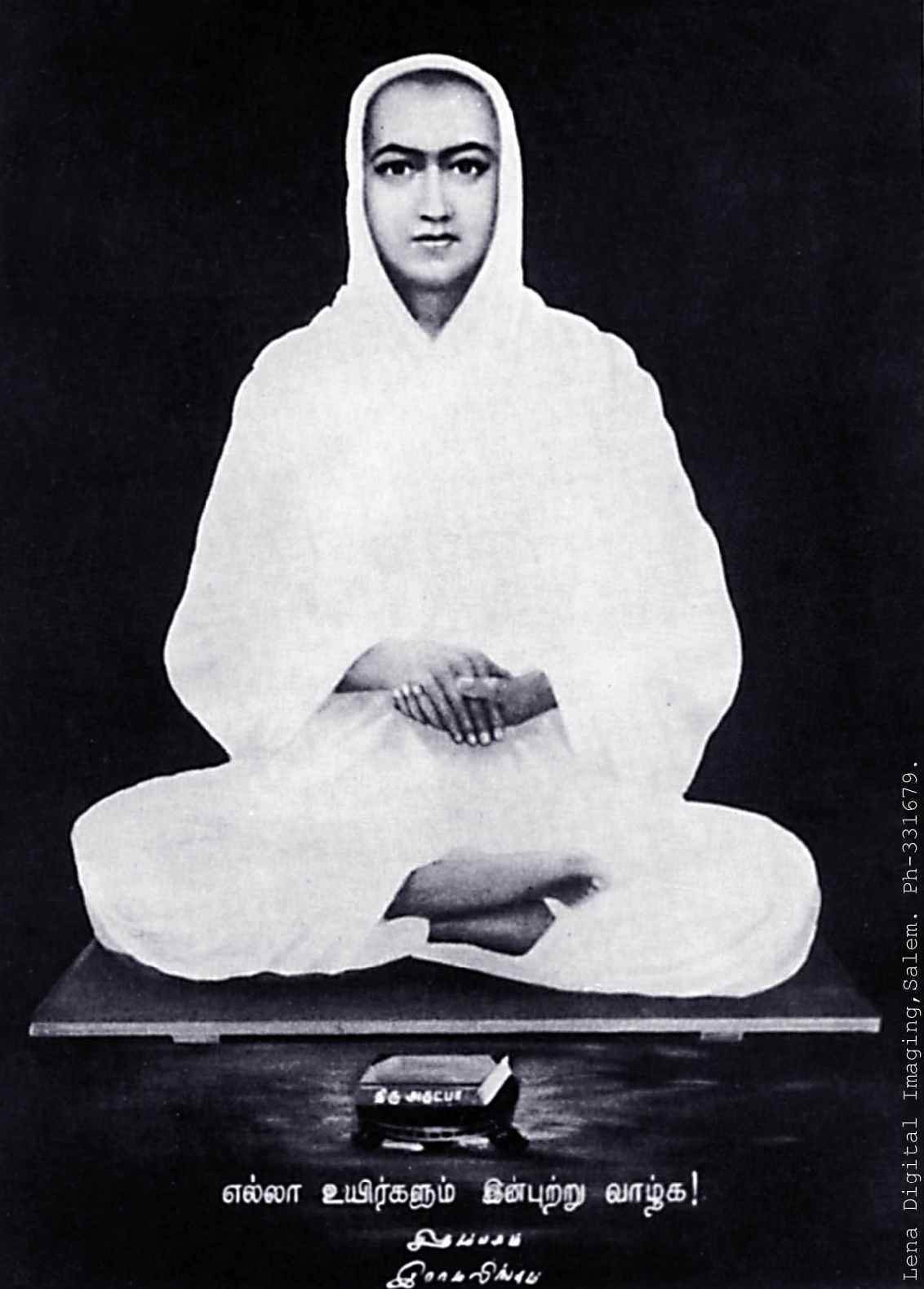
Ramalinga Swamigal, known as Vallalar, was a 19th-century Tamil mystic whose collected writings, the Thiru Arutpa, remain one of the most extraordinary spiritual records ever produced. His life was filled with remarkable feats — though he dismissed anything supernatural, insisting that everything he did was a science. He taught a path called Suddha Sanmarkkam, or the “True Path,” centered on the worship of the Divine as a Vast Grace-Light, Arut Perum Jōti. On January 30, 1874, accounts from those present record that he locked himself in a room in Mettukuppam and was never seen again — his body never found. This event is documented by government records and by British Collector John Henry Garstin.
Many spiritual paths discuss karma as a distant, abstract law of cause and effect. Vallalar’s teaching on the matter is far more direct and immediate, especially regarding the consumption of animals.
According to his writings, the act of killing an animal for food, or paying someone else to do so, is not a neutral transaction. The terror, pain, and suffering of the sentient being at the moment of its death are absorbed by the one who consumes it. This isn’t a metaphor. He taught that this accumulated suffering returns to the individual in tangible forms: increased risk of sudden danger, accidents, and chronic disease. The harm we cause to other souls becomes the blueprint for the harm that finds its way back to us.
This is the direct karmic consequence, a law as consistent as gravity. It is not a punishment from a judging God, but a natural result of inflicting violence upon another life form that is, like us, a vessel for a soul.
So, is it morally wrong to eat meat?
Vallalar reframes the question. Instead of a simple “yes” or “no” on morality, he presents a choice based on spiritual reality. The question is not “Am I a bad person for eating meat?” but rather “What am I choosing to create for myself and for other beings?”
From this perspective, eating meat is a choice to participate in a cycle of suffering that directly impacts one’s own well-being and spiritual progress. It obstructs the path to higher consciousness because the body becomes a storehouse for the vibrations of fear and violence. He taught that a body burdened by this karma cannot be refined into a vessel capable of holding the divine grace-light.
The choice to abstain from meat, then, is not about following a rule to be “good.” It is a practical, scientific step to clear the body of karmic debt and prepare it for a profound transformation.
God’s Compassion: The Invitation to Change
Here we arrive at the center of Vallalar’s teaching on this subject. If causing such harm brings such direct consequences, why do we not suffer immediately? Why are we allowed to continue?
Vallalar’s answer was an expression of the extraordinary compassion of God, the Vast Grace-Light. He taught that even while we are actively causing harm to other sentient beings, God’s grace continues to sustain us. Our hearts keep beating, the sun continues to rise, and we are given another day. This is not an oversight. It is the ultimate expression of compassion.
This continuous sustenance is the invitation itself. It is a quiet, persistent message: “I am giving you another chance to see, another moment to choose differently.” The absence of immediate punishment is not a license; it is an act of love, providing the space and time for a soul to turn toward compassion on its own. It is a call to align with the nature of Grace, which only gives.
The next time you sit to eat, take one moment to consider the life that was given for the food on your plate. If it is an animal, acknowledge the suffering involved. If it is a plant, acknowledge the life force it offers. This simple act of awareness is the beginning of the compassionate choice Vallalar taught was essential.
Jeeva Karunyam: The Foundation for a Deathless Body
Vallalar’s teachings on diet were not an end in themselves. They were the absolute foundation for his science of bodily transformation, a process he claimed could lead to physical immortality.
He called the foundational practice Jeeva Karunyam — active, living compassion toward all beings. This is more than just a feeling; it is the conscious act of preventing or alleviating the suffering of others, starting with the refusal to eat them. Vallalar taught that none of his advanced techniques can take root without Jeeva Karunyam.
With this compassionate discipline as the base, he documented three stages of bodily transformation:
- Suddha Deham (The Pure Body): Through diet, mantra, and compassion, the physical body is purified of all karmic impurities and becomes immune to disease and decay.
- Pranava Deham (The Primal Body): The body becomes increasingly subtle, made of light and sound. It is no longer subject to the same physical laws and becomes visible or invisible at will.
- Gnana Deham (The Wisdom Body): The final stage, which accounts from his life suggest Vallalar himself achieved. The body fully transforms into the Vast Grace-Light, a state of deathless, divine existence. This is a transformation also described, though in different terms, in traditions like the Tibetan Dzogchen practice of the Rainbow Body.
His manual of daily conduct, the Nithya Karma Vidhi, provides the practical dietary steps for one who wishes to begin building this foundation.
One Concrete Action to Take Today
You do not need to change your entire life overnight. Vallalar’s path begins with one conscious choice. Before your next meal, simply pause. Look at your food and ask a quiet, internal question: “Does this food come from a place of suffering, or a place of peace?” Do not judge the answer. Just notice it. This small act of awareness is the first step in practicing Jeeva Karunyam.
You came here for is it morally wrong to eat meat and found something worth reading. Want much more?
The Sanmarkkam Journey delivers free teachings, health guidance, and translations of Vallalar’s works, directly to your inbox. We take you by hand, at your own pace.
No pressure, no selling. Just value. Unsubscribe with one click. Join the Sanmarkkam Journey

Want Vallalar's wisdom
delivered free to your inbox?
All directly to your favourite email inbox.
We take you by hand, at your own pace. Step-by-Step.
- Free E-book: Jeevakarunyam Ozhukkam — Vallalar's Guide to Compassionate Living IMMEDIATE DOWNLOAD
- Free E-books, translations & commentaries
- Free health tips from Vallalar's manuscripts
- Free community
- Free Emporium items
- & Much More 🎁
🕯️ Welcome to the Journey
Look for an email from international@sanmarkkamlife.org. Check your inbox, spam folder and Promotions tab. Your first teaching and your free e-book are on their way.
🔒 We hate Spam. No Pressure. 0 Selling or Pitching.
1 Click Unsubscribe any time.
Privacy Policy · Sanmarkkam Life APS · GDPR compliant